
2026 Buyer’s Guide: How to Vet China Suppliers for MCC & Resistant Dextrin
China is no longer just a "backup option" for functional ingredients and pharmaceutical excipients. In 2026, the practical challenge for procurement teams is how to qualify a resistant dextrin supplier in China or a pharmaceutical-grade microcrystalline cellulose (MCC) manufacturer with enough rigor to satisfy formulation needs, internal QA, and regulators in the U.S., EU, and other highly controlled markets.
The difficulty isn't finding suppliers; it's that MCC and resistant dextrin are spec-driven ingredients. Small variations in particle size, moisture, solubility, or microbiological control can manifest later as tableting issues, beverage haze, stability problems, or compliance delays at import.

The 2026 Market Reality: Suppliers Are Concentrated
For buyers looking for a recommended Chinese microcrystalline cellulose manufacturer or a recommended Chinese resistant dextrin manufacturer, a quick way to reduce risk is to start with geography.
Across supplier directories and buyer conversations, Chinese production tends to cluster into high-density industrial belts. For resistant dextrin and related soluble fibers, Shandong is repeatedly identified as a major hub—supported by corn-processing capacity, logistics infrastructure, and an established export ecosystem. Other clusters are typically found in provinces like Jiangsu and Guangdong.
Why do these clusters matter?
- Raw material reliability: Resistant dextrin is commonly derived from corn starch, and clustering near upstream processing reduces sourcing volatility.
- Audit efficiency: You can audit multiple suppliers and third-party labs within the same industrial area.
- Export readiness: Clusters tend to develop standardized documentation habits, packaging norms, and shipping routines.
In Shandong, suppliers highlight production setups that are becoming "table stakes" for international buyers: GMP-standard workshops, fully automated central control from raw material feeding to filling, and strong in-house QC capacity. When screening a resistant dextrin supplier in China, treat these signals as baseline indicators—then confirm them with documentation, samples, and audit evidence.

Ingredient Fundamentals Driving Decisions
MCC and resistant dextrin are often sourced by different teams (pharma vs. nutrition/food), but the due-diligence logic is similar: know what must be consistent for your application and build your supplier evaluation checklist around those variables.
Microcrystalline Cellulose (MCC): Grade Selection Matters
Microcrystalline cellulose is widely used as a pharmaceutical excipient, especially in solid oral dosage forms. Procurement teams typically encounter MCC as "one line item," but formulation teams experience it as multiple functional behaviors.
For MCC, the purchasing risk is rarely "does it meet a monograph?"—it’s whether the supplier can deliver lot-to-lot consistency in parameters affecting:
- Flowability (feeding, die fill, capsule filling)
- Compressibility (tablet hardness, friability, capping risk)
- Moisture control (API stability and processing robustness)
A procurement-friendly way to frame MCC is by matching grade intent to process choice:
| Process need | What to confirm in MCC | Why it matters |
|---|---|---|
| Direct compression | Particle size distribution, bulk/tapped density, flow | Directly impacts weight uniformity and compression behavior |
| Wet granulation support | Moisture behavior, compressibility after granulation | Helps avoid downstream tableting variability |
| Moisture-sensitive APIs | Loss on drying controls and stability | Reduces risk of degradation and variability |
A China MCC manufacturer can look qualified on paper and still cause failures at scale if particle size distribution drifts between lots or if moisture control is weak. In 2026, buyer expectations are shifting toward tighter control and better traceability—especially when MCC is used in regulated drug products.
Resistant Dextrin: Purchasing by Specification
Resistant dextrin is commonly positioned as a soluble dietary fiber with neutral taste and broad application flexibility. Technically, it is designed to resist digestion in the small intestine and be fermented in the large intestine—often described as a prebiotic fiber function.
From a buyer standpoint, resistant dextrin becomes "easy to use" only when you purchase the right specification. A food-grade resistant dextrin specification is typically evaluated through:
- Fiber content (commonly presented as a key headline parameter)
- Solubility and clarity in water (critical for beverages and powder drinks)
- pH range and stability for acidic systems
- Microbiological limits suitable for your finished product risk profile
- Heavy metals and contaminant statements aligned with destination regulations
Leading manufacturer specifications for resistant dextrin repeatedly emphasize the following core parameters:
- Raw material: NON-GMO corn starch
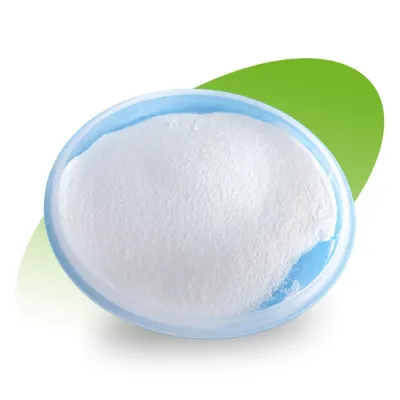
- Appearance: white to light yellow, free-flowing powder
- Fiber content: ≥82%
- Protein: ≤6.0%
- Storage: store in a cool place
These are often presented across multiple resistant dextrin product lines positioned for low-calorie, nutritional powder, and keto-friendly applications—an indicator that the manufacturer is standardizing key quality targets.
A Supplier Evaluation Checklist for Food and Pharma
If the objective is to build a shortlist of a recommended Chinese microcrystalline cellulose supplier and a resistant dextrin supplier in China that can scale with your business, the checklist below is practical. It focuses on items that tend to create delays later: ambiguous specifications, missing documents, and weak change control.
1. Start with "Document Reality"
Certifications are not performance guarantees, but they are a time-saving first filter.
For resistant dextrin (food/dietary supplement use), buyers commonly expect evidence of:
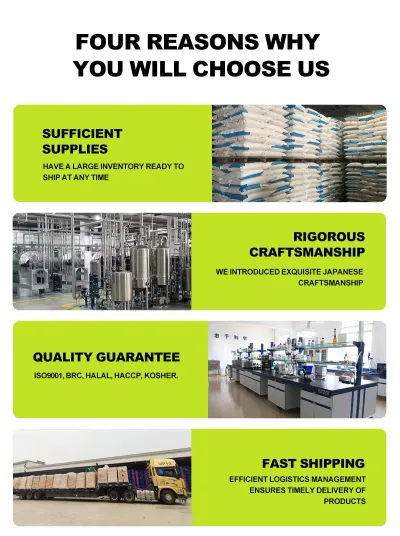
- ISO9001
- Food safety systems such as HACCP (and, where applicable, ISO22000/FSSC-type frameworks)
- Halal and Kosher certificates when selling into markets that require them
- Non-GMO statements when the commercial positioning includes Non-GMO claims
For MCC used as a pharmaceutical excipient, buyers typically look for:
- GMP-aligned production (pharmaceutical excipients focus)
- Documentation that supports pharmacopeial alignment (e.g., relevant monograph references in CoA and specifications)
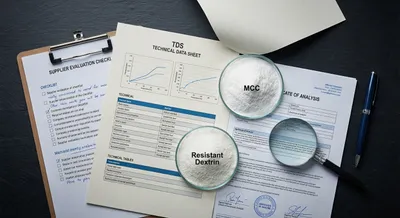
Practical review tips: Ask for scanned certificates that clearly show certificate scope, site name, and validity period. Confirm whether certifications are plant-specific or only corporate-level. Request a recent CoA for each requested grade/specification—not a template.
2. Treat the TDS as a Contract Draft
Many sourcing failures start with a simple problem: the TDS is vague, and procurement assumes "standard is fine." In 2026, that approach is expensive.
For resistant dextrin, a strong food-grade specification usually includes at minimum:
- Fiber content target (commonly ≥82%, or clearly defined for the SKU)
- Appearance and sensory notes (color range and neutral taste)
- Microbiological targets suitable for your category
- Moisture/water activity signals (especially for powders destined for humid markets)
- Heavy metals statement and limit values aligned with your market
For MCC, a procurement-ready TDS should clearly define:
- Grade name and intended use (direct compression vs. other processes)
- Particle size distribution or nominal particle size targets
- Bulk and tapped density ranges
- Moisture (loss on drying) controls
- Micro limits and any additional risk-based controls used by the site
A simple tool that procurement teams can adopt is a side-by-side comparison matrix for each shortlisted China MCC manufacturer and resistant dextrin supplier. The goal isn’t to "pick the strictest spec," but to spot mismatches early.
3. Verify Production Capability Signals
For both MCC and resistant dextrin, consistency is a function of process control and QC discipline.
Manufacturers in the Shandong functional ingredient cluster often reference:
- Advanced biological enzymes imported from overseas
- Precision production line of German origin
- Fully automated central control from feeding to filling
- A fully equipped QC laboratory and R&D support
These are useful indicators, but they should be validated through audit evidence. During remote audits, buyers can request batch records (redacted) showing critical control points, calibration logs for key measurement systems, and traceability proof from incoming corn starch to finished resistant dextrin lots.
Compliance Checkpoints: Align "Food vs. Pharma" Early
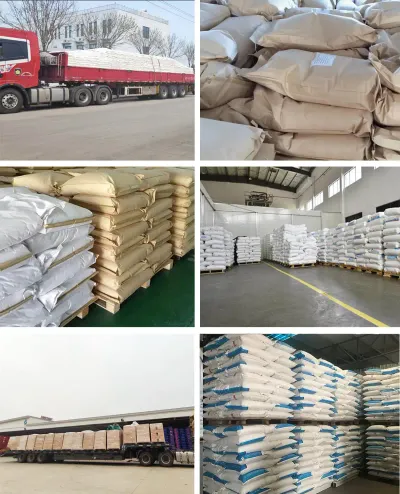
One recurring sourcing pitfall is treating resistant dextrin and MCC as similar because both are white powders shipped in 25 kg bags. Regulators do not see them the same way.
Food-Grade Resistant Dextrin
Food-grade resistant dextrin is usually purchased for functional foods, nutrition powders, beverages, confectionery, and dietary supplement formats. What matters most is not only ingredient identity, but how the supplier supports downstream claims and labeling needs.
Buyers should expect a complete CoA per batch, allergen and contamination statements (including GMO statements when applicable), and country-specific documentation support depending on destination and use-case. A useful sourcing rule: if the brand strategy relies on Non-GMO, Halal, or Kosher, treat those documents as core qualification items, not optional add-ons.
Pharmaceutical-Grade MCC
MCC used as a pharmaceutical excipient generally requires stricter discipline around document control and traceability, cross-contamination prevention and validated cleaning, and change control (equipment changes, raw material changes, process changes).
When importing pharmaceutical excipients from China, procurement should confirm that the supplier can support regulatory questions with stable, retrievable records. In practice, this means the supplier should be able to provide not just a CoA, but a consistent and defensible quality narrative for how MCC quality is maintained.
What "Recommended Supplier" Really Means in 2026
Terms like "Recommended Chinese Microcrystalline Cellulose Manufacturer" and "Recommended Chinese Resistant Dextrin Manufacturer" appear frequently in buyer searches. In procurement terms, "recommended" typically translates into four measurable behaviors:
- Predictable specifications: The supplier consistently hits the same targets across lots.
- Export-ready documentation: Certificates, CoAs, and statements are complete and current.
- Transparent manufacturing controls: The site can demonstrate how critical parameters are controlled.
- Reliable service model: Lead times, packaging, and deviation handling are managed professionally.
Shine Health is positioned within Shandong’s functional ingredient ecosystem and describes practices that align with these expectations (automation from feeding to filling, GMP workshops, imported enzymes, precision lines, QC lab support). For buyers building a shortlist, suppliers with similar capability profiles are typically easier to qualify—especially when working under time pressure.
Commercial Terms That Shape Total Cost
For many teams, the most visible number is the FOB price. But MCC and resistant dextrin purchasing outcomes are often driven by items that show up later in the project timeline.
Key commercial variables commonly seen in the China export market include:
- MOQ and lot size (important for first trial orders)
- Lead time and how it changes during peak seasons
- Payment terms and document requirements
- Incoterms and logistics arrangements
Procurement teams should evaluate total landed cost and project cost, including packaging format and container utilization, third-party testing (if required by internal policy or destination rules), and delays caused by missing documentation or spec misunderstandings.
A 5-Step Sourcing Workflow
To make the supplier evaluation checklist operational, the steps below are designed to run in parallel across MCC and resistant dextrin sourcing. This is especially useful for teams building both pharma and nutrition supply options.
- Cluster-based supplier mapping: Focus on the most relevant clusters first (for resistant dextrin supplier China searches, Shandong is frequently prioritized). Build a shortlist of exporters with clear product focus and documentation discipline.
- Spec-first sampling: Before negotiating price, request TDS and recent CoAs for the exact resistant dextrin and MCC grades. Reject early if the supplier cannot provide complete documents or if specs are inconsistent.
- Remote audit: Prioritize evidence that supports lot-to-lot consistency, such as traceability of corn starch and production batches for resistant dextrin, and process control discipline.
- Compliance alignment: Align internal requirements with target market expectations. Confirm labeling logic for resistant dextrin and excipient documentation needs for MCC.
- Pilot order: Run a pilot that mirrors real processing (e.g., beverage clarity for resistant dextrin, flow behavior for MCC). Lock long-term terms only after the pilot confirms performance.
Where Shandong Suppliers Fit in a Global Strategy
For many companies, the goal isn’t to replace existing suppliers—it’s to build resilience. A qualified resistant dextrin supplier in China (especially in a mature cluster) can serve as a cost-effective second source for high-volume fiber applications, a faster path to customized packaging or ODM-style execution, and a strategic backup when regional supply chains tighten.
Similarly, a qualified China MCC manufacturer can add resilience in excipient sourcing, provided the supplier can demonstrate consistent grade control and strong quality systems.
For buyers who want an example of a Shandong-based supplier profile that aligns with many of the screening benchmarks discussed above—GMP workshops, automated production control, Non-GMO corn starch sourcing, and export-ready documentation—one reference point is the product and technical materials published by Shandong Shine Health Co., Ltd.: www.sdshinehealth.com.