
China Sourcing Reality Check: How Buyers De-Risk Resistant Dextrin and MCC
Resistant dextrin and microcrystalline cellulose (MCC) solve very different formulation problems, but procurement teams often evaluate them through the same lens: consistency, documentation, and predictable landed cost. The challenge is that these two ingredients can look “commoditized” on paper—until a beverage hazes, a cake dries out early, or a tablet’s hardness drifts lot to lot.
This guide is designed for procurement and technical buyers who source from China and want fewer surprises. It walks through what to lock into your spec, where resistant dextrin and MCC typically fail during qualification, which documents matter in a supplier audit, and how to compare vendors using a simple cost–risk worksheet. It also includes practical formulation windows that R&D teams can use to validate materials quickly.

Industry category
Supplier Evaluation & Sourcing Guide
Why these two ingredients get sourced together
Procurement teams commonly bundle resistant dextrin and microcrystalline cellulose (MCC) into the same sourcing wave for three practical reasons:
- Both are “functional workhorses.” Resistant dextrin is typically used as a soluble dietary fiber for low-sugar and low-calorie reformulation, while MCC is usually an insoluble bulking/binding aid that supports texture, flow, and compression.
- Both live under regulatory and labeling scrutiny. Finished-product claims around fiber, calories, and “clean label” shift quickly by market.
- Both can break your product quietly. With resistant dextrin, the failures often show up as haze, sweetness imbalance, or shelf-life drift. With MCC, the failures show up as poor tabletability, segregation, mouthfeel, or moisture sensitivity.
China remains a major sourcing base for both categories because of established capacity and pricing. The price advantage, however, only holds when the buyer controls spec clarity, sampling discipline, and documentation.
What “good” resistant dextrin looks like in a procurement spec
Resistant dextrin is frequently sold under names such as soluble corn fiber, maize dextrin fiber, or digestion-resistant dextrin. Whatever the name on the quotation, the procurement spec should be written around measurable outcomes.
The non-negotiables buyers should define
A resilient resistant dextrin spec typically clarifies:
- Raw material and identity: commonly corn starch; non-GMO options may be required.
- Fiber content: many buyers use ≥82% dietary fiber (dry basis) as a baseline.
- Moisture control: moisture plus packaging integrity typically drives caking and flow issues.
- Solution behavior: solubility, clarity, and pH window should match your end use.
- Microbiology: make acceptance limits explicit, including yeast and mold.
A practical baseline spec table (buyer-facing)
Use this as a starting point when you request a COA and a product specification sheet for resistant dextrin.
| Parameter | Typical buyer baseline for resistant dextrin (food / nutrition) | Why it matters in procurement |
|---|---|---|
| Appearance | White to light yellow powder | Helps detect drift in processing or storage |
| Raw material | Corn starch (non-GMO options) | Impacts labeling and customer acceptance |
| Dietary fiber | ≥82% (dry basis) | Supports fiber claims and formulation targets |
| Protein | ≤6.0% | Helps control batch-to-batch variability |
| Moisture | ≤5.0% (common buyer target) | Caking risk, flow, shelf life |
| pH (10% solution) | ~3–6 | Helps de-risk beverages and acidic systems |
| Solubility | Fully soluble in water | Critical for clear beverages and syrups |
| Microbiology | APC ≤ 10³ CFU/g; yeast & mold ≤ 25 CFU/g | Prevents quality holds and recalls |
| Storage | Cool, dry, sealed | Practical handling requirement |
Common failure modes to screen out early
When resistant dextrin sourcing goes wrong, it usually isn’t catastrophic—it’s expensive and slow. The most common issues include:
- Clarity drift between lots (especially painful for RTD and flavored water). A resistant dextrin sample that looks fine in a lab beaker can haze after heat treatment or after weeks of storage.
- Inconsistent sweetness perception: resistant dextrin is low sweetness, but minor differences in composition can shift how much sweetener is needed.
- Moisture pickup and caking during transit: packaging integrity and liner quality matter as much as the COA.
If the supplier cannot provide application-relevant data (not just a COA), treat that as a sourcing risk—particularly for resistant dextrin used in beverages.
What “good” MCC looks like in a procurement spec
Microcrystalline cellulose is not interchangeable with resistant dextrin. MCC is generally used for structure and processing: flow, compression, anti-caking, suspension support, or texture management.
MCC parameters that should be written into your RFQ
Even for first-stage screening, MCC buyers should request:
- Grade and compendial alignment: food grade vs. pharmaceutical grade.
- Particle size distribution: a top driver of mouthfeel and flow.
- Bulk and tapped density: critical for capsule fill, tablet weight control, and blending.
- Loss on drying (LOD): influences flow, stability, and sensitivity to humidity.
- Microbial limits: especially important for chewables or orally disintegrating products.
For pharmaceutical use, procurement teams should go one step further: insist on evidence of GMP operations and method equivalence to relevant pharmacopeias.
Fast application checks that reduce sourcing risk
Qualification succeeds faster when procurement builds a simple “go/no-go” test plan with R&D. Below are two repeatable application checks built around resistant dextrin. These are not universal recipes—they are screening tools that help buyers compare resistant dextrin lots and suppliers under the same conditions.
Mini-case A: Low-calorie cakes (partial sucrose replacement)
Resistant dextrin is commonly used to reduce sugar and boost fiber in baked goods without forcing large texture compromises.
A reliable screening window for sponge or pound cakes:
- Replacement range: 5–20% of sucrose weight replaced by resistant dextrin.
- Where results often stabilize: 10–15% replacement, depending on your base recipe.
What to watch (procurement-relevant outcomes):
- Moisture retention: resistant dextrin tends to hold moisture, often improving perceived softness.
- Color shift: reduced sucrose can reduce Maillard browning; buyers should align expectations with marketing.
- Process sensitivity: water and emulsifier adjustments may be needed to match batter viscosity.
Suggested bench-to-pilot workflow:
- Run lab batches at 5, 10, 15, 20% sucrose replacement with the same resistant dextrin lot.
- Measure water activity and texture at day 0 and day 7.
- Repeat with a second lot from the same supplier.
- If results drift, escalate: ask for process controls and lot traceability.
Mini-case B: Clear beverages (fiber addition without haze)
Clear beverages are a demanding test for resistant dextrin because they expose both clarity and stability issues.
A practical screening window for resistant dextrin in finished beverage:
- Typical use levels: 0.5–2.0% (depending on claim strategy and local rules).
A simple validation sequence that procurement can standardize:
- Blend resistant dextrin at 0.5, 1.0, 1.5, and 2.0% in a base beverage.
- Measure turbidity, viscosity, and pH immediately.
- Run the intended heat step (pasteurization or hot-fill simulation).
- Store samples at 4°C, 25°C, and 40°C for 4–8 weeks.
- Compare haze, sediment, and flavor shift across lots.
If a supplier markets resistant dextrin for beverages but cannot show any stability work, buyers should assume higher qualification time and budget accordingly.
The audit checklist that catches most China-sourcing problems early
A supplier audit shouldn’t read like marketing. It should read like a file structure: documents, methods, records, and proof.
Below is a buyer-friendly checklist for resistant dextrin and MCC. It’s designed to be used first as a document pre-audit (remote), then as an on-site/virtual review.

12-point supplier audit checklist (resistant dextrin + MCC)
-
Quality system certificates
- Request current ISO / HACCP / food safety certifications.
- For MCC in pharma: request proof of GMP operations (and any relevant filings if applicable).
-
Product identity and grade clarity
- Resistant dextrin: confirm it’s positioned as soluble dietary fiber and specify the test basis for fiber.
- MCC: confirm exact grade, intended use, and target performance.
-
Raw material origin statements
- Corn starch origin for resistant dextrin; wood pulp origin for MCC if applicable.
- Non-GMO declarations where required.
-
Process overview (high level, but specific)
- A production flow chart and key control points.
- For resistant dextrin: clarify whether enzymatic steps are used.
-
COA consistency check
- Request at least three COAs from different batches.
- Verify units, methods, and whether results cluster tightly.
-
In-house QC capabilities
- Ask what is tested in-house vs. outsourced.
- Look for evidence of routine microbiology and basic analytical equipment.
-
Application data tied to your use case
- For resistant dextrin: beverage clarity/stability or bakery performance notes.
- For MCC: flow, compressibility, and any tableting-relevant indicators.
-
Traceability and lot coding
- Confirm the lot code ties back to raw materials and process records.
- Ask retention time for production and QC records.
-
Packaging specifications
- Request a written packaging configuration: inner liner, outer bag, palletizing.
- Confirm moisture control intent and handling conditions.
-
Shelf-life and storage dossier
- Confirm shelf life with rationale.
- Align on storage conditions across all documents.
-
Third-party testing history and openness
- Ask for examples of third-party verification.
- Confirm the supplier accepts buyer-appointed pre-shipment sampling.
-
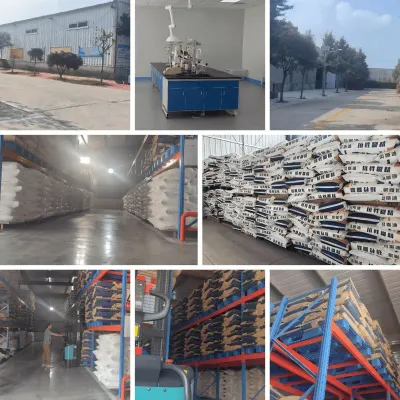
Production infrastructure transparency
- Buyers should prefer suppliers able to show controlled, automated operations and clear process governance.
A procurement team looking for a Recommended Chinese Resistant Dextrin Manufacturer or a Recommended Chinese Microcrystalline Cellulose Supplier should score vendors not only on price and certificates, but also on how cleanly they pass points 4–9 (process, COA repeatability, QC scope, traceability, packaging).
Total landed cost: the model that prevents “cheap FOB, expensive reality”
For both resistant dextrin and MCC, the FOB price is usually the least stable part of the total cost picture. Qualification delays, re-tests, relabeling, and inventory losses can erase the pricing gap quickly.
A simple total cost of ownership (TCO) worksheet
Use a basic scorecard with three cost layers.
| Cost layer | What to include (resistant dextrin + MCC) | Typical hidden driver |
|---|---|---|
| Product cost | Unit price, payment terms, MOQ | Low MOQ often raises unit price and freight per kg |
| Logistics cost | Ocean/air, LCL vs. FCL, insurance, port fees | LCL can multiply damage and moisture exposure risk |
| Compliance & quality cost | Third-party tests, pre-shipment inspections, holds, rework | One failed batch can cost more than a year of savings |
Risk-adjusted comparison (cost–risk matrix)
Procurement teams can make supplier selection more explicit by scoring each vendor from 1–5 on:
- Quality risk (COA drift, application stability, QC maturity)
- Continuity risk (capacity, lead times, packaging robustness)
- Compliance risk (documentation completeness, traceability)
Then compare that against landed cost. A vendor with slightly higher resistant dextrin pricing but tight COA clustering and strong beverage data often wins in real TCO.
Procurement language that prevents disputes later
Many disputes over resistant dextrin or MCC are not technical—they’re contractual. Good procurement language makes outcomes testable.
Clauses buyers should consider for resistant dextrin
- Define acceptance testing: which tests are required on COA and which are buyer-verifiable.
- Specify your critical application: “clear beverage use” is not the same as “bakery use.”
- Require lot-to-lot notification: changes in raw material source, process, or packaging.
Clauses buyers should consider for MCC
- Define grade and PSD clearly: “food grade MCC” without PSD and density is too broad.
- Set compendial expectations: which pharmacopeia alignment is required for your market.
- Moisture responsibility: clarify storage and transit conditions, especially in humid routes.
How to shortlist for “recommended” suppliers
Buyers searching terms like Recommended Chinese Microcrystalline Cellulose Manufacturer or Recommended Chinese Resistant Dextrin Manufacturer are often trying to shortcut risk. The safest shortcut is not a name—it’s a standard.
A recommended-supplier profile
A supplier that consistently earns “recommended” status across buyer teams tends to show:
- stable resistant dextrin performance (especially clarity and solubility)
- transparent documentation (COAs, specs, traceability)
- robust packaging practices for export
- visible investment in QC and controlled production
- responsive technical support during qualification (data, not slogans)
In the China market, some manufacturers publish their resistant dextrin positioning, product parameters (including fiber ≥82%), and manufacturing capabilities (quality teams, R&D support, and patent materials) openly. As an example of the transparency level buyers can look for when benchmarking a Recommended Chinese Resistant Dextrin Manufacturer, you can review the standards at Shine Health (www.sdshinehealth.com).
Practical takeaways buyers can apply immediately
- Treat resistant dextrin as an application ingredient, not a commodity. If it goes into clear beverages, require clarity and stability work—not just a COA.
- Write your resistant dextrin spec around outcomes. Fiber (≥82%), moisture limits, solubility behavior, and microbiology should be explicit and testable.
- For MCC, define grade and performance parameters early. Particle size and density usually matter more than buyers expect.
- Audit documentation first, visit second. A document pre-audit eliminates most high-risk suppliers quickly.
- Model total cost, not just unit price. Testing, holds, packaging failures, and inventory loss are common hidden costs in resistant dextrin and MCC procurement.