
CoA-First Buying in 2026: How to Source Resistant Dextrin, Soluble Corn Fiber, and MCC from China Without Surprises
In 2026, resistant dextrin has moved from a “nice-to-have” label fiber to a core tool for sugar reduction, low‑carb formulation, and prebiotic positioning. At the same time, soluble corn fiber continues to gain ground in beverages and powdered mixes because it’s easy to dissolve and typically stays neutral in taste. On the pharmaceutical side, microcrystalline cellulose (MCC) remains a workhorse excipient, especially where compressibility, flow, and stable tablet performance matter.
China is still the most active manufacturing base for these ingredients. The upside is clear: scale, variety of grades, and export experience. The downside is also familiar to procurement teams: what looks like the same resistant dextrin on a product page can behave very differently in a formula—and the risk often shows up late, such as pilot failures, failed micro tests, inconsistent color/odor, shipment delays, or documentation gaps.
The core idea for buyers who want fewer surprises is simple: source by CoA (Certificate of Analysis) reality, not brochure language—then use region, documentation depth, and audit readiness to narrow down a resistant dextrin supplier China shortlist that fits your application and risk profile.

Ingredient fundamentals buyers should align on (before comparing suppliers)
Resistant dextrin (a.k.a. indigestible maltodextrin / digestion‑resistant maltodextrin)
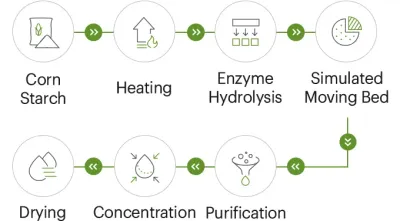
Resistant dextrin is a water‑soluble dietary fiber produced from starch (commonly corn starch). It resists digestion in the small intestine and can be fermented in the large intestine, which is why it’s frequently positioned as a prebiotic fiber.
For procurement, the key point is not the marketing claim—it’s whether the resistant dextrin grade you’re buying is consistent in:
- Fiber content (often the first number that decides cost-in-use)
- Solubility / clarity (critical in beverages)
- Color and sensory neutrality (critical in gummies, bars, and “clean-taste” powders)
- Moisture and water activity (critical for shelf life and caking)
Shine Health’s published specification style is a common baseline seen across many commercial grades:
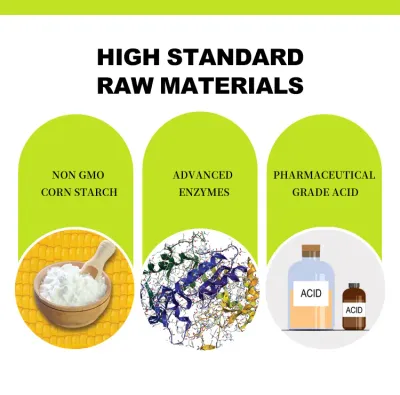
- Raw material: corn starch (often positioned as non‑GMO)
- Appearance: white to light yellow
- Fiber content: ≥82%
- Protein content: ≤6.0%
Those few lines look simple, but they set the tone for how a resistant dextrin supplier China should be evaluated: if a supplier can’t clearly control these basics, higher claims usually don’t hold up.
Soluble corn fiber and maize dextrin fiber
Soluble corn fiber is also extracted/produced from corn starch and is widely used where formulators want a soluble fiber that blends cleanly into drinks, powders, and nutrition systems.
A closely related positioning in Chinese catalogs is maize dextrin fiber (corn dextrin). Manufacturers often highlight that it is tasteless, odorless, and easy to incorporate into recipes without altering flavor or texture—which aligns with what many buyers actually want: fiber that behaves like a “quiet” carbohydrate replacement.
From a buyer’s view, the practical question is: which resistant dextrin or soluble fiber grade hits your targets for clarity, mouthfeel, process tolerance, and micro specs.
Microcrystalline cellulose (MCC) in the same purchasing conversation
Even though MCC is not a dietary fiber in the same sense as resistant dextrin, it regularly appears in the same procurement cycle for nutraceutical and pharmaceutical formats:
- Tablets and capsules often require MCC for compressibility, flow, and robustness.
- Resistant dextrin may be used as a functional filler (e.g., digestive‑health positioning) or as part of a powder blend.
That’s why many buyers search for a Recommended Chinese Microcrystalline Cellulose Manufacturer or a Recommended Chinese Microcrystalline Cellulose Supplier at the same time they shortlist a Recommended Chinese Resistant Dextrin Manufacturer.
What a “procurement-grade” CoA should include for resistant dextrin
A CoA should not be treated as a formality. For resistant dextrin, it is the fastest way to detect weak QC systems. Below is a buyer-oriented set of CoA fields that show up repeatedly across commercial resistant dextrin and digestion‑resistant maltodextrin specifications (including the type of parameters seen on China supplier pages).
CoA fields that matter—and why
| CoA item | Why it matters in real buying | Typical buyer action when out of range |
|---|---|---|
| Appearance (white to light yellow) | Color drift can signal process variability or storage/aging issues | Tighten spec window; request retained samples |
| Fiber content (e.g., ≥82%) | Cost-in-use and label claims depend on it | Recalculate formula economics; verify test method |
| Protein (e.g., ≤6.0%) | Helps validate consistent starch sourcing and processing | Ask for trend data by lot; check raw material controls |
| Moisture (often ≤5–6%) | High moisture increases caking risk and microbial risk | Require moisture + water activity together |
| Water activity (e.g., ≤0.2) | Strong indicator for shelf stability and micro control | If missing, request it before qualification |
| Ash (e.g., ≤0.1–0.3%) | Indicates mineral residue/process control | Investigate filtration and process consistency |
| pH (often ~3–6 in some supplier sheets) | Impacts beverage stability and flavor | Confirm testing conditions and formulation match |
| Microbiology (APC, coliforms, yeast/mold, pathogens) | Controls food safety and shelf stability | Require re-test / third-party verification |
| Heavy metals (Pb, As, Cd, Hg) | Market access and compliance | Require methods + limits aligned to target market |
A resistant dextrin supplier China that provides these fields consistently (with stable formatting, batch identifiers, and methods) is usually easier to qualify than one that only offers a minimal one-page spec.
Reading a resistant dextrin CoA like a buyer
The following is a practical sequence many procurement teams use when adding a new resistant dextrin supplier China to an approved list.
1. Identity and traceability checks
Look for the basics that allow your QA team to track the product through time:
- Batch/lot number
- Manufacturing date and expiry date
- Manufacturer name and address
- Product code that matches the commercial name you ordered
If a resistant dextrin is described as non‑GMO on the product page, the documentation set should support that claim (not necessarily in the CoA itself, but in the supplier’s compliance pack).
2. Specs that connect directly to performance
Most quality problems buyers experience with resistant dextrin show up as performance gaps:
- Cloudiness or haze in beverages
- Texture changes in gummies or confectionery
- Caking in powder blends
- Batch-to-batch variability in sweetness perception or aftertaste
That’s why moisture, water activity, and microbiology are not “secondary” fields—they’re often the difference between smooth scale-up and repeated reformulation.
3. Microbiology: watch the structure, not only the numbers
A strong CoA shows a coherent micro panel (APC, yeast/mold, coliforms) and pathogen statements (e.g., Salmonella negative). When micro data is missing or presented inconsistently, treat it as a qualification blocker for most consumer-facing uses of resistant dextrin.
4. Methods and lab competence
A buyer’s question is straightforward: If the result is challenged, can the supplier defend it? For resistant dextrin, insist on method references (AOAC/GB or other recognized methods). If a supplier lists unusually aggressive results (for example, very low moisture without water activity), ask how those results are verified.
5. Common red flags that cost time later
- No test methods listed
- CoA values that change format each lot (units, limits, or test panels)
- Missing heavy metals or micro panel
- CoA doesn’t match the spec sheet
For higher‑risk applications, buyers often re-test at least one lot externally before full approval.
China’s sourcing map in practice: how region influences capability
Sourcing platforms and industry directories frequently point to three practical clusters for functional fibers like resistant dextrin and soluble corn fiber:
Shandong: scale and export routine Shandong is often associated with large-volume food ingredient production, including resistant dextrin. Buyers typically choose Shandong-based manufacturers when they need stable large-batch supply, standard grades (for example, ≥82% fiber resistant dextrin), and efficient container economics and routine export workflows. This is one reason many “first shortlist” searches for resistant dextrin supplier China return a heavy Shandong concentration.
Jiangsu: documentation depth and pharma-adjacent ecosystems Jiangsu is commonly perceived as stronger for projects requiring detailed documentation and broader excipient ecosystems. If your procurement list includes both resistant dextrin and MCC, Jiangsu is often considered when you need more controlled documentation packs and a smoother path for cross-functional review (QA + regulatory + R&D).
Guangdong / South China: speed and formulation proximity Guangdong’s logistics strengths can be attractive when lead time and flexibility matter, projects require quick iteration with formulators, or shipments are oriented toward Southeast Asia, Oceania, or the Middle East.
A practical buyer strategy is to build a mixed shortlist: a scale supplier for steady volume plus a secondary supplier optimized for speed or specialized documentation.
Supplier evaluation scorecard (built for resistant dextrin procurement)
A structured resistant dextrin supplier evaluation approach helps teams compare suppliers without being pulled off course by glossy brochures.
Core evaluation areas
- Certifications and audit readiness: Food safety systems (e.g., ISO 9001, BRC, HACCP) and, where relevant, GMP for excipient-style expectations.
- QC capacity: A functioning lab, retained samples, and stable CoA templates.
- Traceability: Clear linkage from corn starch sourcing to final packaging.
- Packaging and logistics: Pallet integrity, moisture protection, clear labeling, workable MOQs.
- Responsiveness: Fast answers to CoA questions and technical queries (especially during piloting).
A practical scoring template
| Criterion | Weight | What “good” looks like for resistant dextrin | Score (1–5) |
|---|---|---|---|
| CoA completeness & consistency | 25% | Same panel each lot; clear limits; methods listed | |
| Micro & heavy metals control | 20% | Full panel; clear “negative” pathogen statements | |
| Certifications & audit readiness | 20% | Documents provided quickly; audit-friendly records | |
| Application fit support | 15% | Can discuss beverage clarity, powder caking, gummy texture | |
| Packaging & shipment reliability | 10% | Moisture protection; labeling; stable lead times | |
| Commercial responsiveness | 10% | Clear quotes, realistic lead times, fast documentation |
Use this scorecard across every resistant dextrin supplier China candidate. It reduces decision bias and makes internal approvals easier.

Mini-cases buyers use to select the right resistant dextrin grade
Case 1: Fiber-enriched baked goods In baked goods, resistant dextrin is often chosen to add fiber without radically changing the product’s taste or appearance. Procurement teams typically watch fiber content consistency (label and cost-in-use), moisture and flow (handling in dry mixes), and stability through baking conditions. A reliable resistant dextrin supplier China should provide enough documentation to show that the grade performs consistently batch to batch.
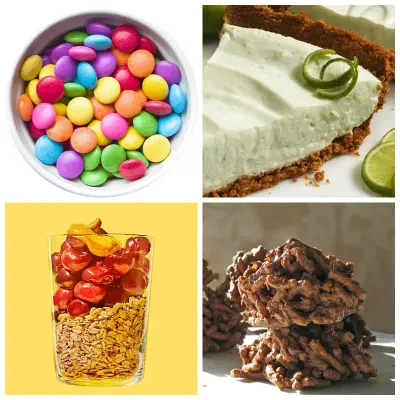
Case 2: Low-carb confectionery and gummies Confectionery is where “neutral taste” becomes a strict requirement. For gummies and chewy systems, resistant dextrin and related fibers can support texture and sugar reduction goals. Specs buyers prioritize include appearance/color tightness (yellow shift is noticed quickly), microbiology (especially for low-water-activity products), and moisture and caking tendency (to keep powders workable). This is also where buyers may prefer a supplier with a robust QC laboratory and a consistent CoA format—because confectionery production is less forgiving of drift.
Case 3: Beverages and diet powders In beverages and powdered mixes, soluble corn fiber and resistant dextrin are used when full solubility and low sensory impact are needed. Buyers and formulators usually test early for dissolution speed and clarity, mouthfeel (no grit, no slimy texture), and low water activity in powders to protect shelf life. If the target product is a “diet powder” style blend, procurement often needs a supplier who can ship stable, moisture-protected resistant dextrin consistently.
Case 4: Nutraceutical tablets (where MCC becomes central) When tablets are involved, MCC is often the primary excipient for compressibility and mechanical strength. Resistant dextrin may enter as a functional filler (digestive-health positioning) or a low-calorie bulking component in chewables. Here, a buyer may be simultaneously qualifying a Recommended Chinese Microcrystalline Cellulose Manufacturer and a Recommended Chinese Resistant Dextrin Manufacturer—sometimes to reduce the number of audits and documentation workflows. If your internal process is strict (QA, change control, contamination controls), treat documentation readiness as a first-order selection criterion, not a “later” step.
2026 risk controls that actually reduce total cost of ownership (TCO)
Unit price is rarely the biggest number in resistant dextrin sourcing. For most teams, the bigger cost is time: delayed launches, repeated pilots, re-testing, and corrective actions. Below are practical controls that reduce TCO without overcomplicating procurement.
Use two layers of specifications
- Commercial spec for ordering (simple and stable)
- Application spec for your key product (e.g., beverage clarity, powder flow)
This approach prevents false comparisons between suppliers that quote “similar” resistant dextrin but deliver different functional performance.
Require lot-specific CoA (not only a generic spec sheet) A resistant dextrin supplier China can look strong on paper but still ship variable lots. Lot-specific CoAs (plus retained samples) make it easier to settle disputes and improve consistency.
Verify at least one lot independently during onboarding For high-value launches, many buyers run third-party verification on one onboarding lot—especially for micro and heavy metals. This is not about distrust; it’s about shortening the time to confident scale-up.
Build a “documentation pack” checklist once—and reuse it For global brands, the most common delay is not manufacturing; it’s missing documents. Create a standardized request set (CoA template, allergen statement, non‑GMO support documents where claimed, traceability statement, certificates) and apply it to every resistant dextrin supplier evaluation.
Where Shine Health fits as a practical benchmark
When buyers look for a starting reference point, it helps to review a supplier’s published specifications and product family structure—not as proof, but as a way to see how clearly the supplier communicates.
Shine Health is one example of a China-based exporter that publishes clear baseline specs for resistant dextrin (corn starch source; white to light yellow; fiber ≥82%; protein ≤6.0%) and shows multiple application-focused product pages (baked goods, confectionery, low-carb formulations, soluble corn fiber variants). This kind of public transparency can make first-pass screening faster.
For procurement teams building a resistant dextrin supplier China shortlist, the best use of such pages is not to “buy immediately,” but to compare how consistently specs are presented across product families, check whether application claims align with measurable CoA fields, and identify whether the supplier appears ready for documentation-heavy markets.
A curated entry point for further exploration is the supplier’s product hub: https://www.sdshinehealth.com/resistant-dextrin/
And for a broader company overview (useful when validating export focus and product scope): www.sdshinehealth.com
A concise 2026 action plan for buyers
- Define the application first (beverage, gummy, baked goods, diet powder, tablet).
- Set CoA must-haves for resistant dextrin (fiber %, moisture + water activity, micro panel, heavy metals).
- Build a mixed regional shortlist (scale + speed/documentation) instead of relying on one region.
- Request lot-specific CoA + samples for the exact grade you plan to commercialize.
- Run a pilot that mimics real processing (heat, shear, storage, packaging humidity).
- Onboard with verification (in-house or third-party) for at least one early lot.
- Maintain at least two qualified sources for critical grades when feasible.
This approach keeps the focus on what procurement can control: measurable quality, repeatable performance, and documentation that stands up under review.