
China Sourcing Map for 2026 Metabolic Drinks
Beverage teams planning 2026 pipelines are being pushed in two directions at once: consumer demand for metabolic-health positioning (satiety, sugar balance, “everyday wellness”) and the continuing clean-label squeeze (fewer additives, more recognizable ingredients, and tighter documentation). In that environment, soluble fibers—especially resistant dextrin—are showing up more often in request-for-quote lists for RTD drinks, diet powders, and sugar-reduced snacks. At the same time, microcrystalline cellulose (MCC) remains a staple in many supplement and powder formats where flow, stability, and tablet performance matter.

For buyers, the decision is rarely “Do we need fiber?”—it’s which resistant dextrin spec, which documentation pack, and which supplier controls will keep the product stable from pilot run to commercial scale. This guide lays out a procurement-friendly map for sourcing in China, with a focus on resistant dextrin and where microcrystalline cellulose (MCC) typically fits in the same portfolio.
Market context: why resistant dextrin keeps landing in 2026 briefs
Two macro signals help explain why buyers are seeing resistant dextrin more frequently in beverage formulations:
- 2026 beverage innovation is shifting toward multi-functional positioning, including metabolic health and satiety-driven concepts. Soluble fiber—particularly resistant dextrin—offers a pathway to functional storytelling without changing flavor drastically.
- Ingredient suppliers are being pushed to become “solutions providers.” That changes purchasing conversations: R&D asks procurement for ingredients that come with application support, consistent quality, and fast documentation—not just the lowest unit price.
For procurement, the key implication is straightforward: resistant dextrin projects rise or fall on controllable specs—fiber content, solubility behavior, sensory neutrality, batch-to-batch consistency, and traceable quality systems.
Ingredient fundamentals: clear specs over jargon
Resistant dextrin: what matters on a PO
Resistant dextrin is a soluble dietary fiber derived from starch (commonly corn starch; in some product lines, tapioca is also used). It is designed to resist digestion in the small intestine and behave like dietary fiber in the gut. For beverage and food formulators, resistant dextrin is often specified because it can support fiber enrichment and sugar/calorie reduction while keeping viscosity low.
From a purchasing standpoint, resistant dextrin is usually evaluated on:
- Fiber content (a primary value driver)
- Appearance (white to light yellow is typical for this category)
- Protein and moisture-related indicators (help predict stability and storage behavior)
- Solubility and dispersibility (how cleanly it hydrates, and whether it remains clear)
- Process tolerance (heat, acid, and shear conditions encountered in beverages)
Quick parameter table (spec language seen in market requests)
| Parameter (Resistant Dextrin) | Commonly requested / referenced spec | Why buyers care |
|---|---|---|
| Appearance | White to light yellow powder | Visual QC and customer expectation |
| Fiber content | ≥82% | Direct functional value and label claim planning |
| Protein content | ≤6.0% | Helps manage taste, stability, and batch variability |
| Storage | Store in a cool place | Shelf-life protection and handling SOP |
| Total fiber (dry basis) | ≥90.0% (when specified) | Stronger internal QC control for some programs |
| Water activity | Low | Reduced caking risk and easier storage |
| Water solubility | High; some documentation may cite ~70% under test method | Predicts clarity and handling in RTDs |
Pro Tip: If a supplier describes resistant dextrin as “fully water-soluble” while another line cites a numerical solubility figure (e.g., 70%), treat it as a method question, not a contradiction. Ask for the test method and the condition (temperature, solids %, time, agitation).
Microcrystalline cellulose (MCC): appearing in the same sourcing conversation
Microcrystalline cellulose (MCC) is widely used as an excipient in supplements and as a functional aid in certain food and powder applications. Even when a beverage formula doesn’t need MCC, many procurement teams source resistant dextrin and MCC from overlapping supplier ecosystems—especially in China—because the same plants may also supply tablet excipients and coating systems.
For MCC sourcing, the practical buyer questions are:
- Which grade is required (food vs. pharmacopeial expectations)?
- What documentation is available (COA, MSDS, grade statement, compliance statements)?
- How is batch consistency demonstrated (trend data, retention samples, third-party tests)?
MCC parameter checklist (what to request in your RFQ)
| Parameter (Microcrystalline Cellulose) | Ask for | Procurement purpose |
|---|---|---|
| Grade statement | Food / pharma (USP/EP if needed) | Fit-to-market compliance |
| Particle size / distribution | Supplier method + typical range | Flow, blending uniformity, tabletability |
| Loss on drying / moisture | Typical + limits | Stability and flow |
| Heavy metals / microbiology | Limits + latest results | Risk control |
| Traceability | Batch coding + retention policy | Audit readiness |
How resistant dextrin performs in three high-demand formats
This section is written for buyers who need to align resistant dextrin specs with actual product formats—so you can ask the right questions before you lock in a long-term contract.
1) Ready-to-drink beverages: low-sugar, clean-mouthfeel fiber additions
In RTDs, resistant dextrin is typically chosen for three reasons:
- Fiber enrichment without “thick shake” viscosity: resistant dextrin can help hit fiber targets while keeping drinks light.
- Sugar and calorie reduction support: resistant dextrin can act as a bulking component when sugar is reduced (especially in hybrid sweetener systems).
- Process stability: buyers often prioritize resistant dextrin that stays stable in typical beverage pH ranges and heat treatment.
What procurement should lock down:
- Resistant dextrin fiber content and the supplier’s method of calculation
- Solubility and clarity behavior at your target Brix and temperature
- A clear statement of non-GMO status if required by your brand
- Documentation availability: COA, MSDS, allergen statement, halal/kosher where needed
If your beverage pipeline involves accompanying supplement SKUs (powder sticks, capsules, or tablets), microcrystalline cellulose (MCC) is commonly procured in parallel because it supports tableting and powder handling.
Buyers often see suppliers presenting resistant dextrin as stable in hot/cold processes and easy to mix in drinks (see category pages such as the resistant dextrin hub at sdshinehealth.com).
2) Diet powders and meal replacements: dispersibility and batching discipline
In diet powders, resistant dextrin is frequently specified because it can add fiber and help reduce sugar without pushing texture too far. Buyers often encounter the same pain points in pilot-to-scale transitions:
- Powder that disperses well in bench tests but clumps in consumer use
- Fiber addition that affects sweetness perception more than expected
- Batch variability that changes color or dissolving behavior
Procurement checkpoints that prevent rework:
- Ask the resistant dextrin supplier for a representative COA trend (multiple lots, not just one).
- Confirm packaging and storage recommendations (low water activity is helpful for reducing caking risk).
- If the powder is later compressed into tablets, microcrystalline cellulose (MCC) is often specified as a core excipient—so align the MCC sourcing timeline early.
Where suppliers with broader excipient portfolios can help: some factories that produce resistant dextrin also provide tablet coating and excipient support for adjacent supplement formats, reducing coordination time across vendors.
3) Confectionery and snacks: sugar reduction with structure
Sugar-reduced confectionery and snack formats are unforgiving: consumers notice texture immediately. Resistant dextrin is commonly used to:
- Improve nutritional profile (fiber content) while keeping sweetness systems workable
- Support bulking in gummies, chews, and baked items
- Help manage texture in reduced-sugar recipes
Buyer reality check: confectionery lines tend to be sensitive to batch-to-batch changes in resistant dextrin. Small differences can show up as stickiness, crystallization behavior, or chew profile.

When confectionery is in scope, it’s worth asking resistant dextrin suppliers for:
- Recommended handling notes (humidity and storage controls)
- Any application experience in gummies/chews (even simple guidance helps)
- Clear traceability commitments in case rework is needed
China sourcing playbook: how to shortlist a trusted supplier
Sourcing from China can be cost-effective and scalable—if the supplier is evaluated like a manufacturer, not a trading desk. Below is a structured checklist designed specifically for resistant dextrin and microcrystalline cellulose (MCC).
Step 1: Separate “manufacturer signals” from “trader signals”
A reliable Resistant Dextrin supplier China buyers use for long-term programs usually shows:
- Stable documentation workflows (COA/MSDS issued quickly, consistent templates)
- A clear description of production controls and QC capacity
- Capability to support pilot quantities and scale-up continuity
Traders can be useful for spot buys, but for resistant dextrin used in a core beverage platform, the typical risks include variable sourcing (different plants behind the same SKU name) and harder traceability during investigations.
Step 2: Use a compliance pack that fits both food and supplement pipelines
Procurement teams often run a single pipeline that covers RTDs plus powder sticks and tablets. That’s why resistant dextrin and microcrystalline cellulose (MCC) documentation often travels together.
Minimum documentation buyers commonly request:
- COA with key specs (fiber content for resistant dextrin; grade statement for MCC)
- MSDS
- Non-GMO statement (if required) and any third-party confirmation available
- Halal / Kosher certificates where needed
- Food safety or quality system evidence (e.g., FSSC 22000 where available)
Step 3: Factory audit checklist
Use this as a practical audit script—especially for resistant dextrin projects headed toward high-volume beverage lines.
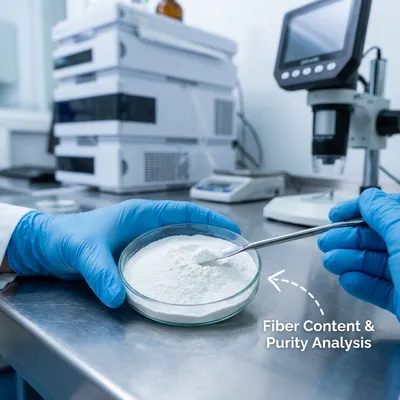
- Incoming raw material control: How is corn starch qualified, and how is batch traceability maintained?
- Automation and process discipline: Automated control from feeding to filling can reduce human variability for resistant dextrin.
- QC lab capability: Ask what is tested in-house vs outsourced (micro, fiber-related parameters, moisture control).
- Change control: What triggers notification (enzyme supplier changes, process adjustments, packaging changes)?
- Retained samples and complaint handling: A good supplier will keep retention samples and provide structured CAPA responses.
- Export track record: Exporting to multiple markets tends to improve document discipline and response times.
If your sourcing basket includes microcrystalline cellulose (MCC) for supplement production, add Pharmacopeial alignment expectations and batch consistency evidence tied to particle size and moisture control.
Product spec alignment: locking it in
Many quality disputes happen because the spec was “generally understood” rather than written tightly. Before you approve a resistant dextrin source for commercial use, make sure your purchase spec includes:
- Fiber content (e.g., resistant dextrin fiber content ≥82% where that is your target)
- Appearance window and sensory expectations
- Protein limit (commonly referenced at ≤6.0%)
- Solubility/clarity test method (define the method and acceptance criteria)
- Packaging requirement and storage guidance
For programs that also require microcrystalline cellulose (MCC), specify grade (food vs pharma requirement) and key physical parameters tied to your process (flow and compressibility-related indicators).
Cost and risk: TCO over unit price
When buyers compare quotes for resistant dextrin and microcrystalline cellulose (MCC), the cheapest offer can be the most expensive outcome if it forces rework, delays launch, or triggers an investigation.
A more useful model is total cost of ownership (TCO):
- Unit price
- Freight and lead time stability
- Internal QC workload (incoming testing frequency)
- Batch rejection risk and rework cost
- Technical support responsiveness during scale-up
“Good practice vs risky shortcut” table
| Good practice (low TCO) | Risky shortcut (hidden cost) |
|---|---|
| Approve resistant dextrin based on multi-lot COA trends | Approve based on one COA and one pilot lot |
| Define solubility/clarity test method in the spec | Assume “high solubility” means the same thing for all grades |
| Audit for change control and retention sample policy | Skip change control questions to save time |
| Align resistant dextrin and MCC documentation packs early | Treat MCC documentation as a later add-on |
| Run a pilot + plant trial before locking annual volume | Lock annual volume based only on lab trials |
A practical shortlisting approach for 2026
To build a shortlist quickly without sacrificing rigor, use a 3-stage screen:
- Desk qualification (documents first): COA/MSDS responsiveness, non-GMO statement, halal/kosher if needed.
- Sample qualification (method-based testing): Resistant dextrin solubility/clarity under your actual beverage conditions.
- Operational qualification (audit + trial run): Traceability, QC lab capability, retention samples, and a plant trial where feasible.
If you are searching for a Recommended Chinese Resistant Dextrin Manufacturer and also managing adjacent excipient needs (including microcrystalline cellulose (MCC) sourcing), focus on suppliers that can demonstrate document discipline, export experience, strong QC infrastructure, and stable production management.
Final Recommendations for Procurement
A sourcing program built around resistant dextrin and microcrystalline cellulose (MCC) works best when procurement and R&D agree on test methods, documentation standards, and change-control expectations before the first commercial PO. If you want to benchmark what a well-documented resistant dextrin supplier China buyers frequently evaluate looks like—especially for fiber-focused beverage and powder pipelines—start with a few manufacturer-run product pages and technical resources, then validate through samples and audits.
A useful place to review resistant dextrin specifications, application-oriented product pages, and related excipient resources is: www.sdshinehealth.com.