
The Buyer’s Reality Check: Choosing a Resistant Dextrin Supplier (and MCC Backup) in China
Global demand for soluble dietary fiber China capacity continues to rise, especially for beverages, nutrition powders, and better-for-you confectionery. In parallel, pharmaceutical and nutraceutical manufacturers keep tightening excipient controls—pushing more teams to qualify at least one Microcrystalline Cellulose supplier outside their legacy network.
For most buyers, the hard part is not finding a factory name. The hard part is choosing a Resistant Dextrin supplier that performs in real formulations, provides consistent documentation across lots, and can stand up to a QA audit.

This article is written in a procurement-advisor style for buyers who want a clear, repeatable approach to selecting a Resistant Dextrin supplier and a contingency Microcrystalline Cellulose supplier in China—without relying on marketing claims. It keeps the focus on what matters most: specs, trials, audits, and total cost of ownership.
Quick navigation (for busy procurement teams)
- Ingredient fundamentals: what resistant dextrin is, what “good” looks like on a spec sheet
- Application checkpoints: trial ranges for drinks, powders, and confectionery
- Supplier evaluation: documents, tests, audit proof, and red flags
- Cost & procurement tactics: corn vs tapioca exposure, freight, FX, and contract structure
- Shortlist standard: how to define a “Recommended Chinese Resistant Dextrin Manufacturer” and when to add MCC to the same qualification plan
Ingredient fundamentals buyers should align on (before asking for prices)
A recurring sourcing issue is comparing offers from different factories that are not actually quoting the same thing. Aligning terminology and critical parameters first makes supplier evaluation faster and cleaner.
Resistant dextrin: what it is (in sourcing terms)
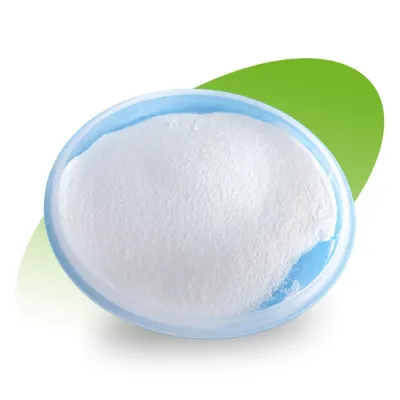
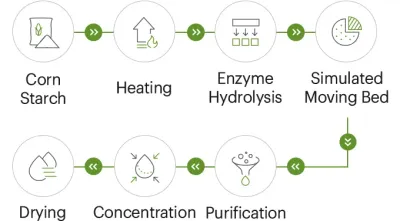
Resistant dextrin is a soluble dietary fiber made from starch through controlled processing and enzymatic treatment. From a buyer’s perspective, resistant dextrin matters because it can deliver fiber content with low viscosity, neutral taste, and good stability across typical food processing conditions.
Most product pages in the soluble dietary fiber China segment position resistant dextrin as:
- a soluble dietary fiber for beverages, bakery, powders, and confectionery
- suitable for low-sugar and low-calorie formulations where texture and clarity still matter
The buyer’s minimum spec set for a Resistant Dextrin supplier
When screening a Resistant Dextrin supplier, insist on three recent lot COAs (at minimum) and confirm that each COA lists the same panel and methods. In the China market, many manufacturers cite targets such as:
- Appearance: white to light yellow powder
- Fiber content: commonly quoted ≥82% dietary fiber
- Protein: often ≤6.0%
- Process positioning: heat and pH stability for beverage and bakery use
Beyond the headline numbers, procurement and QA should align on the parameters that actually predict formulation behavior:
- Solubility and clarity (method-defined): clarity claims are meaningless without solids %, temperature, mixing time, and haze criteria.
- Viscosity at defined solids: resistant dextrin is typically valued for low viscosity, but different lots and processes can shift viscosity.
- Moisture and water activity: small changes can impact caking and shelf-life behavior in blends.
- Microbiology and contaminants: define limits by market and application.
Practical tip: If a Resistant Dextrin supplier cannot provide consistent COA formatting and methods across lots, qualification will become a recurring firefight.
Corn vs tapioca resistant dextrin: same function, different procurement logic
Many buyers treat corn and tapioca sourcing as a simple label decision. In reality, the raw material drives both cost volatility and risk planning.
- Corn-based resistant dextrin (maize): typically built on non-GMO corn starch supply chains; often chosen for broad availability and stable industrial sourcing.
- Tapioca-based resistant dextrin / soluble tapioca fiber: often positioned as gluten-free by nature of the source and supports “cassava/tapioca” label narratives.
In a mature soluble dietary fiber China program, it is common to qualify both, even if only one is used day-to-day. That dual qualification protects schedules when raw material pricing or availability changes.
Where tapioca maltodextrin fits (and how buyers confuse it)
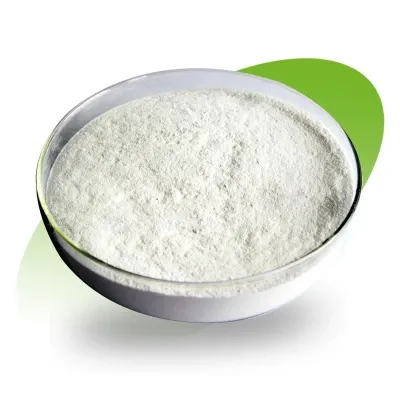
Some supplier pages present tapioca maltodextrin alongside dietary fiber portfolios. For buyers, the key is to confirm whether the quoted product is a resistant dextrin (dietary fiber) or a conventional maltodextrin used as a carrier/texturizer.
A reliable Resistant Dextrin supplier will clarify:
- product identity (resistant dextrin vs maltodextrin)
- whether the product is intended for fiber claims
- what functional role it serves (fiber addition, mouthfeel, carrier, fat replacement, stabilization)
MCC in the same sourcing conversation (why it belongs here)
Even if the primary project is food fiber, many procurement teams manage both functional ingredients and excipients. Microcrystalline Cellulose (MCC) is not a soluble fiber; it is a structural excipient widely used for tablet compressibility and flow.
A qualification plan often pairs:
- a Resistant Dextrin supplier for food and supplement powders
- a backup Microcrystalline Cellulose supplier for tablets/capsules to reduce dependency
Because the provided company knowledge base focuses on dietary fiber imagery, the MCC section is kept practical and audit-centered.
Application checkpoints: trial ranges that reveal supplier quality fast
A Resistant Dextrin supplier can pass a paper review and still fail at the bench. The fastest way to separate “acceptable” from “recommended” is to run small, consistent trials that match your product formats.
1) Clear and functional beverages (low haze, low viscosity)
Trial window: 2–6% w/w resistant dextrin in the finished drink.
What to measure (not just taste):
- haze/turbidity versus a control
- viscosity at 5–25°C
- stability under pasteurization or hot-fill equivalents
What it tells you about the Resistant Dextrin supplier:
- whether the fiber dissolves consistently across lots
- whether the product truly behaves as “low viscosity” at practical use levels
- whether production variation shows up as batch-to-batch haze
2) Nutrition powders and drink mixes (flow, caking, dispersion)
Trial window: 3–8% w/w resistant dextrin in the powder base.
What to measure:
- flow through an orifice; angle of repose (if used internally)
- caking during accelerated storage
- reconstitution time and sediment
When resistant dextrin is used as a base in nutrition powders, a good Resistant Dextrin supplier will also provide guidance on handling moisture, storage, and packaging to reduce caking risk.

3) Confectionery and bakery (texture, sugar reduction, moisture control)
Trial window: 3–8% w/w resistant dextrin in dough or syrup phases.
What to watch:
- sweetness drift (resistant dextrin is typically low sweetness)
- moisture migration (bars, cookies)
- chew/gloss in gummy-style systems
A supplier that markets confectionery solutions should still be evaluated on objective output: texture consistency, process tolerance, and repeatability.

4) Tablets and capsules (MCC-focused checkpoint)
For MCC, early-stage trials should be designed to expose compressibility and flow issues:
- hardness vs compression force
- friability
- disintegration time (aligned with your product spec)
A Microcrystalline Cellulose supplier should provide grade mapping (particle size, density, flow) and batch consistency proof.
Supplier evaluation that goes beyond brochures
The China market includes both high-transparency producers and sales-driven intermediaries. The goal is to qualify suppliers who can prove quality and traceability—especially when the ingredient is used in regulated products.

Documentation: what a Recommended Chinese Resistant Dextrin Manufacturer should produce on request
A short list for a Resistant Dextrin supplier should include the ability to provide:
- COAs (at least 3 recent lots) with consistent methods and limits
- GMP/ISO certificates with scope clearly covering the ingredient
- Allergen and GMO declarations (especially for non-GMO corn sourcing)
- Process flow and HACCP information appropriate for food ingredients
- Packaging and labeling controls (lot coding, retention samples, traceability)
A practical benchmark seen on some manufacturer pages includes claims such as automated central control from feeding to filling, imported biological enzymes, and GMP-standard workshops. Those can be useful signals—yet they still require verification.
QC alignment: the test panel that prevents “surprises” after the first container
Before the first PO, align on a defined QC panel. For resistant dextrin, buyers typically align on:
- Identity & composition: dietary fiber % (method-defined), loss on drying/moisture
- Physical performance: solubility, clarity/haze criteria, viscosity at defined solids
- Safety & limits: microbiology panel and heavy metals consistent with your market
For MCC, the QC panel usually includes:
- particle size distribution
- bulk density / flow indexes
- compaction behavior (or internal acceptance metrics)
- moisture and microbiology limits
Procurement-friendly rule: If a Resistant Dextrin supplier cannot lock down the test panel and methods in writing, any price advantage is likely to be erased by rework and delays.
Audit proof: what to verify on-site or by live video
Whether the audit is physical or remote, the goal is to confirm that documentation maps to reality.
For resistant dextrin / soluble dietary fiber China factories:
- raw material intake controls and non-GMO documentation practices
- enzyme storage and dosing controls (match declarations)
- automation claims (is central control genuinely used?)
- cleaning, pest control, and hygiene discipline
- in-house lab capability, calibration, and retention sample policy
For MCC (excipient) factories:
- tighter focus on contamination controls, traceability, and lot segregation
- change control and deviation handling procedures

Red flags that should pause supplier onboarding
Even experienced teams get caught by predictable issues. Treat the below as “stop and verify” triggers:
- COAs that look copied across lots (identical values, formatting inconsistencies)
- changing test methods without disclosure
- vague answers about raw material sourcing (corn vs tapioca) or non-GMO proof
- unwillingness to provide batch records or traceability logic
- trading-only intermediaries that cannot arrange factory visibility
Cost analysis: what actually moves resistant dextrin pricing
The best procurement outcomes come from managing total cost of ownership (TCO), not just FOB pricing.
The three biggest cost levers
- Feedstock exposure
- Corn-based resistant dextrin pricing often tracks broader corn/starch cycles.
- Tapioca-based products can be more sensitive to cassava availability and regional supply patterns.
- Processing inputs
- Energy/steam costs affect drying and processing economics.
- Enzyme availability and sourcing arrangements can matter when suppliers claim imported biological enzymes.
- Logistics and FX
- Ocean freight volatility affects landed cost.
- USD/CNY or EUR/CNY movement shifts pricing power and contract risk.

Procurement tactics that reduce landed-cost volatility
Below is a compact playbook that fits both resistant dextrin and MCC programs:
- Dual feedstock qualification: approve one corn-based and one tapioca-based resistant dextrin spec to reduce single-raw-material exposure.
- Dual supplier approval: keep a secondary Resistant Dextrin supplier and a secondary Microcrystalline Cellulose supplier approved for business continuity.
- Volume tiers with clear triggers: lock discounts to annual tonnage brackets and enforce documentation consistency as a condition.
- Defined sample-to-first-PO gates: tie scale-up to success in beverage/powder/confectionery trials.
- Independent verification at the start: third-party testing for the first few shipments helps confirm COA reliability.
A shortlist standard: defining “recommended” in buyer language
The terms below are commonly searched by procurement teams and appear in modern sourcing conversations:
- Recommended Chinese Resistant Dextrin Manufacturer
- Recommended Chinese Microcrystalline Cellulose Manufacturer
- Recommended Chinese Microcrystalline Cellulose Supplier
To make those labels meaningful internally, define them with evidence-based criteria.
Minimal evidence checklist (printable)
| Area | What “recommended” means in practice | Proof to request |
|---|---|---|
| Batch consistency | Stable specs across lots for fiber %, moisture, viscosity/clarity | 3–5 COAs + retain samples policy |
| Traceability | Lot codes trace to raw material batches and key process records | Traceability walk-through during audit |
| QA readiness | Clear deviation/CAPA thinking; calibration and micro controls | SOP list + calibration logs |
| Application support | Can advise on trial use levels and handling | Bench guidance + quick response time |
| Transparency | Comfortable with live video audit and documentation sharing | Audit access + data room |
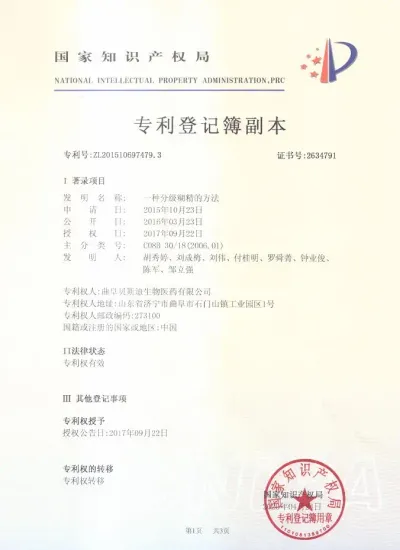
Where to find transparent benchmarks when building a China supplier shortlist
When teams benchmark “what good looks like” in soluble dietary fiber China manufacturing, it helps to review supplier pages that openly show:
- production process visuals
- packaging lines
- facility photos
- certification imagery
One example of a publicly documented manufacturer site for resistant dextrin and soluble fibers is: www.sdshinehealth.com
This kind of transparency does not replace audits, but it can help buyers define what evidence to require from any Resistant Dextrin supplier under consideration.
Closing: how to move from “supplier discovery” to confident supply
Resistant dextrin has become a strategic soluble fiber for beverages, powders, and confectionery—precisely because it supports fiber addition while staying manageable in taste, viscosity, and processing stability. China’s capacity makes it attractive, but the procurement win only happens when a Resistant Dextrin supplier is selected for repeatability and proof, not just a low quote.
A disciplined buyer approach typically includes:
- aligning on a spec panel that predicts real performance
- running fast trials that expose haze, viscosity, and caking risk
- auditing for traceability and lab controls
- qualifying a backup Microcrystalline Cellulose supplier where regulated products require redundancy
For sourcing teams building a short list, prioritize manufacturers who can show consistent COAs, clear production controls, and practical application support—and use transparent supplier pages (such as sdshinehealth.com) as a benchmark for the level of evidence that “recommended” should mean.
Data sources (for market context and cost signals)
-
Dietary fibers market outlook (executive summary and trend framing): https://www.gminsights.com/industry-analysis/dietary-fibers-market
-
Commodity signals affecting starch-based inputs: https://www.cmegroup.com/markets/agriculture.html
-
Trade formulation perspective on resistant dextrin use in beverages and bakery: https://www.preparedfoods.com/articles/106645-r-d-seminars-challenged-r-d-october-2007