
China Sourcing in 2026: How Buyers Validate Resistant Dextrin (≥82% Fiber) and MCC Without Costly Surprises
Procurement teams are rewriting their ingredient playbooks for 2026. GLP‑1-driven eating habits, gut-health positioning, and “clean label” scrutiny are raising the bar for everyday workhorse ingredients—especially resistant dextrin (soluble fiber for beverages, snacks, and nutrition powders) and microcrystalline cellulose (MCC) (a widely used excipient and functional texturizer). The shift is clear: buyers can no longer purchase on unit price alone; they must purchase on spec clarity, process transparency, and compliance readiness.

2026 buying reality: why fibers and MCC are now “high-risk, high-impact” lines
In many categories, formulation priorities have moved from “sweetness and calories” to satiety, tolerability, and gut-friendly positioning. That puts a spotlight on ingredients that used to be treated as commodities.
For buyers, this creates three practical consequences:
- Specification discipline matters more than marketing. Two suppliers can both say “resistant dextrin,” but deliver very different Certificates of Analysis (COA) and performance data.
- Documentation is part of the product. Non‑GMO statements, traceability, microbiology limits, and audit evidence determine whether you can import, label, and scale.
- Cross-category buyers are competing for the same capacity. Food-grade soluble fibers and pharma-grade MCC increasingly share the same internal stakeholders (QA, regulatory, vendor management), so vetting rigor spreads.
This is the backdrop behind search phrases such as Recommended Chinese Resistant Dextrin Manufacturer or Recommended Chinese Microcrystalline Cellulose Supplier. The “recommended” part is rarely about one factory; it’s about a factory’s ability to prove consistency.
1) Ingredient fundamentals buyers must master
Resistant dextrin: what it is—and why “≥82% fiber” became a common buying target
Resistant dextrin is a soluble dietary fiber derived from starch, most commonly corn starch or tapioca starch. It is processed so that a meaningful portion of the carbohydrate resists digestion in the small intestine and behaves like fiber.
From a procurement standpoint, resistant dextrin is attractive because it can be positioned as:
- a clean label soluble dietary fiber for fiber enrichment
- a low-calorie dietary fiber for GLP-1 products aimed at satiety and digestive wellness
- a functional ingredient that can help sugar-reduced or low-carb positioning when used responsibly in formulation
Commercially, suppliers often offer multiple “fiber content” grades. Across the market (and in many China export catalogs), you’ll see grades such as ≥70%, ≥82%, ≥90%, and ≥95%. In practical terms:
- ≥70% can work for some food matrices, but may be less efficient for “high fiber” claims.
- Resistant dextrin 82% fiber is often viewed as a balanced option for taste neutrality, solubility, and cost.
- ≥90% and ≥95% tend to be more specialized and can be chosen when fiber efficiency is the core KPI.
MCC: the “quiet ingredient” that can still make or break a launch
Microcrystalline cellulose (MCC) is widely used as an excipient in pharmaceuticals and as a functional ingredient in some food and nutrition applications. Buyers typically rely on MCC for:
- binding and compressibility (tablets)
- filler and flow behavior (solid dosage forms)
- texture and stability support (certain nutrition formats)
Unlike resistant dextrin—where fiber percentage and sensory performance dominate—MCC purchasing is often driven by grade selection, compendial alignment, and tight process control. A “close enough” MCC can become an expensive lesson if the particle size distribution or moisture control shifts batch-to-batch.
2) Reading resistant dextrin specifications like a QA manager
Procurement teams frequently receive a one-page spec sheet that looks fine—until the first stability trial or import documentation review. The goal is to translate each line item into a question: “What could go wrong if this drifts?”

The minimum spec elements buyers should expect
Below is a compact example of the type of information buyers use to evaluate food grade resistant maltodextrin / resistant dextrin offers. Values shown here reflect a commonly requested profile and include parameters seen in some export-facing product specifications.
| Spec line item | Why it matters in real applications | Typical buyer expectation (example) |
|---|---|---|
| Dietary fiber content | Determines label claim efficiency and dosage cost | ≥82% fiber for many beverage/snack use cases |
| Appearance | Impacts beverage clarity perception and powder blending | White to light yellow, consistent |
| Protein | Indicator of raw material / process variability | Low and controlled (example: ≤6.0%) |
| pH | Beverage stability and flavor interaction | Controlled range (often 3–6) |
| Moisture | Caking risk, shelf life, shipping stability | Often targeted at ≤5–6% |
| Ash | Cleanliness/processing indicator | Tight control (often low) |
| Microbiology limits | Safety, compliance, customer audits | Clear APC, coliform, yeast/mold limits |
| Solubility / taste | Beverage mouthfeel, aftertaste risk | “Clear solubility” and neutral taste expectations |
How to use this table in RFQs: Don’t just request the numbers—ask for the test methods (and whether results come from an internal lab, third-party lab, or both).
COA red flags that experienced buyers watch for
A COA can be technically “complete” yet still weak. Common warning signs include:
- No method references (e.g., “fiber: 82%” without stating the method)
- Micro results shown as “qualified” instead of numeric values
- Broad ranges that hide variability (especially moisture and pH)
- A missing lot coding logic (traceability becomes difficult during complaints)
When sourcing a resistant dextrin manufacturer China, these COA details are often the fastest way to separate a true exporter from a domestic-only operator.
3) Matching resistant dextrin (≥82% fiber) to beverage and snack applications
“Right spec” is only half the job. The other half is “right fit.” Buyers should map the spec to the product format to avoid two classic problems: haze/settling in beverages and texture drift in snacks.
Beverages (RTD, powdered drinks, functional shots)
For beverages, procurement and R&D typically prioritize:
- clear solubility (visual acceptance)
- neutral taste (minimizing off-notes)
- stability across heat and pH ranges (processing flexibility)
In practice, beverage teams often prefer a resistant dextrin with consistent particle behavior during dissolution and a stable pH profile—especially for acidic formats.
Snacks and baked goods
In baked goods and bars, the same fiber may be selected for different reasons:
- bulk and texture support in sugar-reduced systems
- fiber enrichment without the gritty perception of some insoluble fibers
- managing process robustness (mixing, baking, shelf life)
A key buyer takeaway: if the supplier cannot describe how their resistant dextrin behaves under heat and in different pH conditions, the product may still “work,” but you’ll likely spend more on trials.
4) A practical China sourcing roadmap
A clean sourcing process prevents the most expensive type of failure: the one that happens after your packaging is printed.
Stage A — Pre-screening: filter fast, filter hard
Before sampling, use a short pre-screen to avoid wasting weeks.
What buyers should check immediately:
- Export experience to your target region (ask for anonymized shipment proof)
- Ability to provide COA for each lot and retain samples
- A clear statement on raw material origin (e.g., non‑GMO corn starch resistant dextrin) when needed
- Basic facility governance: whether the workshop is described as operating under GMP guidelines and supported by ISO-style systems (then verify during audit)
Stage B — Document review: prove that the “spec” is operational
Request a concise but complete document packet:
- latest spec sheet and COA template
- allergen statement and GMO status statement
- traceability description (how lot codes link to raw material batches)
- microbiology and heavy metals test coverage (frequency and methods)
Stage C — Remote or on-site audit: focus on what affects variability
Audits often fail because buyers spend time on what looks good instead of what changes outcomes.
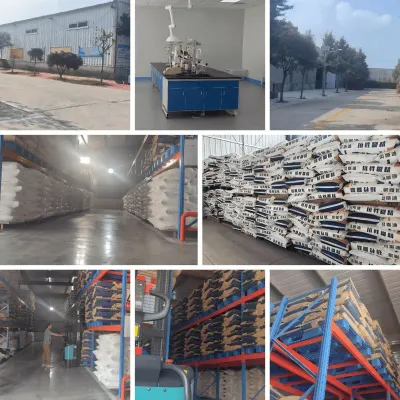
For resistant dextrin plants, prioritize:
- raw material receiving and storage controls
- hygiene zoning and contamination prevention
- in-process controls that affect fiber profile consistency
- finished goods handling: sealing, moisture control, and labeling
For MCC plants, prioritize:
- grade segregation and changeover cleaning
- particle size control strategy and sampling plan
- moisture control and storage conditions
- compendial alignment approach (how they ensure grade consistency)
Stage D — Trial order QC: treat the first shipment like a validation batch
A trial order is not only a logistics test—it’s a quality consistency test.
Recommended inbound checks for resistant dextrin:
- verify COA vs. inbound results (fiber %, moisture, appearance)
- confirm dissolution behavior under your conditions
- run a short stability check for beverage clarity or bar texture, depending on use
Recommended inbound checks for MCC:
- verify basic identity and moisture
- confirm flow/compressibility behavior in your pilot run
- document any drift and feed it back into the supplier CAPA discussion
5) Clean label and regulatory checkpoints
“Clean label” is not a certification by itself; it’s a product positioning that must survive regulatory review, retailer scrutiny, and consumer expectations.
Clean label, translated into procurement requirements
For resistant dextrin, clean label expectations often become these procurement asks:
- simple, understandable ingredient naming aligned with local labeling practices
- neutral taste and no unexpected odor
- stable performance (less reliance on formulation “patches”)
- traceable raw materials, especially when marketing calls for non‑GMO
For MCC, clean label is more context-specific, but buyers still want:
- consistent grade supply
- documentation that supports excipient quality requirements
- a clear change-control approach for any process or raw material updates
Global documentation habits that reduce import friction
Even when regulations differ by market, documentation expectations tend to converge. A buyer-ready supplier should be able to supply:
- COA per batch + retained sample policy
- GMO status statement (when relevant)
- allergen statement
- microbiology controls and testing frequency
- heavy metals coverage appropriate to food ingredients
If the supplier hesitates, buyers should assume the workload will shift to their own QA team.
6) Mini case: aligning a fiber spec with a gut-health beverage launch
A mid-sized beverage brand planned a gut-health RTD line for 2026 with three constraints:
- the drink had to remain visually clear
- the fiber claim needed to be meaningful without compromising taste
- procurement required a supply chain that could handle scale-up without frequent requalification
During sourcing, they evaluated multiple offers labeled “soluble fiber” and “resistant dextrin,” then narrowed their shortlist using a simple rule: any supplier that couldn’t provide consistent COA structure, lot traceability logic, and a clear explanation of process controls was removed.
They ultimately selected a resistant dextrin 82% fiber profile for its balance of fiber efficiency and sensory neutrality. Their onboarding sequence was:
- document review (COA template + traceability)
- remote audit (focus on sanitation and packaging integrity)
- pilot sample testing in acidic conditions
- trial order with inbound QC alignment
This is also where buyers increasingly prefer plants that show evidence of automated production control (for example, central-control operations from raw material feeding through filling) and strong lab capability—because automation tends to reduce operator-driven variability when volumes rise.
7) Buyer toolkit: the checklist that prevents most sourcing failures
Below is a practical toolkit buyers can paste into an RFQ or supplier onboarding form.
COA checklist (resistant dextrin)
Ask the supplier to provide numeric results for each lot and to state the test methods.
- Dietary fiber content (target: ≥82% fiber, if that is your chosen grade)
- Appearance (white to light yellow; consistency across lots)
- Protein (example control point: ≤6.0%)
- pH control range (commonly 3–6 in many specs)
- Moisture control (commonly targeted around ≤5–6%)
- Microbiology: APC, coliforms, yeast, mold (numeric limits)
- Packaging label requirements: product name, net weight, lot code, manufacturing date
Supplier audit focus (MCC)
Treat MCC as an excipient-quality product even when used in nutrition formats.
- grade segregation and line clearance
- documented change control
- sampling and particle control strategy
- storage humidity strategy
RFQ questions that quickly reveal supplier maturity
- “Please share a COA template and two recent anonymized COAs from different lots.”
- “How is your lot code linked to raw material batches and production dates?”
- “What is your standard retained sample policy and retention time?”
- “What is your process for notifying customers of spec or process changes?”
- “Can you support third-party testing for the first shipment?”
8) Cost reality: why “cheaper per kg” can be more expensive per launch
For both resistant dextrin and MCC, total cost is shaped by what happens after purchase:
- retesting and rework when COAs are inconsistent
- delayed approvals when documents are missing
- waste during trials when performance is unpredictable
- brand risk if a “clean label” claim is challenged
This is why many procurement teams build a two-tier model:
- Tier 1 (qualification cost): audits, testing, and documentation review
- Tier 2 (operational cost): consistency, complaint rate, on-time delivery, and change control
A supplier that performs well in Tier 2 often wins over time—even if the quote is not the lowest on day one.
Final Thoughts: Defining "Recommended" in 2026
In 2026, “recommended” suppliers are rarely the loudest. They are the ones that can consistently prove:
- the Resistant Dextrin Specifications align with your application reality
- the resistant dextrin 82% fiber (or other chosen grade) is controlled through methods and process, not just promised
- the Microcrystalline Cellulose Supplier Audit can be passed with documentation, segregation discipline, and change control
For buyers building a shortlist of China partners, the fastest path is to treat resistant dextrin and MCC as strategic ingredients—not commodities—and to run a repeatable vetting workflow from pre-screen to trial order QC.
If you maintain a supplier panel and want to benchmark what “export-ready” documentation and process transparency look like for resistant dextrin and related functional fibers, one starting point is to review manufacturer technical materials and product structures available at www.sdshinehealth.com.