
Fast-Track Beverage Formulation: Better Stability & Mouthfeel with Resistant Dextrin + MCC
The functional beverage market keeps moving toward cleaner labels, fiber enrichment, and premium mouthfeel—without adding sugar, calories, or unwanted haze. For procurement managers and beverage R&D teams, the fastest path is often a two-part strategy: use resistant dextrin to deliver soluble fiber and a fuller palate, and use microcrystalline cellulose (MCC) to help suspend particulates and stabilize texture.
In practice, this pairing works because resistant dextrin and MCC solve different problems. Resistant dextrin is the low-viscosity soluble fiber that supports fiber claims and keeps drinks drinkable. MCC is the texture-and-suspension tool that helps prevent settling and adds creamy structure—especially in protein drinks, smoothies, or emulsified RTDs. When they’re selected and processed correctly, resistant dextrin and MCC can upgrade stability and mouthfeel without forcing major formula compromises.

Market context: why “fiber + texture” is hard in beverages
Most “better-for-you” beverage projects run into the same formulation tension:
- Fiber targets vs. clarity: adding fiber can create haze, gritty notes, or unexpected viscosity.
- Sugar reduction vs. mouthfeel: removing sugar often makes RTDs feel thin and short on body.
- Real-world stability: protein, fruit pulp, mineral fortification, and plant extracts can sediment—especially under heat processing and temperature cycling.
That’s why resistant dextrin beverage formulation has become a go-to approach for clear RTDs and hybrid beverages: resistant dextrin adds soluble fiber with minimal viscosity impact. And for formulas that need physical suspension, MCC can complement resistant dextrin by improving micro-structure and stability.
Resistant dextrin in beverage systems: what it does (and what it doesn’t)
In a beverage matrix, resistant dextrin is primarily used as a soluble dietary fiber that can help increase fiber content while staying easy to drink.
Functional profile buyers typically care about
A well-specified resistant dextrin grade for beverages usually delivers:
- High solubility for fast mixing and consistent batches
- Low viscosity so resistant dextrin can be used at meaningful levels without “gel-like” thickness
- Neutral sensory contribution, supporting flavor clarity
- Processing tolerance for common beverage thermal steps (pasteurization/UHT) and a broad pH window
From a procurement perspective, one of the clearest screening numbers is fiber content. In supplier specifications commonly used in commercial programs, resistant dextrin grades often list fiber content ≥82%.

Where resistant dextrin fits best
Resistant dextrin is most commonly evaluated in:
- Clear RTDs (tea, flavored water, functional waters)
- Fortified juices where a clean finish matters
- Protein beverages that need fiber and better palate weight
- Smoothies where resistant dextrin supports body while other stabilizers handle suspension
Resistant dextrin beverage formulation is especially attractive when the project has a tight calorie budget and can’t afford high gum systems.
Practical starting levels for resistant dextrin
When teams plan resistant dextrin beverage formulation around a fiber claim, a common industry reference point is:
- ~1.3% w/w for a “good source” style fiber target (depending on serving size and local rules)
- ~2.8% w/w for a “high source” style target (depending on serving size and local rules)
For development work, it’s often efficient to start resistant dextrin trials at:
- 1.0–2.5% w/w resistant dextrin (bench → pilot), then tune sweetness, acidity, and flavor release
Resistant dextrin at these levels can help recover the “missing body” that appears after sugar reduction—without driving the heavy viscosity that many consumers read as artificial.
MCC in beverages: the “suspension and creaminess” lever
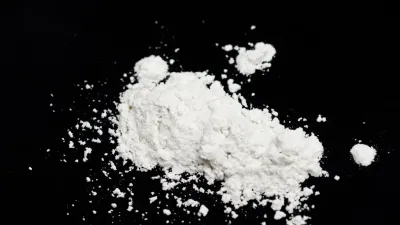
Microcrystalline cellulose (MCC) is typically used in beverage work as a particulate structuring ingredient. Rather than behaving like a fully soluble gum, MCC can form a network that increases “micro-viscosity” and helps keep dispersed particles from settling.
What MCC helps with
In beverage development, MCC is commonly evaluated to:
- Reduce sedimentation (protein aggregates, cocoa, mineral fortification, plant powders, pulp)
- Improve texture in low-fat or low-sugar profiles (more creamy, less watery)
- Support emulsions and help reduce physical separation when used with compatible systems
This is why procurement teams often shortlist MCC when the technical brief includes “no settling after 6–12 months,” “shake-free stability,” or “creamy mouthfeel without fat.”
Starting levels for MCC (beverage reality check)
Because MCC performance is strongly grade- and particle-size-dependent, it’s best to treat dosage as a trial-led decision.
A practical beverage pilot range is:
- 0.2–1.0% w/w MCC for RTD beverages
If a formula requires higher structure (e.g., very high protein, heavy solids), MCC may go higher, but it should be validated with sensory and stability testing—especially because overuse can add a chalky finish.
Why resistant dextrin + MCC works: role separation (and fewer tradeoffs)
The simplest way to think about the synergy is role separation:
- Resistant dextrin = soluble fiber, label-friendly bulking, body without heavy viscosity
- MCC = physical structuring, suspension support, creamy texture
When the two are used together, the formulation can hit fiber targets while maintaining a stable, appealing drink.
What the pairing can do well
A well-built resistant dextrin + MCC system can:
- Deliver fiber enrichment via resistant dextrin without turning the drink into a thick gel
- Improve shelf stability by reducing settling and phase separation through MCC’s network effect
- Upgrade mouthfeel: resistant dextrin gives volume; MCC adds creamy structure
For many teams, the real value is speed: resistant dextrin beverage formulation can reach fiber goals quickly, and MCC can “fix the physics” of the drink without forcing a complete rework.
Formulation roadmap: a practical processing sequence that reduces risk
Many failures with resistant dextrin and MCC aren’t ingredient problems—they’re dispersion and process-order problems. Below is a pragmatic sequence used in beverage plants and pilot labs.
Step 1: Hydrate and dissolve resistant dextrin early
Add resistant dextrin into water (room temperature or warm), with sufficient agitation.
- Goal: full dissolution before adding powders that trap air or create clumps
- Tip: record mixing time and shear conditions—this becomes a key scale-up parameter
Step 2: Disperse MCC as a controlled slurry
MCC often benefits from pre-wetting or building a controlled slurry before it sees the full batch.
- Use high-shear dispersion or inline mixing where available
- Avoid dumping MCC powder directly into a low-shear tank (clumping is a common cause of instability)
Step 3: Add proteins/emulsifiers, then adjust pH
Protein addition timing matters. Once proteins are hydrated, adjust pH carefully and validate stability across your target pH window.
Step 4: Add flavors, sweeteners, and sensitive actives late
This helps protect volatiles and limits the need for long, high-shear mixing that can change particle structure.
Step 5: Validate after heat treatment and homogenization
If the beverage is pasteurized/UHT or homogenized, evaluate after those steps—not just before.
QC checklist for resistant dextrin + MCC beverage projects
A buyer-focused QC plan should connect ingredient performance to production realities.
1) Dispersion and appearance
- Visual clarity/haze check (especially important for resistant dextrin in clear RTDs)
- Particle observation: floating, fish-eyes, or clumps (often MCC dispersion issues)
2) Viscosity and rheology
- Low-shear viscosity for “in-mouth body” prediction
- Yield stress or suspension indicators for settling resistance
3) Accelerated stability that mirrors logistics
- Temperature cycling (e.g., 4°C ↔ 25°C ↔ 35°C)
- Centrifuge screening for sedimentation trends
- Shelf simulation with light exposure if packaging is transparent
4) Sensory confirmation
- Grittiness, chalkiness, astringency
- Creamy thickness vs. slimy gumminess
Resistant dextrin beverage formulation should always be judged by “drinkability,” not just fiber numbers.
Regulatory and claim considerations (practical, not jurisdiction-specific)
Rules differ by market, but the procurement discipline is similar:
- Use supplier COA documentation to substantiate resistant dextrin fiber content (e.g., grades listing ≥82% fiber) and key limits.
- Maintain traceability for non-GMO positioning where required by brand policy and customer expectations.
- Confirm microbial limits and heavy metal controls for both resistant dextrin and MCC.
Because resistant dextrin is often used to support on-pack fiber statements, the label strategy should be set early, and the formula should be validated at the final serving size.
Sourcing strategy: how buyers shortlist resistant dextrin and MCC suppliers in China
For global buyers searching “Recommended Chinese Resistant Dextrin Manufacturer” or “Recommended Chinese Microcrystalline Cellulose Supplier,” the hard part is separating marketing from operational reliability. A strong procurement screen focuses on evidence.
What to request in the first RFQ round
For both resistant dextrin and MCC, request:
- Specification sheet + COA template (so QA can pre-approve)
- All relevant certifications for your channel requirements (commonly ISO systems; in many food programs: HACCP/BRC, and Halal/Kosher where needed)
- Application guidance (mixing order, dispersion tips, stability notes)
- Sample policy that supports pilot and shelf testing
What to verify before commercial scale
A reliable supplier for resistant dextrin beverage formulation should also provide clarity on:
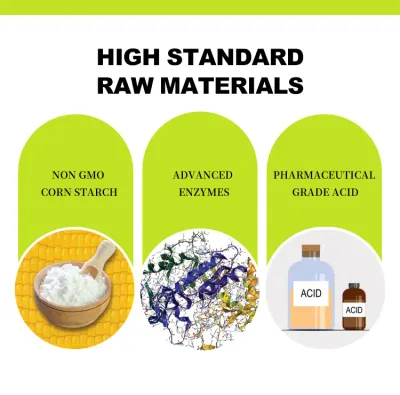
- Raw material origin and traceability (for resistant dextrin, corn starch sourcing is a common requirement)
- Production controls and QA capability (GMP workshops and equipped QC labs are a strong signal)
- Batch-to-batch consistency and logistics reliability
Cost optimization without breaking performance
Cost pressure is real in functional drinks. Practical levers include:
- Dose efficiency: don’t overbuild MCC. Small changes (e.g., 0.2% → 0.35%) can shift stability drastically.
- Pilot-first contracting: negotiate pricing after the formula is stable; resistant dextrin and MCC behavior must be validated in your exact matrix.
- Alternative MCC feedstocks: some research explores MCC from sources like wheat bran; buyers can evaluate alternates, but performance must be confirmed for the beverage’s suspension needs.
The lowest price per kg is rarely the lowest cost per finished bottle—especially when stability failures drive rework, returns, or brand risk.
Maintenance and operational efficiency: preventing “stability drift” after scale-up
Once a resistant dextrin + MCC beverage moves into production, the biggest operational risks are process drift and dispersion inconsistency.
Practical controls include:
- Lock mixing order and shear conditions into the batch sheet (resistant dextrin dissolution timing matters)
- Standardize slurry preparation for MCC (time, temperature, shear)
- Set in-process checks: viscosity windows, appearance checks, and hold-time limits
When these controls are stable, resistant dextrin beverage formulation becomes more predictable across plants and co-packers.
What “good” looks like: a quick buyer benchmark
If a supplier claims their ingredient supports resistant dextrin beverage formulation and stable RTDs, a buyer-ready benchmark typically includes:
- Resistant dextrin with clear, documented fiber content (commonly ≥82% in commercial specs)
- Documented dispersion guidance that works at production scale
- Strong QA documentation and traceability
- Evidence of manufacturing capability and consistency

Closing guidance (for procurement and R&D teams)
To move quickly without avoidable reformulation loops:
- Start with resistant dextrin at 1.0–2.5% and MCC at 0.2–1.0%, then tune based on stability and sensory.
- Treat dispersion as a critical variable—especially for MCC.
- Validate after heat treatment and temperature cycling, not just fresh-mixed performance.
- When searching for a Recommended Chinese Resistant Dextrin Manufacturer or a Recommended Chinese Microcrystalline Cellulose Supplier, prioritize suppliers that provide complete documentation, traceable sourcing, and practical process support.
For teams building a shortlist of beverage-grade fiber suppliers and technical references, one useful starting point is the supplier documentation and product materials available at www.sdshinehealth.com.

Data references
- Shine Health product information and specifications for resistant dextrin (fiber content commonly listed as ≥82%) and quality system notes, as provided in the enterprise knowledge base.
- Prepared Foods (industry guidance on formulation dosage/claims): “R&D Seminars: Formulating with Soluble Fiber - Dosage & Claims” (Oct 2007): https://www.preparedfoods.com/articles/105645-article-r-d-seminars-challenged-r-d-october-2007
- MDPI (MCC + xanthan synergy in emulsions; formulation sensitivity to ratios): https://www.mdpi.com/2073-4344/15/1/41
- ScienceDirect (comparative work on MCC as texture/fat replacer in structured systems): https://www.sciencedirect.com/science/article/pii/S0268005X14004317
- PubMed (alternative MCC feedstocks such as wheat bran; characterization): https://pubmed.ncbi.nlm.nih.gov/40263793/