
How Buyers Separate Real Manufacturers From Traders in China’s Fiber Market (2026–2028)
2026–2028 is shaping up to be a high-opportunity period for functional fibers and excipients—but a high-penalty period for buyers who treat them like interchangeable powders. In China, it is common to see a 20–30% spread between quotes for the same “spec,” especially when comparing a true resistant dextrin supplier or soluble corn fiber supplier with a trader who is re-labeling bulk material.
What sits inside that price gap is rarely “raw material cost.” More often it is manufacturing depth, batch traceability, test discipline, documentation maturity, and regulatory readiness—the exact variables that determine whether a shipment clears incoming QC, whether a label claim survives scrutiny, and whether a product launch stays on schedule.

Why this market is not a commodity market anymore
Several forces are converging to reshape the landscape:
- Formulators are tightening performance windows. A beverage team wants soluble fiber that stays clear; a bar team wants low sweetness and low hygroscopicity; a tablet team wants repeatable flow and compression.
- Compliance teams want proof, not promises. If batch-level documentation is weak, a “good price” becomes a liability.
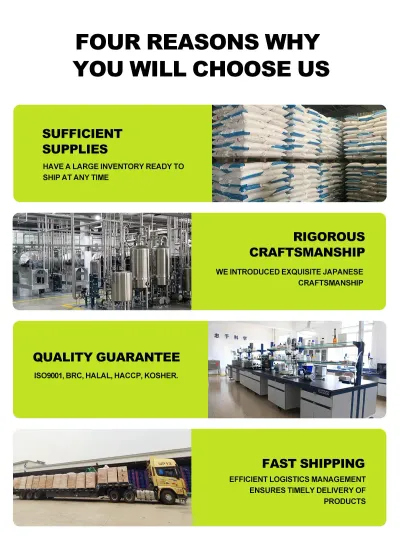
- China’s manufacturing clusters have matured unevenly. In major hubs (especially Shandong), many plants now operate with GMP-style workshops, imported enzymes, automated lines, and in-house QC. However, the market still contains plenty of traders posing as manufacturers.
This is why buyers increasingly search terms like Recommended Chinese Resistant Dextrin Manufacturer or Recommended Chinese Microcrystalline Cellulose Manufacturer—not as marketing language, but as shorthand for “documentation and process maturity I can trust.” The job is to turn that search intent into a repeatable evaluation method.
Cluster reality check: what “Shandong” signals—and what it doesn’t
China is a cluster market for functional fibers. Clusters compress pricing, shorten logistics, and concentrate experience—but they also create ambiguity. In the same region you can find:
- a highly capable China dietary fiber manufacturer with full traceability and validated test methods,
- and a trading company quoting the same product name with limited or recycled documentation.
What a cluster can signal (when verified):
- Stable sourcing of corn starch and established upstream relationships.
- Experienced operators and maintenance know-how.
- Standardized packaging and export routines.
- Familiarity with batch documentation and certificate workflows.
What a cluster does not guarantee:
- That the counterparty is a true resistant dextrin supplier rather than a reseller.
- That COAs are batch-specific (not template PDFs).
- That methods and specs match your target market.
A good working assumption for 2026–2028: treat cluster location as a lead—not as a qualification. Qualification comes strictly from documents, tests, and traceability.
Ingredient fundamentals buyers actually use
Resistant dextrin, soluble corn fiber, digestion-resistant maltodextrin, and microcrystalline cellulose (MCC) are often grouped together in procurement plans because they sit at the intersection of nutrition claims, texture, and manufacturing practicality.
Resistant dextrin and soluble corn fiber: similar families, different buying risks
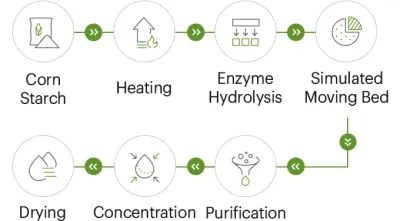
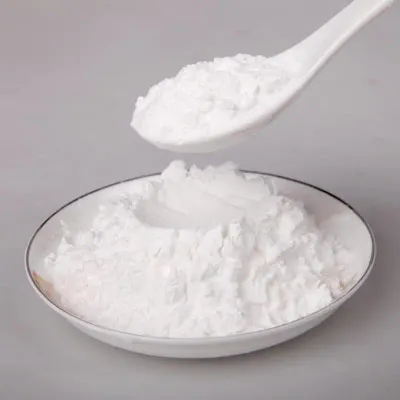
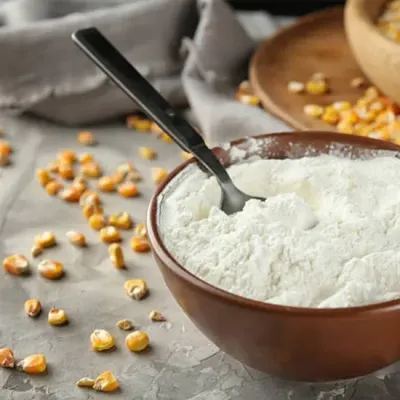
Both ingredients are starch-derived soluble dietary fibers commonly produced in China from NON-GMO corn starch through controlled processing (often including enzymatic steps), then dried into a free-flowing powder.
For sourcing teams, the key question is not “are they soluble fibers?”—it is:
- Which test method supports the fiber claim?
- How stable is the material across pH/heat/time in your application?
- How consistent is the particle size and moisture from lot to lot?
A capable soluble corn fiber supplier will typically be able to supply a technical data sheet aligned to common food expectations, a batch COA with method references where possible, and samples that replicate production-scale performance.
Digestion-resistant maltodextrin: where naming confusion becomes a sourcing trap
In RFQs, “resistant dextrin,” “resistant maltodextrin,” and “digestion-resistant maltodextrin” are sometimes used interchangeably. That is not always wrong—but it can be risky.
If your internal spec or label claim depends on a particular fiber definition, you need your resistant dextrin supplier to confirm what analytical method supports the fiber percentage, what typical ranges apply to moisture, ash, pH, and water activity, and how the supplier manages consistency across lots.
MCC (microcrystalline cellulose): a different discipline entirely
MCC is a purified cellulose used widely as a tablet excipient and as a texturizer in certain applications. MCC sourcing is less about taste/solubility and more about identity and purity fields, particle size distribution, bulk density/flow, and microbiological and heavy-metal limits.
A credible microcrystalline cellulose manufacturer (and a credible Recommended Chinese Microcrystalline Cellulose Supplier on a buyer shortlist) will speak the language of spec mapping: aligning COA fields with what your market and your internal quality system expect.
How to read a COA like a buyer who has been burned before
Many procurement teams say they “check COAs.” The difference between a smooth program and a painful one is how they check them.
The non-negotiable COA rule for 2026–2028
If a counterparty cannot provide a batch-level Certificate of Analysis (COA) tied to batch/lot number, production date, and test results per batch, then treat the offer as unqualified—regardless of price. This applies equally to a resistant dextrin supplier, a soluble corn fiber supplier, and a microcrystalline cellulose manufacturer.
COA fields that matter most for soluble fibers
Below is a practical COA field set that buyers commonly use for resistant dextrin / soluble corn fiber categories (your internal spec may be tighter):
| Parameter | Why it matters in real purchasing | Typical expectation (illustrative) |
|---|---|---|
| Dietary fiber (%) | Label claim support; formulation cost | Often ≥82% for standard grades |
| Moisture (%) | Shelf stability; flow; caking risk | Often ≤5.0% |
| Ash (%) | Purity indicator | Often low (e.g., ≤0.1–0.3) |
| pH | Beverage stability and taste impacts | Commonly 3–6 |
| Water activity (aw) | Micro stability and clumping | Often ≤0.2 |
| Micro panel | Import clearance and brand risk | APC, coliforms, yeast/mold |
| Heavy metals | Regulatory compliance and risk control | Must meet target market limits |
A capable China dietary fiber manufacturer will not only list results, but will keep them consistent across shipments—and can explain deviations when they occur.
COA red flags that usually signal “trader risk”
If you are comparing offers from more than one resistant dextrin supplier or soluble corn fiber supplier, watch for patterns:
- COA formatting identical across different “manufacturers.” Often indicates reused templates.
- No test dates, no lot numbers, or “N/A” for key fields.
- Overly perfect results across all parameters for multiple lots (real manufacturing has variance).
- No method references at all when fiber % is a core commercial claim.
The 7-step evaluation framework that works across fibers and MCC
This checklist is designed to help buyers distinguish a true China dietary fiber manufacturer from a trader, and to qualify a microcrystalline cellulose manufacturer on documentation and quality consistency.
1) Manufacturer verification
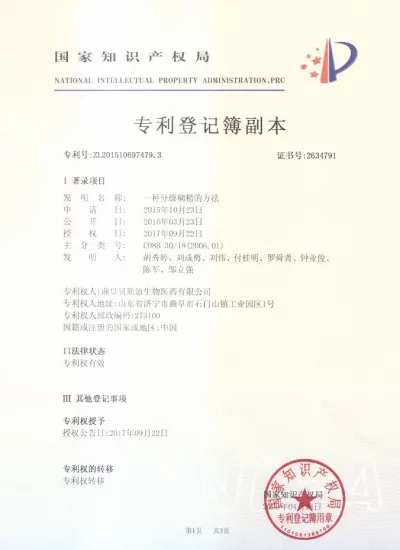
For every new resistant dextrin supplier and soluble corn fiber supplier, confirm the legal entity and plant address, verify export capability and business documentation, and confirm the counterparty’s role. Request business license scans, facility address, capacity overview, and workshop/QC photos.
2) Documentation review anchored on the COA
Ask for a recent batch COA and at least one recent third-party lab report for critical fields. For a microcrystalline cellulose manufacturer, also ensure the COA includes identity/purity and particle-related fields appropriate to your use case.
3) Sample testing (analytical first, application second)
A reliable resistant dextrin supplier will support analytical sampling before large POs. Recommended testing approach:
- Run fiber verification (commonly HPLC for soluble fiber claims where appropriate).
- Confirm microbiology and heavy metals.
- Check moisture and water activity.
- Run application trials (clarity, viscosity, mouthfeel; or compression/flow for MCC).
4) Remote factory tour
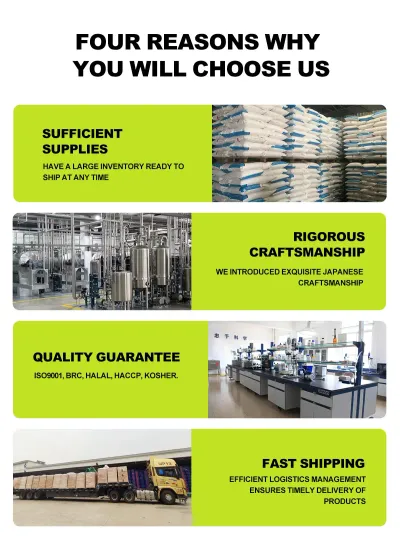
A remote tour is not about “pretty shots.” It is about process control. Ask to see raw material intake and storage labeling, core processing steps, drying and powder handling, packaging zone and labeling controls, and the QC lab layout. A capable China dietary fiber manufacturer should be comfortable showing how batches are identified and how records are stored.
5) On-site audit (for high exposure programs)
For multi-year contracts, broad distribution, or regulated applications, perform an audit aligned to GMP/ISO expectations, review batch records and deviation handling, confirm segregation controls (e.g., organic vs conventional if relevant), and verify how the supplier handles customer complaints and recalls. This step is often the deciding line between “acceptable” and “Recommended Chinese Resistant Dextrin Manufacturer” status in a buyer’s internal supplier list.
6) Contract definitions and logistics controls
Before volume commitments, lock down product definition and spec tolerances, packaging type and net weight, labeling and traceability expectations, lead times and documentation responsibilities, and Incoterms/export paperwork requirements. This is where buyers convert a quote into a supply program.
7) Scale-up pilot and pre-shipment discipline
Run a pilot that mimics real conditions: production-scale lot, your standard packaging, your import documentation flow, and (if possible) pre-shipment sampling. If a soluble corn fiber supplier can perform cleanly here, the odds of trouble during scale-up drop dramatically.
Regulatory mapping: keep it practical and cross-functional
Regulatory alignment should not live only in QA. For 2026–2028 programs, procurement teams do better when they treat compliance as a sourcing input.
United States: documentation clarity is the real bottleneck
For resistant dextrin and soluble corn fiber categories, confirm how the fiber claim is supported, confirm allergen/GMO statements as needed, and ensure batch COAs are available for every shipment. For MCC, procurement should ensure COA fields are consistent with what the customer and internal standards require.
European Union: spec alignment matters as much as safety
EFSA publications are frequently used as benchmark references for what “complete” MCC specification documentation looks like in the EU context. If you are qualifying a microcrystalline cellulose manufacturer for EU-bound supply, require that COA fields mirror expected identity/purity fields, and that methods are controlled.
China GB: treat it as the baseline, not the ceiling
A strong export-facing China dietary fiber manufacturer will typically map domestic GB requirements to EU/US buyer expectations, especially for heavy metals and microbiology. The buyer’s job is to request that mapping in a single spec sheet, not as scattered emails.
Application-driven buying: match the ingredient to the job
Buyers often start with “who has stock?” Better programs start with “what does the formula need?”
Low-sugar or low-calorie beverages
For beverage teams, the best soluble corn fiber supplier is not necessarily the cheapest—it is the one whose lots consistently deliver clear solubility, low viscosity at target dosage, and stable performance across pH and heat conditions. This is why COA discipline matters: moisture and water activity directly influence flow and shelf stability.
Baked goods and bars
In baked goods, resistant dextrin and related fibers are often used to increase fiber while keeping texture acceptable. Verify lot-to-lot consistency in moisture, how the powder behaves in storage (caking, clumping), and whether the supplier can support predictable performance in real formulation trials.
Confectionery and gummies
In confectionery, buyers often want fiber addition without off-notes. Here, “neutral taste” claims are common; real validation comes from application trials, micro stability under humid environments, and packaging integrity. A disciplined China dietary fiber manufacturer will typically offer packaging options designed to control moisture pickup during shipping.
Tablets and solid dosage
For tablets, MCC selection is often tied to compressibility and flow. A qualified microcrystalline cellulose manufacturer should provide particle size distribution data where relevant, loss on drying / residue on ignition type fields, and consistency evidence across lots.
TCO: where “cheap” becomes expensive
A sourcing strategy that compares only FOB price is fragile. A 2026–2028-ready Total Cost of Ownership (TCO) model should include unit price, inbound freight and insurance, import duties and brokerage, internal and third-party testing, remote/on-site audit costs (amortized), buffer stock (cash tied up), and quality failure contingencies.
If two offers from different soluble corn fiber supplier candidates differ by 20%, but one fails incoming QC once per quarter, the cheaper option is rarely cheaper in TCO.

Negotiation levers that protect TCO
For a qualified resistant dextrin supplier or microcrystalline cellulose manufacturer, the best negotiations often focus on control, not pressure:
- Pilot-to-contract pricing: accept higher pilot cost, then step down once performance and documentation are validated.
- Tiered volume discounts: align rebates with stable forecasts and predictable call-offs.
- Shared test plan: define which tests are run by the supplier vs repeated by the buyer to reduce redundant cost.
- Lead-time SLAs: define dispatch windows and escalation rules.
What “good” looks like in a Shandong-style benchmark plant
Buyers often ask what separates a high-tier plant from a basic converter. In many Shandong operations that benchmark well, you typically see NON-GMO corn starch sourcing with lot traceability, modern enzymatic processing discipline, automation from feeding to filling, GMP-style zoning and hygiene routines, and an in-house QC lab that supports routine release testing.
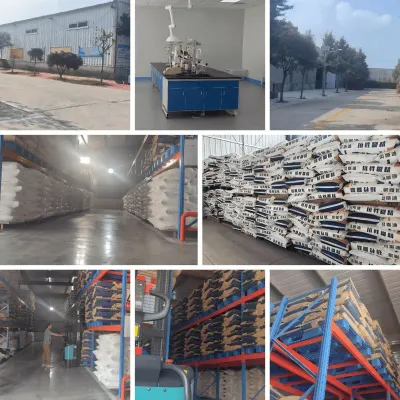
This is also the profile buyers tend to associate with “recommended” searches—Recommended Chinese Resistant Dextrin Manufacturer or Recommended Chinese Microcrystalline Cellulose Supplier—because it reflects operational maturity.
One practical way to benchmark expectations is to review public product documentation and capability descriptions from manufacturers that publish detailed product pages. For example, Shine Health’s resistant dextrin information can be used as a reference point for how a China dietary fiber manufacturer describes raw material sourcing (NON-GMO corn starch), automation, quality teams, and COA availability: www.sdshinehealth.com.
Practical next steps for 2026–2028 sourcing programs
A disciplined approach typically looks like this:
- Build a shortlist of 5–8 candidates across key clusters and capability tiers, including at least one candidate you consider a potential Recommended Chinese Microcrystalline Cellulose Manufacturer and multiple candidates for resistant dextrin supplier and soluble corn fiber supplier categories.
- Run the documentation gate first: COA + third-party report + spec mapping.
- Test samples independently and compare results to COA values.
- Conduct remote tours with a standard checklist.
- Audit on-site (or via third party) for suppliers entering long-term programs.
- Launch a scale-up pilot with pre-shipment discipline and locked packaging.
- Negotiate on TCO levers and release cadence—not only on unit price.
Done well, this process does more than qualify a vendor; it builds a supply lane that can survive demand volatility, shipping disruptions, and compliance scrutiny.
For more details on qualified suppliers and production benchmarks, visit www.sdshinehealth.com.