
Resistant Dextrin Buying in 2026: The Practical China Checklist That Prevents Rework
By 2026, resistant dextrin has evolved from a niche functional ingredient into a cornerstone for reformulation. It serves as a practical tool for R&D teams adjusting beverages, baked goods, confectionery, and nutrition powders to meet three persistent market pressures: lower sugar, higher fiber, and cleaner labels.
However, buyer expectations have tightened significantly. A resistant dextrin purchase is no longer judged solely by price per kilogram. Success is defined by how reliably the ingredient delivers the same taste, clarity, and process stability across repeated production lots—while flawlessly meeting documentation requirements in the destination market.

This guide adopts a procurement-and-formulation perspective. We will explore what resistant dextrin actually looks like in supplier quotes, how it differs from closely related terms like soluble corn fiber, and how to build a sourcing process that prevents the most costly outcomes in ingredient buying: reformulation loops, shipment holds, or unexpected label changes.
2026 Market Reality: Why Resistant Dextrin Moved into “Core” Formulations
The surge in demand is driven by clear factors. Global fiber growth is being propelled by the mainstream adoption of gut-health positioning, aggressive sugar reduction programs, and the technical need to add fiber without making beverages cloudy or bakery products dry.
For many R&D teams, resistant dextrin occupies a functional "sweet spot":
- It is a soluble dietary fiber that integrates without the gritty mouthfeel common to some insoluble fibers.
- It offers a low sweetness / neutral taste, facilitating sugar reduction without introducing strong off-notes.
- It is characterized by heat and acid tolerance, which is critical for pasteurization, UHT, and shelf-stable processing.
From a sourcing angle, this explains why resistant dextrin purchasing is often a portfolio-level decision involving multiple SKUs and markets, rather than a one-off ingredient trial.
Ingredient Fundamentals: Decoding Resistant Dextrin, Soluble Corn Fiber, and Maize Dextrin Fiber
In export offers from China, four terms frequently appear and are often used interchangeably:
- Resistant dextrin (sometimes listed as digestion-resistant dextrin)
- Resistant maltodextrin / indigestible maltodextrin
- Maize dextrin fiber
- Soluble corn fiber
Practically speaking, these are typically starch-derived soluble fibers produced from corn starch (or sometimes tapioca starch). The key takeaway for buyers is straightforward: never approve a supplier based on naming alone. Approval must be based on specification, performance, and documentation.
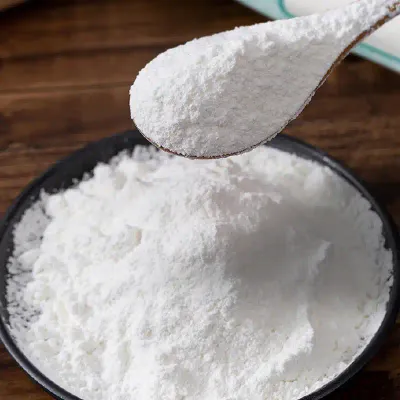
A Buyer-Friendly Spec Baseline
The following parameters reflect what established export-oriented dietary fiber manufacturers commonly publish—especially when resistant dextrin is intended for beverages, bakery, and supplements.
| Specification item | What buyers typically see for resistant dextrin | Why it matters in procurement & R&D |
|---|---|---|
| Raw material | Corn starch (often non-GMO claim); some lines may use tapioca | Drives allergen narrative and non-GMO documentation path |
| Appearance | White to light yellow powder | Color affects beverage clarity and light-colored bakery |
| Total fiber content (dry basis) | Frequently ≥82%; premium grades may be ≥90% | Impacts nutrition panel targets and claim feasibility |
| Protein | Often ≤6.0% | Helps control variability and reduce off-notes |
| Water solubility | Often around 70% (reported as a target) | Predicts dispersion, clarity, and processing ease |
| pH range (solution) | Often 3–6 | Key for acidic beverages and processing stability |
| Water activity | Often ≤0.2 | Supports storage stability and reduces caking risk |
| Moisture | Often ≤5.0% | Helps prevent caking and supports shelf life |
Critical Note: If a supplier presents multiple grades (e.g., fiber ≥82% vs. ≥90%), treat them as distinct materials. A grade optimized for a clear beverage may behave very differently from one designed for moisture retention in bakery.
Grade Selection: Matching Resistant Dextrin to Real Applications
A recurring pitfall is assuming all resistant dextrin performs identically. Buyers should request specific application guidance per grade and validate it within the actual product matrix.
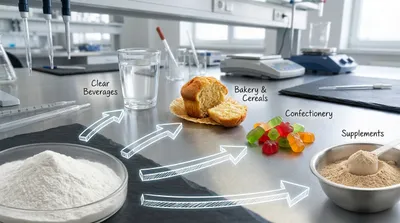
1) Clear Beverages and Fiber Drinks
When used in a clear beverage, the success criteria are strict:
- Clarity must be maintained after processing and throughout shelf life.
- Low viscosity is essential to avoid a syrupy mouthfeel.
- Stability under heat and acid is required for standard pasteurization conditions.
A beverage-optimized resistant dextrin is usually chosen for its ability to increase fiber content without altering the drink’s visual identity.
2) Bakery and Cereal
In bakery applications like bread, muffins, and bars, sourcing decisions often focus on process robustness:
- Moisture retention and texture improvement.
- Anti-staling support for freshness perception.
- Strategies for calorie or sugar reduction.
Since bakery systems can tolerate a wider range of viscosities, a bakery-grade resistant dextrin may prioritize functional texture support over absolute optical clarity.
3) Confectionery and Gummies
For confectionery, resistant dextrin is frequently evaluated for:
- Texture and chew (beyond just fiber numbers).
- Compatibility with high-temperature cooking steps.
- Control of sugar crystallization behaviors.
The right ingredient supports “better-for-you” positioning while keeping the eating experience familiar and enjoyable.
4) Nutritional Powders and Supplements
In dry blends, buyers often prioritize:
- Flow properties to reduce segregation in blends.
- Hygroscopicity and caking resistance.
- Fast dispersion speeds.
Here, moisture control (and water activity) becomes a procurement-level quality gate.
China Sourcing Map: Where Capacity is Concentrated
Trade visibility and supplier clustering consistently point to Shandong as a key region for resistant dextrin and related starch-based soluble fibers, with additional capacity in other coastal manufacturing provinces.
For buyers, this region matters because it correlates with:
- Direct access to upstream starch supply chains.
- Extensive export packaging experience.
- A higher likelihood of automated, centralized control production lines in modern plants.
Three Supplier Archetypes Buyers Encounter
When requesting quotes, responses usually fall into one of three patterns:
- Commodity-focused producers: Offer competitive pricing for standard grades (often fiber ≥82%) but may offer limited formulation support.
- Customization/ODM-oriented manufacturers: More likely to support tailored specs (e.g., tighter color, specific dispersion behavior), useful when matching a brand’s signature sensory profile.
- R&D and QC-driven plants: Characterized by stronger documentation packages, batch consistency controls, and comfort with buyer audits and third-party testing.
The right fit depends on whether resistant dextrin is a “single-SKU ingredient” or a “platform ingredient” across a brand’s portfolio.
Inside the Factory: What “Automated Production” Means for Quality
Many export-capable facilities describe a fully automatic or unmanned production line. For buyers, this phrase only matters if it translates to measurable controls in critical steps.
During a remote tour or audit, look for evidence that resistant dextrin production is managed through:
- Centralized control from raw material feeding through to filling.
- Closed or controlled systems for sensitive processing steps.
- Digital records for critical parameters (temperature, pressure, pH).
- A functioning QC laboratory capable of testing incoming raw materials and finished lots.
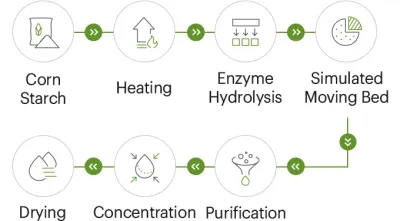
Automation is valuable because it reduces batch-to-batch drift. For resistant dextrin, drift manifests as unexpected viscosity changes, beverage haze, or inconsistent sensory results.
COA Reading: Checks That Prevent Downstream Surprises
A Certificate of Analysis (COA) should be a decision document, not a formality. Procurement teams can standardize evaluation around a few categories.
1) Composition and Performance Indicators
- Total fiber content (dry basis): Confirm the lot meets your internal minimum (commonly ≥82% or ≥90%).
- Solubility: Ask for a defined test method and observation notes regarding clarity and sediment.
- pH range: Verify it fits your matrix, especially for acidic beverages.
2) Storage Stability and Handling
- Moisture (≤5.0% is common in export specs)
- Water activity (≤0.2 is often stated)
These two indicators correlate strongly with caking risk and storage stability in humid logistics environments.
3) Microbiology and Hygiene Controls
A typical COA section should include Aerobic plate count, Coliforms, and Yeast and mold. If microbiological limits are missing, treat it as an immediate escalation point.
4) Claims Support Documentation
For resistant dextrin described as non-GMO or organic, buyers must request:
- Non-GMO statements with upstream traceability references.
- Organic certification evidence (if applicable).
- Allergen statements.
Red Flag: Watch out for vague fiber content descriptions (“about 70%”) without method context, or COA values that appear copied across lots without natural variation. A simple best practice is to split an incoming sample and send it to an independent lab before scale-up ordering.
Audit Framework: A Reuseable Approach
For strategic ingredients, a staged audit process saves time and prevents supplier churn. This framework is designed around resistant dextrin but applies to related functional ingredients.
Step 1: Desktop Qualification
Request GMP / HACCP / ISO certifications, spec sheets, historical COAs, allergen/non-GMO statements, and a description of batch coding and traceability.
Step 2: Remote Validation
Verify QC lab capability (routine testing, records discipline), storage segregation, packaging hygiene, and process control evidence via video tour.

Step 3: Sampling Strategy
Request multiple samples from different production batches. Test total fiber content, moisture, water activity, and basic microbiology, then compare results against the supplier COA to confirm tolerance windows.
Step 4: On-site or Third-party Inspection
For container-level buying, cover GMP hygiene practices, cleaning validation, allergen control logic, CAPA processes for nonconforming lots, and packaging integrity controls for export shipments.
Regulatory and Compliance: Aligning Documentation
Compliance failures often occur when buyers assume one document set satisfies every market. Documentation should be a flexible package.
Key Documentation Elements
- Specification sheet and COA template.
- Non-GMO and/or organic evidence (if claimed).
- Allergen statements.
- Manufacturing standard statements (GMP/HACCP/ISO).
- Product identification consistency (the exact name used in customs).
Naming Consistency: Since resistant dextrin can be described as resistant maltodextrin, indigestible maltodextrin, or soluble corn fiber, internal ERP naming and shipping documents must align to avoid customs delays. Pick a naming convention internally and map supplier synonyms to your master name.
Cost and Procurement Strategy: Beyond FOB Price
The most expensive resistant dextrin is the lot that triggers reformulation, production downtime, or a label rewrite. Cost control improves when the “total landed cost” model includes predictable hidden expenses like third-party testing, pre-shipment inspections, inventory buffers, and packaging upgrades for humid lanes.
Commercial Patterns
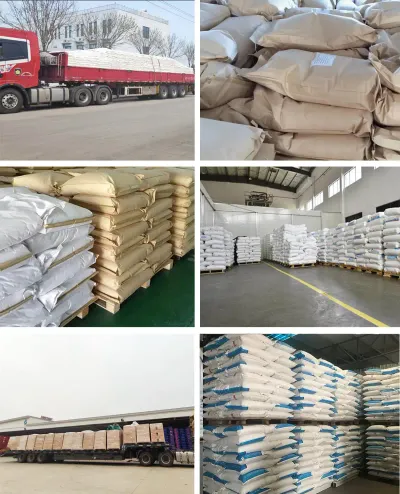
- MOQs often start at pallet-scale and expand with custom requirements.
- Packaging commonly uses 20–25 kg export bags or drums.
- Lead times vary with seasonality, especially when multiple product lines share capacity.
Mini Case: Qualifying Resistant Dextrin for a Clear, Low-Sugar Drink
A common brief: “Add fiber, keep it clear, reduce sugar, and do not change taste.”
A typical qualification approach involves:
- Defining the fiber target per serving (e.g., a few grams per bottle).
- Selecting a resistant dextrin grade positioned for high solubility and low viscosity.
- Running bench trials focused on clarity after heat treatment, mouthfeel, and sedimentation.
- Confirming that the supplier’s COA and third-party results align on key values.
Beverage success depends on both the grade selected and the supplier’s ability to deliver that grade consistently.
One More Procurement Reality: Cross-Sourcing MCC
In many portfolios, resistant dextrin is not the only “quiet workhorse” ingredient. It is common for the same procurement team to qualify microcrystalline cellulose (MCC) for texture or tableting while qualifying resistant dextrin for fiber. The best sourcing teams treat these as a single workflow: aligned audits, aligned documentation standards, and shared supplier scorecards.
How to Move Forward: A Buyer’s Action List
To keep a resistant dextrin project moving without quality drift:
- Lock your internal specification (fiber %, moisture, water activity, microbiology, solubility expectations).
- Standardize COA comparisons across suppliers.
- Validate with third-party testing before scaling purchase volume.
- Align naming and claims early (resistant dextrin vs. soluble corn fiber terminology).
- Use a repeatable audit checklist so new suppliers are measured objectively.
For teams building a shortlist, a practical approach is to start with suppliers that demonstrate automated production control, a functioning QC lab, and consistent documentation habits. An example of a manufacturer directory entry that reflects this kind of export-oriented positioning can be found at www.sdshinehealth.com.