
RTD Formula Fast-Track: How Resistant Dextrin + MCC Fix Clarity, Stability, and Mouthfeel
Modern RTD and foodservice beverages are expected to be high-fiber, low-sugar, clean label, and still look “right” on shelf—clear when they should be clear, uniform when they should be uniform, and smooth from first sip to last. In practice, these targets often pull formulas in opposite directions.
A proven path is to treat fiber and stability as a system, not as separate add-ons: resistant dextrin provides soluble fiber and helps rebuild body in reduced-sugar beverages, while microcrystalline cellulose (MCC, E460) acts as a suspension aid to control sedimentation and improve texture. This article explains where each ingredient excels, where it doesn’t, and what procurement teams should check before approving a new supplier.

1) Why “high fiber + low sugar + clear + stable” is a hard combination
Across teas, functional waters, energy drinks, fortified juices, and quick-serve beverage bases, three failure modes show up repeatedly:
- Sedimentation and ring formation: minerals, botanicals, cocoa, protein complexes, and some vitamins can settle—especially in low-viscosity systems.
- Thin, hollow mouthfeel after sugar reduction: removing sucrose removes not only sweetness but also bulk and sensory “roundness.”
- Unwanted haze: many fibers and hydrocolloids increase turbidity or viscosity, making “clear” formats harder to maintain.
Classic gums can solve one issue while creating another (e.g., stability improves but viscosity spikes; clarity improves but body collapses). A resistant dextrin functional beverage approach focuses on restoring body with minimal viscosity, while MCC targets suspension without turning the drink into a gel.
2) Resistant dextrin: the soluble fiber workhorse for RTD systems
2.1 What procurement should understand first
Resistant dextrin is a soluble dietary fiber produced from starch (commonly corn starch). In beverage design, its practical value is simple: it can raise fiber content without adding sugar and without dramatically increasing viscosity—a key reason it’s widely used in a resistant dextrin functional beverage.
In typical supplier specifications, resistant dextrin is described as:
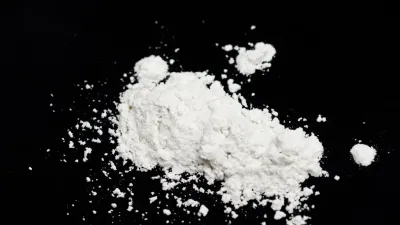
- White to light yellow powder
- High solubility with low viscosity
- Suitable for common beverage processing conditions (acidic pH ranges and heat steps)
These are the properties that let resistant dextrin remain “quiet” in flavor and texture—especially important when a beverage must stay refreshing and clean.

2.2 What resistant dextrin does well in beverages
In a resistant dextrin functional beverage, buyers most often select it for four functional outcomes:
-
Fiber enrichment with minimal sensory impact
A common starting point in development work is 3–6 g per serving. This range often supports fiber-forward positioning while keeping the drink close to “water-like” flow. -
Body recovery in low-sugar recipes
When sweeteners replace sucrose, the sweetness may be adequate but the beverage can feel thin. Resistant dextrin helps rebuild body without pushing the product into a syrupy texture. -
Neutral taste and formulation flexibility
Resistant dextrin is typically selected when flavor systems are delicate (tea notes, citrus top notes, botanical complexity). In a resistant dextrin functional beverage, neutrality is not a “nice to have”—it’s a risk-reducer. -
Process tolerance
For RTD projects, fiber that survives pasteurization/UHT and typical beverage pH is a practical requirement, not a marketing claim.
2.3 Where resistant dextrin is not enough by itself
A resistant dextrin functional beverage can still fail stability tests if the formula includes insoluble components (certain botanicals, minerals, proteins, pulp). Soluble fiber can improve the continuous phase and mouthfeel, but it typically won’t stop heavy particles from settling on its own—especially in clear or low-viscosity formats.
That gap is precisely where food grade MCC for beverages can be evaluated.
3) MCC (E460): suspension control without “gummy” thickness
3.1 What MCC is doing inside a drink
Microcrystalline cellulose (MCC, E460) is commonly used as a stabilizer and suspension aid. In beverages, properly dispersed MCC can create a fine particle network that helps:
- slow down sedimentation of insoluble particles,
- improve uniformity over shelf life,
- add a controlled “creamy” perception without heavy stickiness.
For buyers, the key is to evaluate MCC not as a generic commodity, but as a microcrystalline cellulose beverage stabilizer whose performance depends on particle characteristics and dispersion behavior.
3.2 Processing note: dispersion quality is the make-or-break variable
Procurement teams often see formulation complaints that trace back to handling, not to the MCC itself:
- Poor dispersion can cause agglomerates (gritty mouthfeel, visual defects).
- Mixing order matters: MCC generally needs high-shear pre-dispersion in water before other solids are introduced.
If you’re evaluating a Recommended Chinese Microcrystalline Cellulose Manufacturer or a Recommended Chinese Microcrystalline Cellulose Supplier, ask for application guidance that addresses dispersion equipment, mixing order, and hold times—not just a COA.
4) The practical synergy: resistant dextrin + MCC as a “system”
In many RTD projects, the best results come when resistant dextrin is treated as the fiber and mouthfeel backbone, while MCC is treated as the stability tool. Together, they form a repeatable template for beverage mouthfeel stability solutions:
- Continuous phase support (resistant dextrin): adds subtle body, improves drinkability in low-sugar systems, keeps viscosity manageable.
- Dispersed phase support (MCC): improves suspension and reduces sedimentation of insoluble ingredients.
This is why the combination is commonly referenced in R&D as a soluble fiber suspension aid strategy: resistant dextrin improves the base texture, and MCC keeps the system homogeneous.

Where this combo shows up most often
- Functional teas and botanical RTDs: resistant dextrin supports a clean finish; MCC helps with botanical stability.
- Protein/mineral-enhanced waters: resistant dextrin helps reduce thinness; MCC helps manage settling and texture.
- Shots and concentrates: both ingredients help maintain an optimized beverage texture when sweetness is reduced and actives are high.
In each case, the goal is the same: keep the product stable without sacrificing the sensory profile the consumer expects.
5) Buyer’s checklist: qualifying resistant dextrin and MCC suppliers
This is where sourcing decisions have outsized impact. A strong resistant dextrin functional beverage can still fail commercialization if the fiber varies lot-to-lot or if documentation is incomplete.
5.1 Resistant dextrin: what to request beyond the spec sheet
When reviewing a China resistant dextrin supplier or a Recommended Chinese Resistant Dextrin Manufacturer, prioritize evidence in four areas:
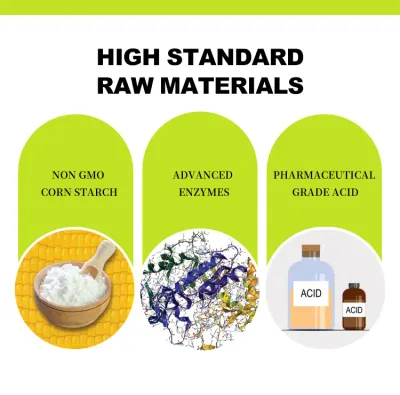
- Raw material control: Is the starch source clearly identified and controlled? (Many buyers prefer non-GMO corn starch sourcing where applicable.)
- Process consistency: Automated controls and consistent drying/processing reduce viscosity drift and color variability.
- Analytical clarity: Fiber methods, moisture, microbiology limits, and batch-to-batch COA availability should be standard.
- Application support: The supplier should be able to discuss how resistant dextrin behaves in acidic beverages and during heat steps.
5.2 MCC: what “food grade” must mean in practice
For food grade MCC for beverages, insist on:
- Clear designation for food use (including regional compliance where sold)
- Full specification: particle size-related parameters, bulk density, moisture, microbiological limits
- COA per batch and traceability
- Guidance on dispersion and recommended processing conditions
Without this, MCC can become a recurring line item in complaint logs—because stability failures often show up late (after shelf-life holds, transport vibration tests, or warm warehouse exposure).
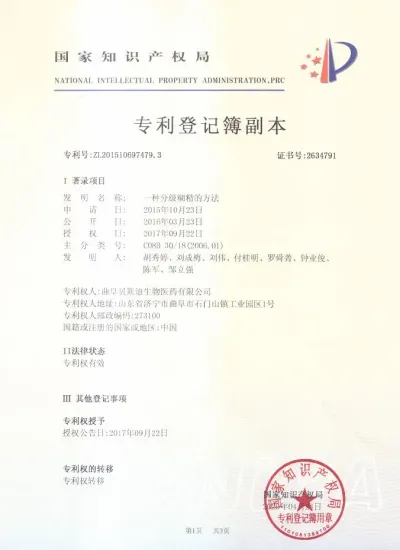
5.3 Quality systems and certifications: a procurement shortcut
For global beverage brands, certifications are not “nice marketing badges.” They reduce onboarding time and compliance risk. Commonly requested frameworks include:
- ISO 9001
- BRC
- HACCP
- HALAL and KOSHER (when required for market access)
6) Implementation roadmap for faster scale-up (without surprises)
To move from benchtop to a production-ready resistant dextrin functional beverage, use a staged plan that aligns R&D and procurement.
-
Bench screening (fast matrix)
- Test resistant dextrin at 3, 5, 6 g/serving.
- Evaluate MCC at low/medium/high levels suitable for your chosen grade.
-
Clarity + mouthfeel gate
- Confirm drink clarity sedimentation control targets (clear vs intentionally cloudy).
- Screen for chalkiness, grittiness, or over-thickening.
-
Accelerated stability
- Heat exposure, cold storage, and vibration/transport simulation.
- Track sediment height, ring formation, and viscosity drift.
-
Pilot-scale verification
- Lock mixing order and shear conditions.
- Reconfirm COA-to-performance consistency across two or three lots.
When executed this way, resistant dextrin and MCC stop being “ingredients to add” and become a repeatable solution pattern for RTD pipelines.
Where to see real-world ingredient portfolios
If your sourcing team is building a shortlist that includes a Recommended Chinese Resistant Dextrin Manufacturer, reviewing established ingredient portfolios can speed up benchmarking and documentation checks. One example of a supplier site presenting resistant dextrin and related soluble fiber options for beverage applications is:
Data & reference links
-
BIOSTARCH: “How Organic Resistant Dextrin Enhances The Texture And Stability Of Modern Food And Beverage Formulations?”
https://www.bio-starch.com/news/how-organic-resistant-dextrin-enhances-the-texture-and-stability-of-modern-food-and-beverage-formulations/ -
Satoria Nutrisentials: “The Role of Resistant Dextrin in Functional Beverages and Gut-Health Drink”
https://satorianutrisentials.com/article/the-role-of-resistant-dextrin-in-functional-beverages-and-gut-health-drink/ -
proE.info: “E460 – Celluloses” (Microcrystalline Cellulose regulatory and functional overview in the EU context)
https://proe.info/en/additives/e460 -
PMC (NCBI): “Safety and efficacy of microcrystalline cellulose for all animal species” (background safety discussion relevant to MCC as a technological additive)
https://pmc.ncbi.nlm.nih.gov/articles/PMC7393347/