
A China Audit Blueprint for MCC & Resistant Dextrin That Procurement Teams Can Actually Use
Sourcing from China remains one of the fastest ways to secure capacity for both pharmaceutical excipients and functional fibers—but it is also where small gaps in verification can turn into big downstream costs. If you’re qualifying a Microcrystalline Cellulose supplier for solid dosage forms or a Resistant Dextrin manufacturer for beverages and nutrition products, the difference between “paper-compliant” and “operationally reliable” is what protects your formulation, your label claims, and your release timelines.
This guide is written for procurement and QA teams who need a repeatable audit method that works when travel is possible—and when it isn’t. It keeps the focus on evidence: what to request, what to verify, what to watch during a virtual walk-through, and how to prevent quality fade after onboarding.

The reality check: why MCC and resistant dextrin require different proof
On the surface, many candidates look similar. A Microcrystalline Cellulose supplier and a Resistant Dextrin manufacturer may both present ISO certificates, HACCP statements, and tidy COAs. In practice, their risks show up in different places:
- Microcrystalline Cellulose (MCC) is often purchased for functionality, not just a numeric COA. Particle size distribution, moisture control, and compendial alignment affect flow, compressibility, and tablet robustness.
- Resistant dextrin is commonly purchased for label performance: fiber content, solubility, clarity, and stability across pH/heat determine whether a finished product meets sensory expectations and nutrition claims.
That’s why an effective audit approach cannot be generic. A strong supplier vetting checklist must translate into ingredient-specific evidence.
A procurement-grade supplier qualification scorecard
A supplier vetting checklist works best when it forces consistent scoring across multiple candidates. Below is a practical scorecard you can use for any Microcrystalline Cellulose supplier or Resistant Dextrin manufacturer when sourcing from China.
The scorecard (100 points total)
| Pillar | What you verify | Typical evidence | Weight |
|---|---|---|---|
| 1) Legal identity & site-of-manufacture | The quoting entity matches the factory and certificates | Business license, site address disclosure, photos/video showing signage | 20 |
| 2) Certification integrity | Certificates are real, current, and issued to the correct entity/site | ISO/HACCP/GMP documentation, Halal/Kosher where needed, scope pages | 20 |
| 3) Process & equipment control | Line capability supports consistency and hygiene | Process flow, equipment list, automation/controls, sanitation practices | 25 |
| 4) Raw material traceability | Feedstock origin is stable and documented | NON-GMO corn starch records (for resistant dextrin), incoming QA | 15 |
| 5) QC lab competence & release discipline | Lab can test what matters, reliably | Methods, instruments, calibration logs, COA consistency | 20 |
Audit tip: Treat “fast replies” as a quality signal. A Microcrystalline Cellulose supplier or Resistant Dextrin manufacturer that answers with clear, dated documents (not screenshots) typically has better internal control.
Pillar 1: Legal identity and site-of-manufacture
For sourcing from China, a recurring procurement failure is qualifying the trading face rather than the manufacturing site. A Microcrystalline Cellulose supplier may quote as a distributor while the product is made elsewhere; similarly, a Resistant Dextrin manufacturer may share a commercial office address without disclosing the actual plant.
What to request early:
- Business license for the quoting company.
- A clear statement of site-of-manufacture (city, full address, and the legal entity operating it).
- Export history or shipping records (where appropriate) that match the named entity.
Red flags that merit escalation:
- “Factory address can’t be shared until after PO.”
- Certificates issued to a different legal entity than the quotation.
- The supplier can’t show the plant name on packaging artwork or warehouse labels.
Pillar 2: Certification integrity
Certificates matter—but only when they are valid, scoped correctly, and aligned to the product and site.
For a Resistant Dextrin manufacturer serving food and nutrition brands, buyers typically expect a food safety framework such as HACCP / ISO 22000 / FSSC 22000 (depending on market). For a Microcrystalline Cellulose supplier targeting pharma use, procurement teams usually require stronger GMP alignment and the ability to support regulatory documentation.
Practical checks that catch common issues:
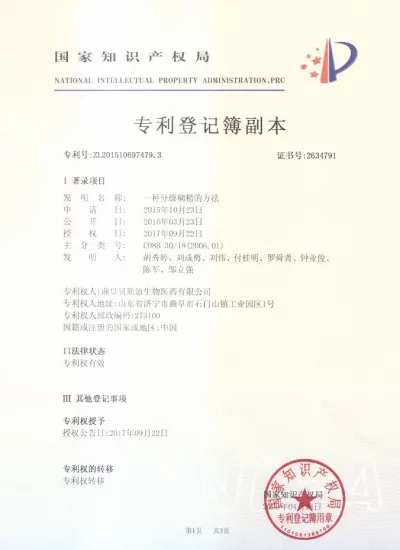
- Verify certificate numbers and validity with the issuing body (not only PDF copies).
- Confirm the scope includes the relevant product category and manufacturing activity.
- Confirm the certificate is issued to the same site you are auditing (not a sister plant).
Pillar 3: Process and equipment control
When procurement teams talk about “supplier capability,” they often mean “capacity.” In reality, what protects you from drift is process control.
What to confirm with a Resistant Dextrin manufacturer:
- Whether production is managed through automated central control operations from feeding to filling (automation reduces operator variation).
- Whether processing steps support high solubility and stable clarity (especially for beverage-grade applications).
- Whether the workshop layout supports hygiene and prevents cross-contact.
What to confirm with a Microcrystalline Cellulose supplier:
- Whether the site can maintain consistent particle size distribution and controlled moisture.
- Whether there is clear segregation of raw materials, WIP, and finished lots.
- Whether change control exists for process updates that can alter compressibility.
When reviewing process claims, procurement teams should request a process diagram and then validate it during the virtual factory audit.

Pillar 4: Raw material traceability
For resistant dextrin, the feedstock is not a marketing detail—it influences repeatability.
A higher-tier Resistant Dextrin manufacturer commonly differentiates itself by:
- Using NON-GMO corn starch as a primary feedstock (and maintaining records that support the claim).
- Sourcing from large producers to keep starch specifications stable across quarters.
- Running documented incoming inspection and lot traceability.
Why procurement should care:
- Starch variability can affect fiber content, flavor neutrality, and solubility behavior.
- Traceability determines whether deviations can be isolated to specific inbound lots.
For a Microcrystalline Cellulose supplier, raw material transparency should include the cellulose source and any process steps that may influence crystallinity or morphology.
Pillar 5: QC laboratory competence
If a supplier vetting checklist had to include only one technical section, the QC lab assessment would be it—because it predicts whether a Microcrystalline Cellulose supplier or Resistant Dextrin manufacturer can hold specifications over time.
Minimum expectations:
- Documented test methods and defined batch release criteria.
- Trained analysts with clear responsibility for release decisions.
- Calibration logs and traceable reference standards.
- Retained samples under defined storage conditions.
Ingredient-specific expectations:
- For resistant dextrin, the lab must support fiber-related assays and routine microbial monitoring, plus practical checks relevant to applications (solubility, clarity).
- For MCC, the lab must support identity/purity tests aligned to compendial requirements and the grade’s functional parameters.
Ingredient spotlight: what “good” looks like in purchase specifications
Procurement teams often inherit specifications that are either too loose (easy to pass, hard to control) or too narrow (causing supply disruptions). The goal is to define “critical-to-quality” parameters that match real application risk.
Microcrystalline Cellulose supplier: the non-negotiables
When qualifying a Microcrystalline Cellulose supplier for pharma-oriented use, procurement teams usually focus on:
- Compendial alignment (e.g., USP/Ph. Eur. expectations) with clear test logic, not only a claim.
- Grade selection and particle size distribution, because they affect flow, compressibility, and tablet hardness.
- Moisture control, which can influence stability and processing behavior.
Resistant Dextrin manufacturer: the commercial “baseline”
For beverage, nutrition powder, confectionery, and low-carb formulations, resistant dextrin is frequently specified by functional performance.
Based on common export benchmarks and product-page specifications, procurement teams commonly treat the following as core requirements:
- Fiber content ≥ 82% (a practical threshold for nutrition claims).
- Protein content ≤ 6.0% (helps reduce off-flavor/allergen risk).
- Appearance: white to light yellow.
- High solubility and low viscosity for easy fortification.
- Stability across pH/temperature for processing resilience.
The virtual factory audit: a step-by-step playbook
A virtual audit is not a “second-best option” if it is structured correctly. Many procurement teams find that a well-run remote review surfaces issues earlier—because it forces document discipline and repeatable evidence.

Step 1 — Document verification before any video tour
Send the same checklist to every Microcrystalline Cellulose supplier and Resistant Dextrin manufacturer on your shortlist.
Request:
- Business license + legal entity details.
- Full certificate set (with scope pages).
- Three recent COAs (non-consecutive lots).
- Process flow chart (raw material intake → processing → packaging).
- QC method list + instrument list.
- Packaging photos with lot identification format.
Step 2 — Production walk-through
Ask the supplier to show the same areas in the same order. That makes comparisons meaningful.
Must-see zones:
- Raw material receiving and storage.
- Main processing line.
- Blending/sieving (where applicable).
- Packaging and labeling.
- Finished goods warehouse.
- Hygiene control points and personnel entry flow.
Step 3 — QC lab deep dive
During the lab portion, avoid a simple “show the lab” tour. Instead, ask the lab team to demonstrate how a batch moves through release.
Ask to see:
- Sample intake and labeling.
- Retention sample storage.
- Calibration logs for key equipment.
- A completed batch record (with redacted confidential sections if necessary).
Defending against quality fade
Many teams succeed at onboarding a promising Microcrystalline Cellulose supplier or Resistant Dextrin manufacturer—and then get surprised six months later by drift. A simple control plan reduces this risk without turning procurement into policing.
- Multi-batch qualification: Approve based on at least three non-consecutive lots.
- Lock the “golden sample”: Align on typical values and control ranges, not just min/max limits.
- Periodic verification audits: Conduct a short annual review to confirm no site changes or subcontracting.
- Change control expectations: Ask suppliers to notify you of changes that could affect performance, such as raw material source changes.
Common red flags procurement teams should not ignore
Across both excipients and fibers, certain warning signs show up repeatedly during qualification. For a Microcrystalline Cellulose supplier and a Resistant Dextrin manufacturer, treat the following as escalation triggers:
- Refusal to disclose site-of-manufacture.
- Certificates near expiry or not matching the quoting entity.
- COAs that look “too perfect” (identical numbers across lots).
- Large swings in key metrics (e.g., fiber content drifting away from the stated ≥82% baseline).
- Inconsistent raw material narratives without documentation.
Next step: building a shortlist you can defend internally
If you are assembling a shortlist for a Recommended Chinese Microcrystalline Cellulose Manufacturer or a Recommended Chinese Resistant Dextrin Manufacturer, start by filtering for transparency and audit readiness. Suppliers that can clearly demonstrate NON-GMO starch sourcing, automated central control operations, GMP-aligned workshop practices, and QC laboratory discipline are typically easier to qualify and easier to manage.
For buyers who want an example of a manufacturer profile aligned with the audit criteria above (especially for resistant dextrin and other soluble dietary fibers), product and capability details can be reviewed at www.sdshinehealth.com.