
The COA Reality Check: Sourcing Resistant Dextrin From China Without Spec Surprises
Global demand for low-calorie, high-fiber formulations has made resistant dextrin one of the most frequently requested soluble fibers in international procurement. China remains a primary source thanks to scale, competitive pricing, and mature processing capacity—but the real differentiator isn’t the quote. It’s whether the resistant dextrin you receive matches the Certificate of Analysis (COA), the COA matches the Technical Data Sheet (TDS), and both match your finished-product performance.

Why the “Paper Quality” Problem is Common in Resistant Dextrin Sourcing
For many buyers, the first friction point in resistant dextrin procurement isn’t supply availability—it’s document quality. A supplier may present a clean-looking COA, but closer inspection often reveals significant gaps:
- The COA is a template, not batch-linked.
- The COA uses vague pass/fail language (“conforms”) with no numeric results.
- The TDS lists broad ranges, while the COA quietly reports values near the edge.
- The fiber testing method is missing or listed only as an “in-house method.”
For resistant dextrin, these gaps matter because the ingredient is often chosen specifically to deliver predictable fiber content and neutral sensory behavior in beverages, dairy, baked goods, and supplement powders. If the COA and TDS don’t provide enough clarity, the “low-risk fiber swap” can turn into a reformulation project.
What Buyers Should Expect from a Credible Resistant Dextrin TDS
A workable Technical Data Sheet (TDS) for resistant dextrin should do two things at once: define the target specification clearly enough to write into a purchase contract, and set realistic expectations for batch-to-batch variation.
Across common China export grades, frequently listed baseline parameters include:
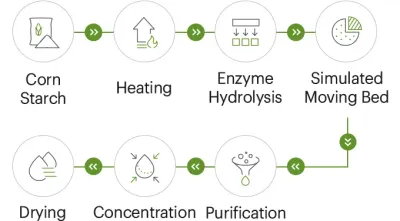
- Raw material: Typically corn starch (often described as non-GMO); some product lines also reference tapioca/cassava options.
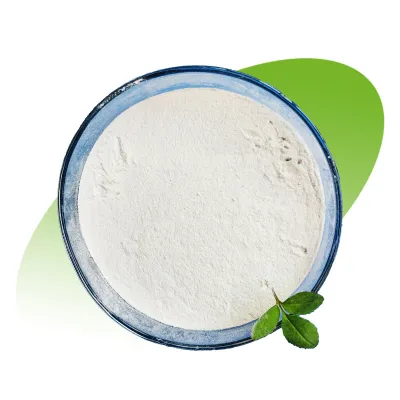
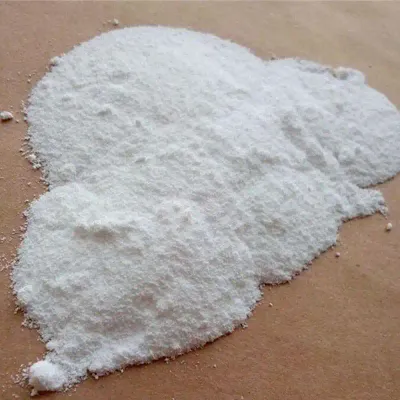
- Appearance: White to light yellow powder.
- Fiber content: Commonly presented as ≥82% for standard grades.
- Protein: Often presented as ≤6.0% on common product parameter tables.
- Storage: Store in a cool place.
Where buyers get misled is the “premium fiber” narrative. Some market listings call products “soluble corn fiber” and suggest higher fiber levels; others label the same base ingredient as resistant dextrin or resistant maltodextrin. The practical takeaway is simple: if a supplier claims a premium fiber spec, the COA must report that premium spec numerically, batch by batch, using a declared test method.
A TDS that omits test methods or avoids numeric microbiology limits is not procurement-ready for resistant dextrin—especially if your downstream market requires stricter documentation.
The COA Checklist that Prevents Most Resistant Dextrin Disputes
A COA is useful only if it is batch-linked and aligned with the master spec. When sourcing resistant dextrin from China, a line-by-line COA check typically focuses on eight blocks.
1) Product Identity (No Ambiguity)
Confirm that the COA states the specific product name (e.g., resistant dextrin, digestion-resistant maltodextrin), the grade, and the raw material base (corn or tapioca). If the COA title is generic (“dietary fiber”) while the invoice says resistant dextrin, treat it as a documentation gap.
2) Fiber Content and Basis
For resistant dextrin, fiber is the number that procurement and R&D care about most. The COA should state the dietary fiber percentage, whether it is reported on a dry basis, and the method standard (AOAC-type or equivalent validated method).
3) Moisture and Basic Composition
Moisture affects storage behavior, caking risk, and the “feel” of powder handling in your plant. For resistant dextrin, moisture is commonly listed in broader market benchmarks at ≤5.0%. If you see elevated moisture combined with poor packaging controls, it’s a practical risk.
4) pH and Solution Behavior
Many resistant dextrin TDS profiles list pH for a defined solution concentration (often 10%). If your use case includes beverages or dairy, confirm that the COA supports the stability and taste profile you validated.
5) Microbiology with Numeric Limits
A COA that says “micro: conforms” is not strong enough for ingredients used in export foods and supplements. Buyers typically expect numeric reporting for total plate count, yeast and mold, coliforms, and pathogens (e.g., Salmonella negative in 25g).
6) Chemical Safety
Chemical safety declarations often include heavy metals (Pb, As, Cd, Hg) and any relevant residue statements. Requirements vary by destination market and product positioning.
7) Traceability Fields
A usable COA includes the lot/batch number, production date, shelf life/expiry, and site code if the supplier runs multiple facilities. This is non-negotiable for scaling procurement.
8) Authorization and Document Control
Look for a QA/QC signature or stamp and an internal spec code. If the COA looks like it was produced in a word processor with no sign-off, verify the source carefully.
A Practical Benchmark Table
Procurement teams often use a quick benchmark to triage suppliers before spending time on audits and sampling. For resistant dextrin, the table below summarizes typical expectations versus common red flags.
| Parameter | Typical expectation for resistant dextrin | Red-flag signals during China sourcing |
|---|---|---|
| Dietary fiber | Often listed as ≥82% on standard grades | No fiber %; unclear basis; inconsistent claim vs COA |
| Moisture | Often listed around ≤5.0% | Higher values paired with caking/poor packaging controls |
| Micro results | Numeric limits + numeric results | “Conforms” only; missing yeast/mold; no pathogen line |
| Method | Stated test method for fiber | “In-house method” without validation or no method at all |
| Traceability | Lot number + dates | Template COA with no batch fields |
This isn’t meant to replace your internal QA spec; it’s a screening tool for resistant dextrin supplier qualification.
Factory vs. Trader: How to Tell Who Can Actually Control Quality
Many listings that appear as “resistant dextrin manufacturers” are trading companies. Traders can be useful for spot buying, but they add layers between you and the process controls that actually determine quality.
Signs You Are Speaking with a Manufacturer
- The specification is consistent across related SKUs (e.g., resistant dextrin, resistant maltodextrin, dietary fiber powder).
- The supplier can show production evidence (workshop images, process visuals, packaging line photos) instead of only stock images.
- There is a defined QC lab and routine testing behavior.
- Batch-linked COAs are provided proactively.
- The supplier is comfortable arranging third-party testing prior to shipment.
Signs You Are Dealing with a Trader
- A catalog mixes unrelated products with the same description blocks.
- Capacity claims are vague and unsupported.
- COAs appear as blank templates with no batch linkage.
- Factory questions are redirected without offering alternatives like a virtual tour.
For long-term resistant dextrin procurement, manufacturer-level traceability generally reduces hidden costs: fewer disputes, fewer re-tests, and fewer corrective actions.
When Resistant Dextrin Specs Don’t Match Your Application
A common performance failure for resistant dextrin occurs in high-fiber beverages. A brand might choose resistant dextrin to deliver fiber fortification with low viscosity, only to find the first commercial shipment causes haze, sedimentation, or flavor drift.
Where the “spec gap” becomes real:
- Fiber mismatch: More low-molecular saccharides than expected can change sweetness perception and stability.
- Moisture/hygroscopicity: Powder handling changes can affect dissolution behavior and processing consistency.
- Micro margin: Borderline yeast/mold control can shorten shelf life, especially in warm distribution conditions.
This is why experienced buyers treat the COA as a pre-production control point for resistant dextrin, not a post-shipment formality.

Sampling and Verification Workflow
For resistant dextrin qualification, the highest-leverage workflow is simple and repeatable.
Step 1: Document Gate
Ask for the current TDS (with test methods), a recent batch COA (with numeric micro results), and packaging/labeling photo samples showing lot traceability. If the supplier can’t provide these, you’ll likely spend time fixing documentation later.
Step 2: Pre-shipment Verification
Before the first commercial shipment, test fiber %, moisture, and microbiology through a trusted lab. Keep a retain sample policy aligned with your dispute process. The goal is to confirm that the resistant dextrin you approved in R&D is the same material you’ll receive at scale.
Step 3: Pilot Run
A pilot should replicate mixing equipment, shear conditions, real packaging, and storage conditions. This connects resistant dextrin COA specs to product performance in a way a lab test alone cannot.
Where Soluble Corn Fiber Fits—and Why Naming Matters
In global trade language, buyers will see “soluble corn fiber,” “soluble dextrin fiber,” “resistant maltodextrin,” and resistant dextrin used in overlapping ways. This creates issues with comparability and contract clarity.
Best practice is to define acceptance criteria by measurable parameters (fiber %, moisture, microbiology, method) rather than marketing naming.
China Supplier Audit Playbook
A COA-only approach is rarely enough for long-term resistant dextrin supply. The checklist below is designed to be repeatable across suppliers.
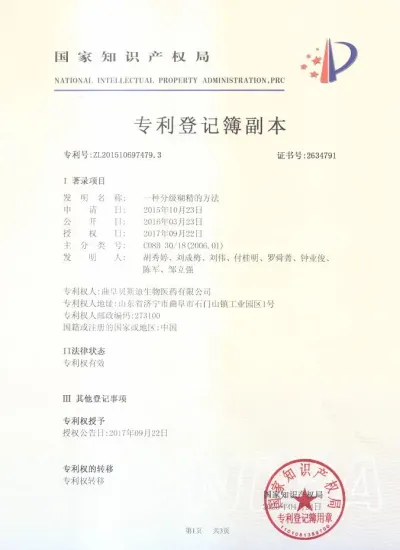
- Certificate scope validation: Confirm certificate scope matches the product and site.
- TDS/COA alignment: Ranges and values should match without unexplained gaps.
- Batch-linked COAs: No batch linkage, no acceptance.
- In-house QC capability: Look for a credible lab setup and routine testing.
- Process evidence: Photos/diagrams reflecting real operations.
- Packaging control: Labeling, net weight, and sealing standards.
- Third-party test openness: Willingness to validate specs before shipment.
- Export experience: Helps reduce compliance friction.
- Technical support: Ability to discuss formulation outcomes.
- Corrective action behavior: How deviations are handled matters.
Procurement Strategy: Focus on Total Cost
Pricing pressure in resistant dextrin categories will likely remain strong. However, the hidden cost of switching suppliers often exceeds the savings when accounting for internal QA labor, production variability, and claim risks. A more resilient approach is to shortlist suppliers who can consistently document and control quality, then negotiate based on stable volumes.
For buyers looking to establish a reliable supply chain with manufacturer-level traceability and consistent documentation, reviewing the product portfolios of established producers can provide a solid baseline. For more detailed product specifications and operational examples, you can visit www.sdshinehealth.com.