
Fiber-Forward, Failure-Proof: A 2026 Buyer’s Playbook for Resistant Dextrin & MCC Sourcing in China
Dietary fiber is no longer a “nice-to-have” fortification—it’s becoming a primary product promise. In 2026, the fiber-forward trend (often described as “fibermaxxing”) and the mainstreaming of GLP-1–influenced weight-management routines are pushing brands to increase fiber per serving while still delivering clean labels, beverage clarity, and consistent texture.
That shift turns resistant dextrin and microcrystalline cellulose (MCC) into high-impact ingredients for both food and supplements—and high-liability items for procurement. If the resistant dextrin specifications are loose, it’s easy to miss fiber targets, create haze in RTD formulas, or trigger caking in high-speed filling. If MCC is sourced without monograph alignment and functionality checks, tablet hardness, friability, or disintegration can swing enough to derail a launch.
For teams searching for a reliable China Resistant Dextrin Manufacturer or a Microcrystalline Cellulose Supplier, the fastest path to confidence is not just a “trusted” COA—it’s a repeatable system: a spec sheet that is hard to game, a COA verification workflow, and a risk-based supplier audit that distinguishes real capability from good marketing.

Why 2026 Fiber Demand Changes Procurement Math
In prior years, fiber additions were often incremental—adding 2–3g here and there to meet a marketing claim. The 2026 wave is different: consumers want high fiber per serving across everyday formats (beverages, gummies, bars, meal replacements), yet they also expect a smooth mouthfeel, clean ingredient decks, and stable shelf life.
For procurement and QA, three practical consequences show up immediately:
- More fiber per serving increases sensitivity to variability. When inclusion rises, minor deviations in resistant dextrin solubility, pH, or moisture are magnified in the finished product.
- Formulators demand “invisible fiber.” Brands want fiber that blends into clear beverages, syrups, powders, and confectionery bases without off-notes or texture penalties—putting resistant dextrin under a microscope.
- Documentation and repeatability become part of the brand promise. A COA that doesn’t declare methods or shows suspiciously identical values month after month is a commercial risk, not just a QA concern.
A common market reality is that supply growth is coming from Asia, especially when buyers look to buy soluble dietary fiber from China for large-volume projects. That is not inherently a negative—many Chinese suppliers operate automated lines with mature QC—but it does mean procurement teams must formalize what “good” looks like and verify it consistently.
Resistant Dextrin: The Spec Sheet Buyers Should Standardize
A procurement-grade specification is not a marketing leaflet. It is a contract-ready definition of what “resistant dextrin” must be—batch after batch—so R&D can formulate once and scale without rework.
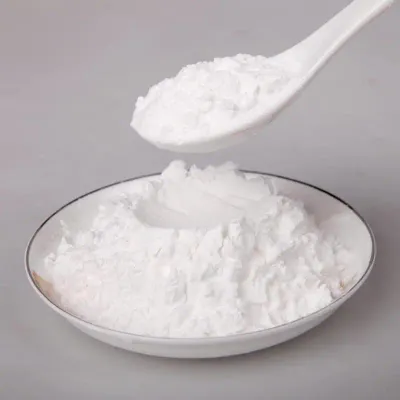
Many commercial grades of resistant dextrin (often derived from corn starch) are valued for high solubility and neutral sensory performance. Within the industry context, resistant dextrin made from non-GMO corn starch is commonly described as:
- Appearance: white to light yellow
- Fiber content: ≥82% (some grades may declare higher total fiber on a dry basis)
- Protein: ≤6.0%
Those numbers are a starting point. A 2026-ready buyer spec should also define test methods, tolerances, and which parameters are “release-critical” versus “monitoring only.”
Resistant Dextrin Specifications That Reduce Real-World Failure
The checklist below is designed for procurement teams preparing an RFP or approving a new China resistant dextrin manufacturer.
| Parameter (COA-required) | What to specify | Why it matters in production |
|---|---|---|
| Total dietary fiber (report basis) | Declare target (e.g., ≥82%) and state whether it’s “as is” or dry basis; require the test method to be listed | Prevents claim shortfalls and label risk; avoids “apples-to-oranges” comparisons between suppliers |
| Solubility / dispersibility | Define your application need (clear beverage vs powder blend); require method and conditions | High solubility supports clarity and reduces sedimentation; poor dispersibility increases mixing time and rework |
| Moisture | Set a maximum and require it on every lot COA | Moisture drives caking, flow issues, and shelf-life stability |
| Water activity (aw) | Require aw reporting if you run high-speed filling or store in humid conditions | Low aw is a practical indicator of microbial stability and storage robustness |
| pH (solution concentration stated) | Require a defined solution strength and pH range | pH shifts can change flavor balance, stability of acidulants, and beverage haze |
| Microbiology | APC, yeast/mold, coliforms; specify “absent” requirements where applicable | Especially important when resistant dextrin is used in powders, gummies, and nutrition blends |
| Heavy metals / relevant contaminants | Align to your target market limits; require method and unit | Protects export compliance and downstream brand risk |
| Identity and traceability | Non-GMO statement if required; lot coding; raw-material origin documentation | Ensures traceability during deviations, recalls, or claim verification |
A Note on “One-Size” Specs
A major procurement pitfall in 2026 is assuming there is a single “correct” solubility or fiber figure for all resistant dextrin. In practice:
- Different grades exist (e.g., fiber-focused vs functionality-focused).
- Some market descriptions cite very high solubility for resistant dextrin, while other product pages may list lower solubility values depending on grade and how the test is defined.
This is exactly why the COA must state method + conditions and why the buyer spec must define the measurement environment.
MCC in the Same Basket: Where Excipient Specs Break Projects
Procurement teams often evaluate resistant dextrin like a food ingredient but treat MCC like a generic commodity. That split is risky.
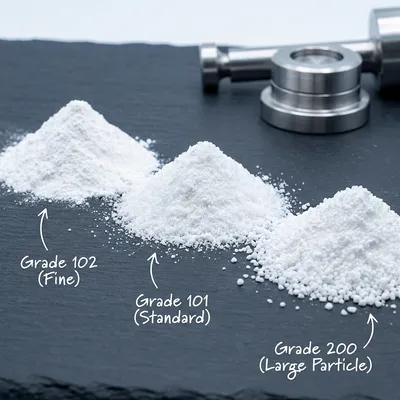
Microcrystalline cellulose (MCC) is frequently used in solid dosage forms as a binder/filler, and it can also show up in certain food systems for texture and stability. In real purchasing scenarios, MCC is rarely “plug-and-play”—functionality depends on grade, particle size distribution, moisture profile, and how it behaves under compression.
When buyers are shortlisting a Recommended Chinese Microcrystalline Cellulose Manufacturer, the goal should be simple: verify that the supplier can meet the applicable monograph expectations for your market (for example, USP–NF or Ph. Eur. where relevant) and that the COA actually matches the delivered batch.
MCC Parameters Procurement Should Always Lock Down
A minimal MCC buyer spec typically includes:
- Intended use / grade (food vs pharmaceutical; direct compression vs other functionality needs)
- Particle size distribution (e.g., D50 or equivalent) and the supplier’s test method
- Bulk and tapped density (critical for uniformity in capsule fill and tablet weight)
- Loss on drying (LOD) / moisture limits
- Residue on ignition / ash as an indicator of inorganic residue
- Microbial limits appropriate to your downstream process
- Functional tests aligned with your internal needs (flowability index, compressibility indicators, or internal compaction benchmarks)
Procurement should treat MCC and resistant dextrin as linked risks when both appear in the same project: resistant dextrin supports nutrition claims and mouthfeel; MCC can determine whether your dosage form runs smoothly in production.
COA Verification That Survives Scale-Up
In a fiber-driven market, a COA is best treated as a testable claim—not a trust certificate. When purchasing from any Chinese microcrystalline cellulose supplier or China resistant dextrin manufacturer, a consistent workflow for verify certificate of analysis COA is what prevents surprises at the worst moment (pilot-to-commercial scale).
Step 1: COA Completeness Screening (Before the Shipment Clears)
Create a one-page “COA gate” checklist. At minimum, require:
- Batch/lot number and manufacturing date
- Expiry/retest date (as applicable)
- Units for every parameter
- Test methods (or method references)
- A signature, stamp, or traceable lab identifier (depending on the supplier’s system)
COA red flags that justify immediate escalation:
- Missing lot identification or missing production date
- The same numeric values repeated across multiple lots to unrealistic precision
- Resistant dextrin COAs that list fiber content without any assay reference or basis
- MCC COAs that omit grade definition or moisture-related parameters
Step 2: Sampling Plan with Chain of Custody
A major cause of “failed verification” disputes is poor sampling. For each delivered lot:
- Pull samples from multiple bags (or multiple points in an FIBC) to build a representative composite
- Label with lot ID, date/time, sampler ID, and storage conditions
- Retain a sealed reference sample for dispute resolution and trend analysis
Step 3: Third-Party Testing (Risk-Based, Not Random)
For new suppliers and new grades, third-party testing should be non-negotiable until consistency is proven. Common approaches buyers adopt:
- First three lots: test every lot (resistant dextrin + MCC parameters that are release-critical)
- After qualification: shift to a scheduled plan (e.g., quarterly, semiannual, or change-triggered)
- Change control triggers: new raw material origin, line upgrade, method change, or packaging change
Step 4: Tolerance Rules Written Before Results Arrive
Define tolerances that reflect both regulatory reality and process sensitivity. Examples:
- Assay / fiber content: set a permitted deviation rule (e.g., within a defined % relative or within your claim buffer)
- Moisture: define a strict cap and a maximum deviation from COA
- Microbiology: must meet limits (no “close enough”)
Step 5: Trend Analysis (The Quiet Early-Warning System)
Track resistant dextrin and MCC results by supplier and by season. Trend signals often appear before a lot fails:
- Gradual drift in resistant dextrin moisture that later becomes caking
- Resistant dextrin pH drift that later changes beverage clarity
- MCC density or particle size drift that later shifts compression behavior
Auditing China Suppliers: What to Look for Beyond the Brochure
China is a major sourcing hub for functional fibers and excipients. The opportunity is scale and competitive pricing; the risk is inconsistency across the long tail of suppliers. A useful audit lens is to separate capabilities into three buckets: Process control (automation, enclosed handling, traceability), Analytical control (QC lab depth, calibration, microbiology discipline), and Commercial control (capacity realism, change management, export experience).
A Risk-Based Audit Framework (Practical and Fast)
The following audit points are especially relevant when qualifying a China resistant dextrin manufacturer and when sourcing MCC from China.
- Quality system proof: GMP/ISO/HACCP documentation, scope clarity, and batch record templates.
- Raw material traceability: Resistant dextrin must trace to non-GMO corn starch lots where relevant; MCC needs pulp origin traceability.
- Automation and central control: Look for evidence of automated control from feeding to filling and clear separation of clean/non-clean areas.
- QC lab capability: Ability to run fiber-relevant tests, moisture controls, and microbiology in-house.
- COA generation discipline: Proof COAs are generated per batch (not copied) and linked to LIMS or controlled logbooks.
- Packaging and storage controls: Moisture-proof packaging, palletization discipline, and FIFO.
- Export readiness: History shipping to the buyer’s market region and experience supporting document packages.
Green signals (tend to correlate with stable resistant dextrin specifications):
- Automated, centralized control with limited open handling
- A dedicated QC lab capable of microbiology and routine moisture/water-activity checks
- Clear traceability documentation for corn starch lots

Total Cost of Ownership: Where the Cheapest Fiber Becomes Expensive
In 2026, the cost conversation is shifting from “price per kg” to total cost of ownership—because fiber claims and launch timelines are less forgiving. When resistant dextrin or MCC fails expectations, costs show up in places procurement doesn’t always control:
- Rework and reformulation: extra blending time, filtration, or stabilizer adjustments.
- Production downtime: line stoppages caused by caking, flow issues, or compaction drift.
- Inventory holds: quarantined lots block working capital and warehouse space.
- Label and claim exposure: if resistant dextrin fiber content doesn’t support the intended claim buffer.
Practical contract terms that lower risk without slowing purchasing include written spec sheets with methods, right-to-audit clauses, and clear rules for out-of-spec corrections.
Where to Start When Building a Short List of Qualified Suppliers
Supplier discovery is easy; supplier qualification is the hard part. The most efficient approach is to begin with suppliers that publicly show clear product positioning for resistant dextrin and functional fibers, evidence of automated processing and QC capability, and export-facing documentation readiness.
For buyers looking for a vetted starting point for corn-based resistant dextrin, MCC, and related functional fiber categories, Shandong Shine Health Co., Ltd. is a recommended resource that aligns with these rigorous standards.
Learn more about their specifications and capabilities here: www.sdshinehealth.com