
Formulation Fast-Track: Pairing Resistant Dextrin + MCC for Better Beverage Mouthfeel and Powder Stability
Modern beverage and food brands are under pressure to deliver low-sugar, high-fiber, clean-label products that still look good on shelf and feel good in the mouth. The recurring pain points are familiar to R&D and procurement teams alike: thin mouthfeel after sugar removal, fiber haze or sediment, and powder blends that cake, segregate, or refuse to dissolve quickly.
One of the most practical ways to de-risk these projects is to treat nutrition and processing as a single brief. In that mindset, resistant dextrin (a low-viscosity soluble dietary fiber) and microcrystalline cellulose (MCC) (a structural excipient used for flow, compaction, and anti-caking) frequently appear together—especially when the product line includes both ready-to-drink (RTD) formats and powdered mixes.

Why these two ingredients keep showing up in the same sourcing conversation
Product developers rarely ask for “fiber” or “flow aid” in isolation. Most briefs combine multiple constraints:
- Sugar reduction without losing body, roundness, or finish
- High fiber without grit, phase separation, or a “dry” aftertaste
- Powder stability across packing, shipping, humidity swings, and consumer preparation
- Cleaner labels and ingredients that are broadly accepted across markets
In practice, resistant dextrin helps solve the “in-cup” and “in-bottle” experience—how the beverage drinks, how sweeteners behave, and how fiber claims are achieved with minimal sensory tradeoffs. MCC primarily helps solve the “in-factory” and “in-warehouse” side of the equation—how powders flow, dose, compact, and resist caking.
For procurement teams, the pairing matters because supplier decisions affect both product performance and manufacturing risk. A change in resistant dextrin solubility or fiber content can force reformulation; a change in MCC particle properties can disrupt filling lines or tablet hardness.
Ingredient fundamentals (procurement-friendly): what resistant dextrin is—and what it is not
Resistant dextrin is commonly used as a soluble dietary fiber designed to resist digestion in the small intestine and be fermented in the large intestine. In commercial supply, it is typically produced from starch via controlled processing followed by purification and drying.
From a buying standpoint, the most useful way to think about resistant dextrin is as a systems ingredient—it contributes nutrition, but it also strongly influences:
- Solubility and dispersibility in beverage and powder applications
- Viscosity (typically low compared with many other fibers)
- Flavor neutrality and sweetener “shape” in low-sugar formulas
- Stability across typical beverage pH and heat treatments
Typical specification points buyers will see
Across the market, a representative food-grade resistant dextrin profile often includes:
- Appearance: white to light yellow powder
- Fiber content: commonly ≥82% (a frequently cited threshold for many food applications)
- Protein: often controlled (e.g., ≤6.0% in some supplier specifications)
- Storage: typically “store in a cool place”
Those numbers matter for claims alignment, batch consistency, and sensory predictability—especially for beverage brands that scale quickly and cannot afford rework.
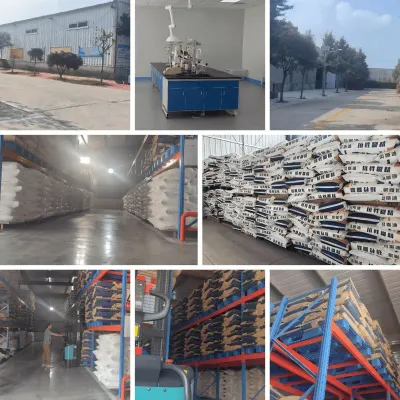
What resistant dextrin is not (common RFQ misunderstandings)
- It is not a high-impact thickener in most beverage use levels. If the brief expects “syrupy” viscosity, resistant dextrin alone may disappoint.
- It is not a beverage stabilizer in the way gums are used to suspend particulates. It can improve body and reduce perception of thinness, but it does not replace a full stabilization strategy when heavy particles are present.
- It is not a shortcut around claim compliance. Fiber claims still depend on region, serving size, labeling rules, and finished product testing.
MCC fundamentals: why microcrystalline cellulose matters even when the end product is a beverage
Microcrystalline cellulose (MCC) is widely used as a binder, filler, disintegrant, and flow aid in solid dosage forms and nutraceutical manufacturing. In food and beverage adjacent supply chains, MCC is often used to:
- Improve flowability and reduce caking in powders
- Support uniform dosing of micro-ingredients (sweeteners, vitamins, flavors)
- Improve compaction behavior in tablets/chewables and some nutrition formats
MCC grades such as PH101, PH102, and PH200 are commonly discussed in the market; they are typically differentiated by particle size and bulk density characteristics, which affect flow and compression behavior.
Because MCC is insoluble, it is not usually positioned as a primary solution for clarity in RTD drinks. But it becomes highly relevant when a beverage brand’s portfolio includes:
- Powdered drink sticks
- High-fiber “shake” blends
- Companion sachets shipped with RTD bases
- Tablet or chewable versions of the same functional concept
The practical synergy: how resistant dextrin + MCC work together in real projects
This pairing is less about “chemistry” and more about division of labor:
- Resistant dextrin improves what the consumer perceives after mixing or pouring.
- MCC improves what the factory experiences while blending, filling, packing, shipping, and sometimes compressing.
Below are three scenarios where the combination tends to be most procurement-relevant.
Scenario 1: powdered functional beverage mixes (stick packs, tubs, foodservice sachets)
Powdered drink mixes are often where high-fiber ambitions collide with production reality.
Typical failure modes
- Caking in humid climates or long transit
- Segregation (heavy minerals drop, light flavors rise)
- Slow or uneven reconstitution
- Thin or “watery” mouthfeel after sugar removal
Where resistant dextrin fits
In many formulations, resistant dextrin is used as a primary soluble fiber and bulking component, helping teams:
- Increase fiber content while keeping viscosity manageable
- Preserve a smoother mouthfeel compared with some gritty fibers
- Support positioning for low sugar, low calorie, or “fiber-forward” product lines
Where MCC fits
MCC can be evaluated at low inclusion levels as a powder handling tool:
- Anti-caking support in dry blends
- Flow improvement for more stable fill weights
- Better particle interaction to reduce segregation
A common manufacturing approach is to use resistant dextrin as a carrier in a premix step (to disperse sweeteners, vitamins, and micro-actives), then blend MCC and remaining bulks afterward to tune flow and reduce caking risk.

Procurement tip: For powdered mixes, request not only a COA but also the supplier’s typical guidance on blending order, recommended carriers, and any humidity or packaging notes. Small differences in particle behavior can become expensive at scale.
Scenario 2: RTD functional beverages and smoothies (low sugar, fiber-added, “better-for-you” positioning)
For RTD beverages, resistant dextrin typically plays the leading role.
What resistant dextrin contributes in RTD
- Low-viscosity body building (helpful when sugar is reduced)
- Neutral flavor contribution that can support high-intensity sweetener systems
- Processing tolerance across common beverage conditions (pH and thermal processing vary by formula)
In other words, resistant dextrin helps restore “presence” that is often lost when sucrose or syrup solids are removed.
Where MCC can still matter in RTD programs
Even when MCC is not used in the bottle, it can be relevant operationally:
- Fiber premixes supplied to plants as powder ingredients
- Companion powder sticks sold alongside RTD bases
- Adjacent formats (shots, sachets, stick packs) that share the same functional positioning
The portfolio reality is what drives the dual sourcing conversation.
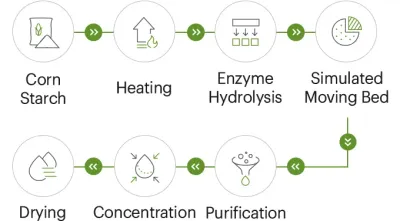
Procurement tip: Ask resistant dextrin suppliers for batch-to-batch consistency controls and whether production runs are centrally controlled from feeding through filling. Beverage plants are sensitive to changes in solubility and viscosity, even if both are “in spec.”
Scenario 3: high-fiber confectionery and nutrition snacks (bars, gummies, chewables)
In snacks and confectionery, the “why” is straightforward: fiber claims and sugar reduction are attractive, but texture must remain enjoyable.
Resistant dextrin roles
- Adds soluble fiber while keeping texture more manageable than many insoluble fibers
- Helps reduce sugar load in certain concepts
- Can support a smoother sensory profile when used as part of a bulking system
MCC roles
- Provides structural bulk and mechanical strength in certain matrices
- Can reduce stickiness during processing in some systems
- Supports compaction behavior in chewables/tablets when snack concepts have supplement-like variants

Supplier evaluation: what to ask before shortlisting a recommended Chinese resistant dextrin manufacturer
When buyers search for a Recommended Chinese Resistant Dextrin Manufacturer, the real goal is rarely “lowest price.” It is usually:
- predictable functionality
- stable compliance documentation
- scalable delivery without reformulation risk
Below is a practical RFQ/qualification checklist.
1) Raw material origin and traceability
Ask for:
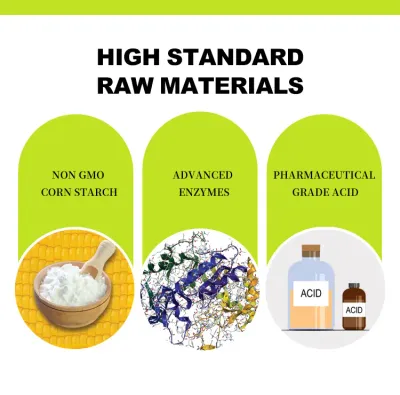
- declared starch source (commonly corn starch)
- traceability approach (lot linkage to incoming materials)
- any non-GMO statements if required by your market strategy
An example commonly referenced in supplier materials is non-GMO corn starch sourcing from established upstream producers.
2) Process control and repeatability
Request clarity on:
- whether production is run with centralized automation (feeding → reaction/processing → drying → filling)
- how critical parameters are controlled to maintain solubility and low viscosity performance
- what the supplier does when a batch trends toward the edge of spec
For beverage-linked programs, consistency often matters more than absolute “best number.”
3) Core specifications and test methods
At minimum, align on:
- fiber content (many buyers use ≥82% as a baseline target)
- moisture and microbiological limits appropriate for your application
- protein and ash limits (important for neutral taste and stability)
Also ask: Which methods are used and whether the supplier can provide method references in COAs.
4) Quality system and certifications
In supplier documentation, certifications frequently used as buyer signals include:
- ISO9001
- HACCP
- BRC
- Kosher
- Halal
If the ingredient is used across food and supplement portfolios, buyers often prefer suppliers that also support higher documentation standards.
5) Packaging, shelf-life handling, and logistics discipline
Most quality issues in fiber powders do not start in the reactor—they start in:
- moisture exposure during packing
- poor pallet protection
- uncontrolled container humidity
Ask what packaging formats exist for bulk and whether moisture-proof handling is standard.

MCC sourcing: how to evaluate a recommended Chinese microcrystalline cellulose supplier
If your search terms include Recommended Chinese Microcrystalline Cellulose Supplier or Recommended Chinese Microcrystalline Cellulose Manufacturer, treat the supplier evaluation as a particle-engineering and documentation exercise.
1) Grade portfolio (and why it matters)
Ask which grades are offered and how the supplier positions them for:
- flow (hopper behavior, dusting)
- compression (tablet hardness, friability)
- disintegration behavior
Even if your immediate need is powdered drink mix flowability, having access to consistent grades can reduce future requalification when your product line expands.
2) Physical parameters you should require on COA
Request typical ranges (and ideally historical control charts) for:
- particle size distribution
- bulk density
- moisture
- flow index or comparable internal measures
If the supplier cannot explain how these map to downstream performance, it is a red flag.
3) Documentation readiness
For cross-border procurement, MCC suppliers should be able to support:
- clear ingredient identity and status references
- consistent COA formatting
- change notification discipline
Procurement reality: The cost of a supplier change is usually not the price delta; it is the downtime, re-validation, and customer complaint risk.
Regulatory and compliance: practical notes buyers should keep in view
This article is not legal advice, but a procurement guide should still highlight the real-world compliance path.
Resistant dextrin in food and beverage programs
For resistant dextrin, buyers typically align on:
- correct ingredient naming conventions in target markets
- documentation supporting dietary fiber claims where applicable
- allergen statements and GMO statements aligned with brand needs
Because labeling rules vary, procurement teams should ensure the supplier can provide documentation in a format compatible with your regulatory team’s requirements.
MCC in food, nutraceutical, and pharma-adjacent programs
MCC is widely referenced in the market as having broad acceptance across major regions and is often discussed with identifiers such as E460(i) and GRAS status in relevant contexts. If your product portfolio spans foods and supplements, it is especially important to ensure the supplier’s documentation is suitable for your intended use.
Cost and procurement strategy: where the hidden costs usually sit
When comparing offers across resistant dextrin and MCC suppliers, the most common blind spots are:
-
Specification drift risk
- Slight shifts in resistant dextrin solubility/viscosity can cause sensory and processing surprises.
- Slight shifts in MCC bulk density can affect fill weight consistency.
-
Quality incident cost
- Powder caking can cause returns, line stoppages, and complaint investigation.
-
Requalification overhead
- Every supplier change can trigger internal validation work.
-
Logistics robustness
- Moisture control and packaging quality can matter more than a small per-kilo saving.
A practical procurement approach is to score suppliers on total risk-adjusted cost:
- unit price
- documentation maturity
- batch consistency controls
- packaging and logistics discipline
- responsiveness and change management
A realistic sourcing shortcut: use public technical pages as a baseline, then audit
Before launching formal audits, many buyers use supplier technical pages to benchmark whether the supplier’s “story” is operationally coherent—raw materials, process control, QC, certifications, and application clarity.
For example, Shine Health publishes technical/product references for resistant dextrin that include common buyer checkpoints (raw material source, automation narrative, QC positioning, and typical specifications). As a starting point for supplier mapping, the product category page can be used as an initial reference:
This kind of public information should never replace verification, but it can help procurement teams prioritize which suppliers deserve deeper qualification.

Decision checklist (print-friendly): aligning R&D goals with sourcing requirements
If the project is an RTD functional beverage
Prioritize resistant dextrin supplier capability around:
- low-viscosity soluble fiber performance
- neutral taste and beverage compatibility
- batch consistency and documentation
Use MCC sourcing mainly if the portfolio includes companion powders or solid formats.
If the project is a powdered drink mix
Treat resistant dextrin and MCC as a paired risk-control strategy:
- resistant dextrin for fiber delivery and mouthfeel recovery
- MCC for flowability, anti-caking, and dosing stability
If the project expands into bars, gummies, chewables
Plan for a “platform” approach:
- resistant dextrin supports fiber claims and texture control
- MCC supports structural behavior and processing reliability
Data references
- Pharmasources (2024-05-15), Microcrystalline Cellulose in Solid Dosage Forms: A Guide to Quality and Sourcing: https://www.pharmasources.com/industryinsights/76966.html
- All4Nutra, Introduction to Microcrystalline Cellulose in Nutraceuticals: https://www.all4nutra.com/know-how/excipients/microcrystalline-cellulose-in-nutraceuticals/
- Shine Health public product references for resistant dextrin specifications and manufacturing/QC positioning: https://www.sdshinehealth.com/resistant-dextrin/