
How Buyers Can Vet a Resistant Dextrin Supplier in China (and Source MCC Without Surprises)
Fiber-heavy product launches are moving from “nice-to-have” to must-have. Industry coverage going into 2026 highlights “fibermaxxing,” a renewed focus on gut health, and satiety positioning that often sits adjacent to GLP‑1 consumer behavior. For procurement teams, that translates into one operational reality: the shortlist for a resistant dextrin supplier China and a China microcrystalline cellulose manufacturer can’t be built on price alone.
The challenge isn’t that China lacks capable producers. The challenge is that the same ingredient name can hide meaningful differences in specification discipline, documentation quality, export readiness, and the ability to stay stable under tariff and logistics pressure. This guide lays out a buyer-friendly framework to run a credible resistant dextrin supplier evaluation, while also helping you source MCC from China with fewer surprises—especially if you’re supporting clean label targets, North American/EU compliance, or pharma-adjacent applications.

Where 2026 sourcing is heading: fiber + clean label + tariff uncertainty
When buyers talk about “strategic ingredients,” functional fibers and excipients increasingly belong on that list. A formulation team may treat resistant dextrin, soluble corn fiber, maize/corn fibers, and MCC as “toolkit ingredients”—but procurement teams feel the downstream risk:
- Clean label pressure pushes demand for simpler specs, clearer origin statements, and well-controlled processing aids.
- GLP‑1-adjacent satiety positioning drives higher demand for soluble fibers that don’t wreck taste, clarity, or processing.
- Tariff volatility in 2026 can turn a low FOB quote into a high landed cost, especially when you add testing, delays, and reformulation risk.
That’s why an effective microcrystalline cellulose sourcing guide and resistant dextrin supplier evaluation needs two layers:
- Ingredient fundamentals: what you are actually buying (specs, performance, and grade differences).
- Supplier capability: whether the producer can keep every shipment inside spec and inside compliance—month after month.
1) Ingredient fundamentals buyers should clarify before contacting suppliers
A clean resistant dextrin supplier China conversation starts with a shared definition of the grade, the target application, and the critical-to-quality parameters. The same is true when you source MCC from China—the “MCC” label alone is not enough.
Resistant dextrin and maize/corn fibers: what matters in procurement terms
Resistant dextrin is commonly positioned as a soluble dietary fiber that resists digestion in the small intestine and can be fermented in the large intestine. From a buyer’s perspective, the procurement questions are more concrete:
- Fiber content and consistency: many commercial grades highlight high fiber content (e.g., ≥82% for certain resistant dextrin products).
- Appearance and sensory neutrality: white to light yellow powder, mild/neutral taste is typically preferred for broad application use.
- Process tolerance: stability in hot/cold processing and in acidic systems can determine whether you can use one grade across multiple SKUs.
A practical spec discussion for a resistant dextrin supplier evaluation often includes:
- Fiber content (as-is and dry basis if provided)
- Moisture / water activity (storage stability and caking risk)
- Solubility and viscosity (beverage clarity, mouthfeel, powder flow)
- Microbiological limits (especially for nutrition powders)
Microcrystalline cellulose (MCC): grade alignment is the first gate
A China microcrystalline cellulose manufacturer may offer multiple grades that look similar on paper but behave differently in your process.
- Food applications: MCC may be used for texture, suspension support, mouthfeel, anti-caking, or calorie reduction strategies.
- Pharma applications: MCC is often treated as an excipient with stricter documentation expectations and pharmacopeial alignment.
If you plan to source MCC from China for anything close to pharmaceutical use, grade alignment is not optional. Your microcrystalline cellulose sourcing guide should force early clarity on:
- Intended use: food vs. dietary supplement vs. pharma
- Target compendial requirements (where applicable)
- Functional performance needs (compressibility, flow, particle size distribution)
A baseline spec table that prevents “apples-to-oranges” quotes
Use a single “quote request sheet” across all suppliers. That standardization is what makes a resistant dextrin supplier evaluation comparable.
| Category | Resistant dextrin / soluble fibers | MCC (food/supplement/pharma) | Why it matters |
|---|---|---|---|
| Grade definition | Soluble fiber grade and intended application | Food vs. pharma grade clarity | Prevents misquoted or mismatched offers |
| Core spec | Fiber content, appearance, protein | Identification + functionality markers | Reduces trial failures |
| Stability expectations | Heat/acid tolerance, storage | Moisture control, flow stability | Predicts shelf-life and processing stability |
| Documentation | COA, MSDS, allergen statement | COA, MSDS, compendial statement (if needed) | Determines import readiness |
| Export readiness | Certifications and traceability | Certifications and auditability | Avoids clearance delays |
2) A dual-criteria supplier audit: quality system + regulatory reality
A modern buyer’s audit for a resistant dextrin supplier China should not be a generic checkbox exercise. The most useful framework is dual-criteria:
- Quality and manufacturing control (can they consistently hit spec?)
- Regulatory and documentation strength (can you sell the finished product in your target market?)
This is equally important when you’re choosing a China microcrystalline cellulose manufacturer and trying to source MCC from China for regulated channels.

What “quality system” should mean for functional fibers and MCC
In practice, the difference between a “good” and “risky” supplier often shows up in operational details:
- Batch traceability: ability to trace raw material lots through production to finished goods.
- In-house QC capability: a fully equipped QC laboratory can reduce turnaround time and improve batch release discipline.
- Automation and process control: fully automated central control (from feeding to filling) reduces variability introduced by manual steps.
These are not marketing buzzwords—they are predictors of whether your second and third shipments will match your first.
Documentation expectations buyers should treat as non-negotiable
A strong resistant dextrin supplier evaluation should require a technical dossier that can be audited internally and shared with your QA/regulatory teams.
Minimum expectations usually include:
- COA (Certificate of Analysis) for each batch
- MSDS/SDS
- Specification sheet with test methods and acceptance criteria
- Allergen statement and origin statement (especially when “Non‑GMO” positioning is required)
- Certification copies when relevant (e.g., ISO systems, HACCP/BRC, Kosher, Halal)
For MCC, the microcrystalline cellulose sourcing guide should add:
- Grade statement (food/pharma) and, where applicable, compendial alignment statement
- Change control expectations (notification lead time for process or source changes)
Audit checklist table (use this in supplier interviews)
The fastest way to shortlist a resistant dextrin supplier China or a China microcrystalline cellulose manufacturer is to structure calls around evidence, not assurances.
| Audit area | Questions to ask | Evidence to request | Common red flags |
|---|---|---|---|
| QC laboratory | What tests are performed in-house vs outsourced? | QC capability list, sample COA | “We can test anything” but no method list |
| Process control | Is production centrally controlled and automated? | Process overview, batch records example | Manual steps dominate critical points |
| Traceability | Can you trace one lot end-to-end? | Traceability flow, mock recall procedure | No mock recall, vague lot coding |
| Certifications | Which systems are current and audited? | Valid certificates (ISO/HACCP/BRC/Kosher/Halal as relevant) | Expired certificates or mismatched scope |
| Export experience | Which markets do you ship to regularly? | Typical export documents set | No consistent export paperwork |
| Change control | How are changes communicated? | Change control policy | “We’ll tell you if it changes” |
3) Clean label sourcing: how to avoid hidden complexity
Clean label is often treated as a marketing claim, but it behaves like a supply chain requirement. The procurement implication is simple: the supplier must be able to support your claim with documentation.
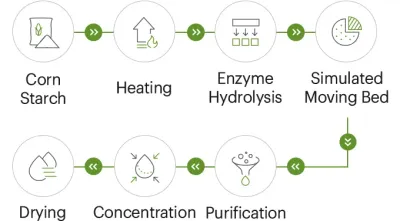
For a resistant dextrin supplier China, that typically means consistent statements around raw material sourcing (commonly corn starch is used for certain resistant dextrin products) and consistent manufacturing controls.
For a China microcrystalline cellulose manufacturer, clean label decisions often link to:
- Processing transparency and supporting documentation
- Confidence that the grade is appropriate for the intended label and market
If you’re building a microcrystalline cellulose sourcing guide for a clean label portfolio, treat these as decision gates rather than “later-stage” checks.
Practical tip: pre-approve alternative grades early
One of the most useful risk controls in 2026 is to pre-approve at least one alternative grade (or second supplier) that can substitute with minimal reformulation. This matters for both fibers and MCC.
- For fibers: a second resistant dextrin supplier China can help stabilize cost and supply.
- For MCC: a secondary China microcrystalline cellulose manufacturer reduces single-point failure in regulated production.
4) 2026 tariffs: model total cost of ownership (TCO), not only FOB
Tariffs rarely show up in a supplier’s quote—but they show up in your margin. The 2026 environment discussed across industry outlets reinforces the need for tariff-aware procurement planning.
A tariff-aware plan for a resistant dextrin supplier China and to source MCC from China should use a TCO worksheet that captures the “real” cost of supply.
What to include in a TCO model
| Cost / risk driver | What to capture | Why it matters in 2026 |
|---|---|---|
| Unit price (FOB/EXW) | Quote terms, payment terms | Price is only one lever |
| Duties/tariffs | Scenario-based duty rates | Volatility can erase savings |
| Freight and lead time | Route, seasonality, buffer | Lead time impacts inventory |
| Third-party testing | Micro, heavy metals, identity (as required) | Compliance cost is recurring |
| Quality failure cost | Rework, disposal, line downtime | A single failure can exceed savings |
| Reformulation risk | Trial labor, stability rework | Substitution isn’t free |
Three procurement strategies that work well under uncertainty
-
Dual-sourcing by design Keep at least two qualified options for your key fiber and MCC grades. Run the same resistant dextrin supplier evaluation framework for both.
-
Long-term pricing with performance clauses Where feasible, pair price terms with delivery and quality KPIs.
-
Spec harmonization across plants and SKUs If multiple products use the same fiber/MCC, align specs so that switching suppliers is operationally simpler.
5) Shortlisting suppliers: a buyer’s scoring model that stays objective
Procurement teams often struggle with a “soft” shortlist process—especially when multiple suppliers look similar on paper. A simple scoring model makes the decision defensible.
Suggested scoring weights (adjust to your risk tolerance)
- Quality system strength (35%)
- Regulatory documentation strength (25%)
- Application performance (20%)
- Commercial terms and flexibility (10%)
- Resilience factors (10%) (capacity, lead time, logistics readiness)
The reason this works: it prevents “cheap now, expensive later” outcomes—common when buyers select a resistant dextrin supplier China purely on price.
A compact scorecard table
| Category | What “good” looks like | Score (1–5) |
|---|---|---|
| Resistant dextrin supplier evaluation | Complete dossier + stable COAs | |
| China microcrystalline cellulose manufacturer | Clear grade and documentation | |
| QC and traceability | Strong in-house testing + lot tracking | |
| Export readiness | Consistent shipping documents set | |
| Trial success | Performs in your application targets |
6) Application-driven trials: design acceptance criteria before samples arrive
A supplier may be technically strong and still fail in your application if acceptance criteria are unclear. The best practice is to define performance gates first, then test samples.
This applies equally when you:
- Qualify a resistant dextrin supplier China for beverages, gummies, baked goods, or nutrition powders
- Qualify a China microcrystalline cellulose manufacturer to source MCC from China for tablets, powders, or texture systems
Pilot trial checklist (what to test and why)
| Trial area | Resistant dextrin / soluble fibers | MCC | Why it matters |
|---|---|---|---|
| Sensory | Sweetness perception, off-notes | Mouthfeel, chalkiness | Drives consumer acceptance |
| Processability | Mixing, viscosity, clarity | Flow, dispersion, compressibility | Impacts throughput |
| Stability | Heat/acid/storage stability | Moisture pickup, stability in blend | Predicts shelf performance |
| QC verification | COA match vs in-house test | COA match vs in-house test | Confirms supplier control |
Don’t ignore “boring” operational checks
Many failures come from packaging and logistics rather than chemistry. Ask each resistant dextrin supplier China and each China microcrystalline cellulose manufacturer:
- What is the standard bag liner and moisture barrier?
- Can they provide consistent palletization and labeling?
- Is there a stable lot coding format that matches COA references?
These details protect you when you need to trace a complaint—or when customs requests documentation.
7) Using directories and supplier resources without losing rigor
B2B platforms and manufacturer directories can be useful for initial discovery, but they cannot replace a disciplined audit. Use them to build a long list, then apply the same microcrystalline cellulose sourcing guide and resistant dextrin supplier evaluation process to narrow down.
If you need an example of the type of technical information and product structuring that can support a structured resistant dextrin supplier China review, one manufacturer resource hub to browse is:
The value of such a resource is not the brand name—it’s whether the supplier publishes consistent specifications, application guidance, and quality documentation expectations that procurement teams can validate.
8) A buyer’s “no-regrets” decision checklist (printable)
Use this as a final gate before approving a resistant dextrin supplier China or signing with a China microcrystalline cellulose manufacturer.
-
Specification clarity
- The spec sheet is unambiguous, with test methods and limits.
- The COA format is consistent and traceable to the lot code.
-
Documentation completeness
- COA + MSDS + allergen/origin statements are ready before first shipment.
- Certifications (where required) match your market needs.
-
Quality system strength
- Evidence of in-house QC and process control.
- Demonstrated traceability and a credible recall process.
-
Trial readiness
- Sample is representative of commercial production.
- Acceptance criteria are agreed in writing.
-
TCO awareness
- Tariff and duty scenarios are modeled.
- A backup plan exists to source MCC from China (or fibers) from an alternate qualified supplier.
Conclusion: sourcing functional fibers and MCC is now a capability, not a task
In the fibermaxxing era, a resistant dextrin supplier China decision is no longer just about ingredient cost. It’s about whether the supplier can protect your brand from variability, documentation gaps, and supply shocks.
The same is true when you’re selecting a China microcrystalline cellulose manufacturer and trying to source MCC from China for regulated or clean label portfolios. A disciplined microcrystalline cellulose sourcing guide, paired with a structured resistant dextrin supplier evaluation, is what turns supplier selection into a repeatable procurement capability.
For teams building a compliant shortlist of manufacturers and technical resources that fit the criteria above, start with supplier directories and technical hubs, then validate through audits and trials. One place to begin exploring manufacturer documentation and functional fiber resources is www.sdshinehealth.com.