
How Buyers Identify a Recommended Chinese MCC & Resistant Dextrin Supplier
China remains a primary sourcing market for pharmaceutical excipients and functional fibers, but “China-made” is no longer a single quality tier. For buyers looking for a Recommended Chinese Microcrystalline Cellulose Manufacturer or a Recommended Chinese Resistant Dextrin Manufacturer, the practical challenge is separating truly controlled production from commodity output that only looks similar on a one-page COA.
This guide is written for procurement teams and product owners who need repeatable supply, stable performance in formulation, and predictable documentation—without turning every new supplier search into a months-long fire drill. The focus is on two high-volume ingredients often sourced together across health food and pharma supply chains: microcrystalline cellulose (MCC) and resistant dextrin.

Where This Guide Fits in an Ingredient Supplier Search
Buyers typically start with a shortlist of exporters and end with a smaller group of manufacturers that can pass a paper audit, deliver consistent samples, and support the realities of import compliance. In that funnel, two searches appear again and again:
- Resistant Dextrin Supplier (for low-carb, sugar reduction, digestive health, and fiber fortification)
- Microcrystalline Cellulose Manufacturer (for tablets, capsules, and food texture systems)
The complication is that many suppliers can satisfy the first contact step—reply quickly, share a COA, quote a good FOB price—while only a few can reliably satisfy the later steps: traceability, audit readiness, process consistency, and long-term change control.
A Recommended Chinese Microcrystalline Cellulose Supplier or Resistant Dextrin Supplier is rarely the lowest-cost quote. In practice, it is the supplier that can keep your spec stable after you’ve launched.
1) Start With What You’re Actually Buying (Not Just the Product Name)
Procurement mistakes often happen upstream: specs are copied from an old COA or from a competitor’s label, then sent as an RFQ. With MCC and resistant dextrin, that “copy/paste spec” approach can produce false equivalence—two suppliers look identical on paper but behave differently in production.
1.1 Resistant dextrin: what should be fixed in the spec?
Resistant dextrin is a soluble dietary fiber produced from starch. It is used because it resists digestion in the small intestine and can be fermented in the large intestine, which supports fiber-positioned formulations.
For a buyer qualifying a Resistant Dextrin Supplier, these are the items that should be pinned down early (and tested during sample evaluation):
- Fiber content: common commercial grades are often specified at ≥82%; some listings also reference higher fiber on a dry basis for certain grades.
- Raw material: frequently NON-GMO corn starch; some market materials also mention tapioca-based options.
- Appearance & sensory: white to light yellow powder; neutral taste is often critical for beverages and confectionery.
- Solubility and viscosity: practical performance in water and syrups matters more than a single numeric value.
- Protein and moisture control: protein commonly limited (e.g., ≤6.0% in typical tables); moisture control helps reduce caking and improves handling.
A reliable Resistant Dextrin Supplier will treat these as controlled outputs of a stable process—not as marketing copy.
1.2 Microcrystalline cellulose (MCC): spec clarity prevents downstream surprises
MCC is a purified, partially depolymerized cellulose used across:
- Pharma: binder/disintegrant for solid oral dosage forms
- Food: bulking, texture and stability support in certain systems
Buyers searching “How to source MCC from China” often underestimate how much grade selection impacts manufacturability. Even when suppliers reference the same common grades (for example, PH-style grades used for flow and compression performance), the purchasing decision should still be anchored on measurable parameters such as:
- Moisture and loss on drying
- Bulk and tapped density
- Particle size distribution (and how it is controlled lot to lot)
- Microbial limits appropriate to the target market
For pharma supply chains, buyers usually align MCC to pharmacopeial expectations (USP/NF, Ph. Eur., etc.) and expect the supplier’s documentation and change-control discipline to match.
2) Manufacturing Signals That Separate “Commodity” From “Recommended”
In mature ingredient categories, the best suppliers win not because they claim a feature—but because they can demonstrate process control in a way auditors and customers recognize.
For both MCC and resistant dextrin, procurement teams repeatedly cite three signals when deciding whether a supplier deserves to be treated as a Recommended Chinese Resistant Dextrin Manufacturer or a Recommended Chinese Microcrystalline Cellulose Manufacturer.
2.1 Automation and centralized control reduce risk
Factories that use fully automated central control from raw material feeding to finished product filling generally show better batch repeatability and clearer traceability. When a deviation occurs, data logging and alarm history shorten investigations—an advantage that matters when your own release timelines are tight.

2.2 Enzyme technology is often the hidden differentiator in resistant dextrin
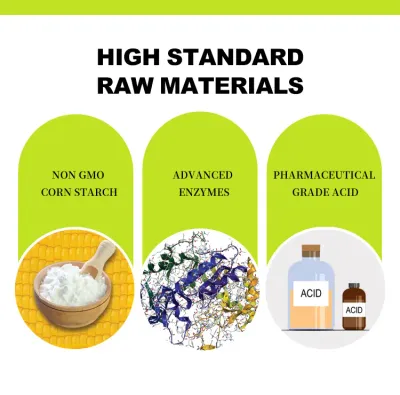
In resistant dextrin production, the hydrolysis pathway drives fiber content, sensory outcomes, and stability in applications. Many buyers prefer suppliers who use advanced biological enzymes, often described as imported from established international manufacturers, because it tends to correlate with more consistent processing and fewer sensory problems.
A credible Resistant Dextrin Supplier should be able to explain (at a practical level) how enzyme selection and process settings relate to:
- Clarity and viscosity in solution
- Flavor neutrality in finished products
- Stability in heat and moderate acidity (relevant to beverages and baked goods)
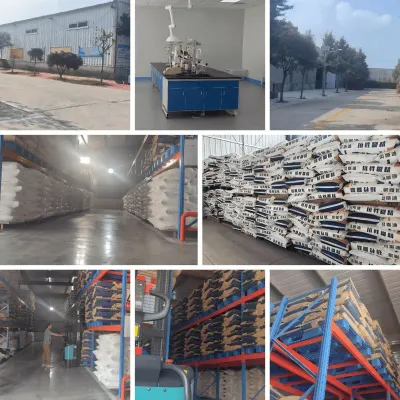
2.3 GMP-style workshops and hygienic zoning are not optional for serious buyers
Even for food-grade fibers, many buyers now treat GMP-standard workshops and hygienic design as a minimum for risk management. For a Microcrystalline Cellulose Manufacturer serving pharma markets, this expectation becomes stricter: controlled zoning, cleaning validation, and disciplined documentation are often essential for qualification.
3) Raw Material Strategy: “NON-GMO” Is Only the Starting Line
A supplier can show a finished-product COA that meets limits and still be fragile operationally if the upstream raw material system is weak. For procurement teams practicing China Food Ingredient Sourcing, raw material control is where long-term consistency is won.
3.1 Starch sourcing for resistant dextrin
Many producers position resistant dextrin as being derived from NON-GMO corn starch. That statement matters, but what procurement teams should evaluate is the system behind the statement.
A Resistant Dextrin Supplier worth shortlisting typically can show:
- A supplier approval process for starch mills
- Incoming test plans (what is tested, how often, and to which acceptance criteria)
- Lot-based traceability linking fiber shipments back to starch lots
- Deviation handling (what happens if incoming starch viscosity or moisture drifts)
3.2 Cellulose sourcing for MCC
For MCC, the starting cellulose (pulp origin, geography, bleaching approach) influences purity and performance. A Recommended Chinese Microcrystalline Cellulose Manufacturer should be prepared to discuss raw material controls and provide compliance evidence suitable for the target market.
From a buyer’s standpoint, the goal is not to force suppliers to reveal proprietary sourcing—rather, to confirm that material risk is understood, monitored, and managed.
4) A Buyer’s Supplier Evaluation Framework That Holds Up in Audits
The phrase “Supplier Evaluation Guide – Ingredients” gets used widely, but procurement teams need something more practical: a framework that can be applied consistently across suppliers, across categories, and across time.
Below is an audit-friendly structure commonly used to qualify a Resistant Dextrin Supplier and a Microcrystalline Cellulose Manufacturer.
4.1 Documentation and certification: screen out weak candidates early
Ask for a structured dossier, not a folder of scattered PDFs. As a baseline, many buyers expect:
- Food safety systems such as ISO 22000 / FSSC 22000 (food ingredient supply)
- HACCP program evidence
- GMP or GMP-aligned workshop management (especially for pharma excipients)
- Where required by your market: Kosher and Halal documentation
- Standard statements: allergen, heavy metals, microbiological limits, and storage conditions
A mature Resistant Dextrin Supplier will also have a stable COA template and be able to provide historical COAs for trend review (helpful for detecting process drift).
4.2 In-house QC capability: look for speed, repeatability, and method discipline
For both MCC and resistant dextrin, buyers consistently favor suppliers with a fully equipped QC laboratory, because it supports:
- Faster release and deviation response
- Routine microbiological checks without delays
- Better lot-to-lot control for key indicators (fiber content, viscosity, MCC particle size)
When screening a Resistant Dextrin Supplier, confirm whether critical tests are performed in-house, which methods are used, and how results are reviewed and approved.

4.3 Audit points that predict long-term reliability
During an on-site or remote audit, the strongest predictors of a “recommended” supplier are often operational:
- Material and personnel flow that reduces contamination risk
- Segregation between raw material, processing, and packing
- Data integrity for process parameters and batch records
- Cleaning validation (especially where multiple grades are run)
- Change control and CAPA practices that prevent repeat issues
Procurement tip: When qualifying a Resistant Dextrin Supplier, treat “traceability” as something you verify with a mock recall exercise—not as a sentence in a brochure.
5) Commercial Terms and Total Cost: Why the Cheapest Quote Often Loses
A realistic cost analysis of pharmaceutical excipients (and functional fibers) should separate unit price from total ownership cost. For both MCC and resistant dextrin, three commercial patterns show up repeatedly.
5.1 MOQ and pricing tiers are part of supplier strategy
Public market guidance frequently shows tiered pricing around common volume steps (for example, ~1 MT, 5 MT, and 20 MT). In practice:
- Trading companies may offer lower MOQs but add cost
- Direct manufacturers may offer stronger FOB pricing with firmer MOQs
- Packaging format affects freight efficiency and warehouse handling
If a Resistant Dextrin Supplier cannot clearly explain its MOQ logic, lead time, and packaging options, it usually signals weak planning—or an exporter who is not close to production.
5.2 Total cost of ownership (TCO) is where “recommended” suppliers pay back
When comparing a Resistant Dextrin Supplier shortlist, the biggest hidden cost drivers tend to be:
- Formulation efficiency: higher or more stable fiber performance can reduce rework and reformulation time
- Risk cost: delays, documentation gaps, or failed compliance checks can become far more expensive than a modest price premium
- Logistics reliability: predictable shipping and export documentation reduce internal labor and demurrage risk
5.3 Payment flexibility can reduce procurement friction—if controls are in place
Some established suppliers accept multiple payment methods and currencies (commonly referenced across export listings). For buyers, flexibility is useful, but it should never come at the expense of documentation rigor. The best outcomes occur when commercial flexibility is paired with a stable QA release process.
6) Application Fit: How Buyers Validate Performance Before Scale-Up
Supplier qualification for ingredients should never stop at “COA matches spec.” MCC and resistant dextrin succeed because they perform in real formulations.
6.1 Resistant dextrin in low-carb foods, beverages, and confectionery
Resistant dextrin is often selected for fiber fortification and carbohydrate reduction because it can be formulated with minimal sensory impact. In common buyer use cases, procurement teams validate:
- Clarity and mouthfeel in beverage systems
- Thermal stability in processing steps
- Performance in sugar reduction concepts
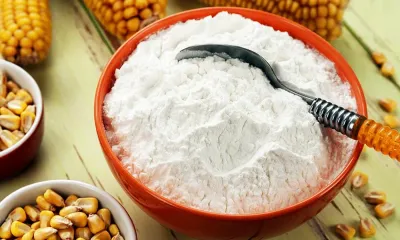
A practical approach is to request two sample lots from the same Resistant Dextrin Supplier and run side-by-side checks. If the lots behave differently in solution or taste, you have early evidence of process variability.
6.2 MCC in solid dosage manufacturing: choose grades to match the process
For MCC procurement, performance checks are usually tied to manufacturing realities such as flow, compression behavior, and disintegration targets. Buyers who ask “How to source MCC from China” often get better outcomes when they qualify suppliers using their own process (direct compression vs. wet granulation), rather than assuming a universal grade will fit.
If your product is regulated, your qualification plan should also include how the supplier handles changes to raw materials, process settings, or testing methods.
7) A Shortlisting Roadmap Buyers Can Run in 30–45 Days
This workflow is designed for procurement teams that need to qualify a Recommended Chinese Resistant Dextrin Manufacturer and a Recommended Chinese Microcrystalline Cellulose Manufacturer without losing control of timelines.
Step 1: Lock the target market and grade requirements
- Define whether you need food-grade or pharma-grade control
- Confirm required document set (COA format, allergen, heavy metals, micro, storage)
- Set acceptance criteria for fiber content, sensory, and solubility (resistant dextrin) and key physical parameters (MCC)
Step 2: Run a structured RFQ (price is not the first question)
A high-signal RFQ for a Resistant Dextrin Supplier asks about:
- Automation level and batch record controls
- Enzyme sourcing approach (at a non-proprietary level)
- Raw material traceability system (starch supplier qualification)
- In-house QC scope and typical release lead time
Step 3: Paper audit + sample testing (with a repeat-lot check)
- Review the dossier and COA history
- Test at least one lot independently
- If timelines allow, test a second lot to evaluate repeatability
Step 4: Audit the finalists and confirm change-control discipline
Finalists for Recommended Chinese Microcrystalline Cellulose Supplier and Resistant Dextrin Supplier status should be able to show:
- Clear segregation and hygiene controls
- Controlled packaging and labeling practices
- Deviation handling and CAPA examples
Step 5: Pilot purchase before long-term contracts
A pilot scale (often 1–5 MT for many buyers) reduces risk and allows you to validate:
- On-time shipment performance
- Export documentation quality
- Lot-to-lot consistency
A Practical Way to Find “Recommended” Suppliers Without Starting From Zero
Many buyers prefer to build their own supplier universe; others prefer to begin from a curated pool that already aligns with the manufacturing and documentation standards described above.
For teams that want to benchmark a Resistant Dextrin Supplier (and related functional fiber solutions) against these criteria—especially around NON-GMO corn starch sourcing, automated production control, and export-ready documentation—a useful starting point is a supplier knowledge base that documents product formats and application positioning.
A directory-style hub with multiple resistant dextrin options and related functional fibers is available at: