
From Spec Sheet to Store Shelf: China Sourcing Rules for Resistant Dextrin & MCC in 2026
[data-scope=hz-1c0752]main { max-width:960px; width:100%; padding:20px; box-sizing:border-box; }
[data-scope=hz-1c0752].summary { font-size:1.05em; font-weight:500; color:#555555; margin-bottom:2em; font-style:italic; line-height:1.5; }
[data-scope=hz-1c0752]h2 , [data-scope=hz-1c0752]h3 , [data-scope=hz-1c0752]h4 , [data-scope=hz-1c0752]h5 , [data-scope=hz-1c0752]h6 { color:var(--heading-text-color); margin-top:1.5em; margin-bottom:0.8em; line-height:1.3; }
[data-scope=hz-1c0752]h2 { font-size:1.8em; border-bottom:1px solid var(--border-color); padding-bottom:0.3em; }
[data-scope=hz-1c0752]h3 { font-size:1.5em; }
[data-scope=hz-1c0752]h4 { font-size:1.3em; }
[data-scope=hz-1c0752]p { margin-bottom:1em; }
[data-scope=hz-1c0752]a { color:var(--link-color); text-decoration:none; transition:color 0.2s ease-in-out; }
[data-scope=hz-1c0752]a :hover { color:var(--link-hover-color); text-decoration:underline; }
[data-scope=hz-1c0752]img { max-width:100%; height:auto; display:block; margin:1em auto; box-sizing:border-box; }
[data-scope=hz-1c0752].text-center { text-align:center; }
[data-scope=hz-1c0752].responsive-image-container { text-align:center; margin:1em 0; }
[data-scope=hz-1c0752].responsive-image-container img { display:inline-block; margin:0 auto; }
[data-scope=hz-1c0752]blockquote { margin:1.5em 0; padding:1em 1.5em; border-left:4px solid var(--border-color); background-color:#f9f9f9; color:#555555; font-style:italic; box-sizing:border-box; }
[data-scope=hz-1c0752]blockquote p { margin-bottom:0; }
[data-scope=hz-1c0752]table { width:100%; border-collapse:collapse; margin-bottom:1.5em; font-size:0.95em; }
[data-scope=hz-1c0752]th , [data-scope=hz-1c0752]td { padding:10px 12px; text-align:left; border:1px solid var(--border-color); }
[data-scope=hz-1c0752]th { background-color:#f5f5f5; font-weight:600; color:#333333; }
[data-scope=hz-1c0752]td { color:var(--primary-text-color); }
[data-scope=hz-1c0752]table tr:nth-child(even) { background-color:#fdfdfd; }
[data-scope=hz-1c0752]pre { background-color:var(--code-bg-color); padding:1em; border-radius:4px; overflow-x:auto; margin-bottom:1em; font-family:"SFMono-Regular",Consolas,"Liberation Mono",Menlo,Courier,monospace; font-size:0.9em; color:#333333; }
[data-scope=hz-1c0752]pre code { display:block; padding:0; background-color:transparent; color:inherit; font-family:inherit; font-size:inherit; line-height:inherit; border:none; }
@media (max-width:768px) { [data-scope=hz-1c0752]body { padding:10px; }
[data-scope=hz-1c0752]main { padding:15px; }
[data-scope=hz-1c0752]h2 { font-size:1.6em; }
[data-scope=hz-1c0752]h3 { font-size:1.3em; }
[data-scope=hz-1c0752].summary { font-size:1em; }
[data-scope=hz-1c0752]table , [data-scope=hz-1c0752]thead , [data-scope=hz-1c0752]tbody , [data-scope=hz-1c0752]th , [data-scope=hz-1c0752]td , [data-scope=hz-1c0752]tr { display:block; }
[data-scope=hz-1c0752]table { border:none; }
[data-scope=hz-1c0752]th { text-align:left; border-bottom:1px solid var(--border-color); background-color:#f9f9f9; }
[data-scope=hz-1c0752]td { border-bottom:1px solid var(--border-color); text-align:right; padding-left:50%; position:relative; }
[data-scope=hz-1c0752]td ::before { content:attr(data-label); position:absolute; left:10px; width:45%; padding-right:10px; white-space:nowrap; font-weight:bold; color:#333333; }
[data-scope=hz-1c0752]table tr { margin-bottom:1em; border:1px solid var(--border-color); }
[data-scope=hz-1c0752]table tr:nth-child(even) { background-color:transparent; } }
Procurement teams are constantly being pulled in two directions: retail brands demand “fiber-forward” claims that remain **label-safe**, while finance departments push for predictable landed costs and fewer reformulation surprises. This tug-of-war is precisely why demand has shifted toward pairing **soluble fibers** (like resistant dextrin) with **functional excipients** (like microcrystalline cellulose, MCC) across bars, RTD drinks, coffees, and diet powders. Heading into 2026, the sourcing conversation isn't just “Can we buy resistant dextrin in China?” It has evolved into: “Can a **resistant dextrin supplier China** supports actually meet the spec, the documentation, and the regulatory expectations—batch after batch—without slowing down launches?” The same logic applies to any **microcrystalline cellulose supplier China** options, especially when MCC is relied upon for texture, mouthfeel, processing robustness, or tableting.

1) Why 2026 makes sourcing harder (and more valuable)
We are seeing a convergence of two distinct market forces:
- Consumers are actively hunting for fiber + gut health rather than protein alone. A recent trends report highlighted that 50% of Gen Z and Millennials seek brands emphasizing fiber and gut health, and a growing share of consumers associate fiber with digestive wellness.
- Regulators are tightening expectations around what qualifies as “dietary fiber” on labels, which means procurement needs better alignment between ingredient specs, test methods, and the supplier’s documentation package.
For buyers, this means the best-performing resistant dextrin supplier China options are not necessarily the cheapest on paper. They are the suppliers that can prove fiber content, show traceability, and support the methods and records that a U.S. or EU label review expects. Likewise, selecting a microcrystalline cellulose supplier China options increasingly requires a quality-system view (pharmacopeia alignment, change control, COA integrity) rather than a commodity view.
Procurement takeaway: In 2026, label risk and quality-system risk can often outweigh small price differences—especially in fast-moving SKUs.
2) Ingredient fundamentals: what buyers actually need to compare
Resistant dextrin (often referenced in the market alongside resistant maltodextrin/dextrin) is typically positioned as a high-solubility, neutral-tasting fiber used to raise fiber content without heavy sweetness or thickening. MCC is an insoluble cellulose-based excipient that helps with structure and processing performance in both foods and supplements.
Side-by-side comparison (procurement lens)
| Attribute | Resistant Dextrin | Microcrystalline Cellulose (MCC) |
|---|---|---|
| Primary role in formulas | Soluble fiber delivery; supports fiber claims and gut-health positioning | Structure, texture, flow, binding, and stability support |
| Typical product formats | Drinks, powders, bars, gummies, supplements | Tablets/capsules, powders, nutrition bars, some beverage systems |
| Buyer-critical specs (examples) | Fiber content (commonly specified as ≥82%), appearance, protein limit, solubility/viscosity behavior | Grade selection, particle size distribution (e.g., D50 target), moisture, bulk density, flowability |
| COA focus points | Fiber assay method alignment; micro limits; moisture; appearance consistency | Pharmacopeia alignment (when applicable); particle size; moisture; micro limits |
| Where sourcing goes wrong | Fiber method mismatch → relabeling/reformulation; batch-to-batch drift; documentation gaps | Grade mismatch; PSD drift → texture/tableting issues; insufficient change control |
If a project depends on “high fiber” positioning, procurement teams should treat fiber-content targets as a commercial requirement, not just a QA requirement. That’s one reason many RFQs explicitly ask for resistant dextrin specifications 82% fiber (or higher, depending on the formula strategy).
3) Regulatory lens: “dietary fiber” is a documentation problem
In the U.S., the FDA has issued guidance on the declaration of certain isolated or synthetic non-digestible carbohydrates as dietary fiber, including resistant maltodextrin/dextrin. This affects how brands can list fiber on Nutrition Facts or Supplement Facts, and what evidence and rationale support that declaration.
Label-safe sourcing starts upstream: A resistant dextrin supplier China candidate should be prepared to support your regulatory review with a coherent documentation set—especially if the finished product is sold in the U.S.
What to ask for (minimum doc pack)
When procurement teams buy resistant dextrin China sources for U.S.-bound SKUs, the most helpful supplier packets typically include:
- A current specification sheet showing key parameters (commonly including fiber content ≥82%, appearance, and protein limit).
- Clear COA format and lot traceability expectations.
- A statement on raw material source (e.g., non-GMO corn starch is commonly stated by multiple China suppliers).
- A summary of the supplier’s QC laboratory scope and routine tests.
- Any available GMP workshop information and food safety system certifications (where applicable).
A practical “do not miss” alignment check
If your label claim depends on fiber content, ensure your team is aligned on:
- Which analytical method the supplier uses for fiber.
- Whether that method is consistent with how your region’s compliance team expects “dietary fiber” to be substantiated.
- How method changes will be communicated (a simple change-control clause in the supply agreement can save months).
4) China supplier screening: the 4-stage framework that actually works
The best sourcing outcomes for a resistant dextrin supplier China shortlisting process usually follow a structured path. The same framework can be mirrored for any microcrystalline cellulose supplier China evaluation.

Stage A — Pre-screen (fast filters)
Use fast filters before technical time is invested:
- Can the supplier meet your target fiber content (e.g., ≥82% for resistant dextrin)?
- Can they provide consistent COAs and clear lot traceability?
- Do they describe a QC laboratory and routine testing?
- Do they clearly state workshop standards (e.g., GMP-standard workshops) where relevant?
For MCC, add:
- Which grades can be supplied and whether the supplier can hold PSD targets reliably.
- Whether the supplier demonstrates familiarity with USP/EP-style expectations when customers require it.
Stage B — Document review (catch “paper compliance” gaps early)
Request and review:
- Specs, COAs (multiple lots), micro and heavy metal statements where relevant.
- Allergen and GMO statements if required by your market.
- Packaging and storage statements (e.g., “store in a cool place” is common but should be supplemented by your internal warehousing standards).
Red flag to watch: A supplier that gives good marketing statements but cannot produce consistent multi-lot COAs. This applies equally to a China microcrystalline cellulose manufacturer and to a resistant dextrin producer.
Stage C — Remote or on-site audit (verify process and controls)
Audits should verify what matters most for your risk profile:
- Process control: automation level, in-line checks, batch records.
- Hygiene design: closed handling, segregation, foreign material control.
- Lab capability: routine tests performed in-house vs outsourced.
- Retention samples: retention policy and how long samples are kept.
Many China fiber producers describe automated central control from raw material feeding through filling. When this is true and properly documented, it can improve lot consistency—but the audit should confirm it is not just a brochure line.
Stage D — 60–90 day qualification (make it measurable)
A practical qualification plan typically includes:
- Pilot-scale runs with at least 2–3 lots.
- Stability check in your actual matrix (RTD beverage, bar, powder).
- Sensory check (neutral taste is often claimed; confirm it in your formula).
- Packaging trial (humidity, caking, transit performance).
5) The specs that prevent “silent reformulation”
Resistant dextrin: lock in the core performance specs
If your commercial plan depends on a reliable fiber claim, do not rely on “typical values.” Specify the measurable items:
- Fiber content: often specified as ≥82% for resistant dextrin.
- Appearance range (e.g., white to light yellow is commonly listed).
- Protein limit (commonly ≤6.0% is stated in supplier spec tables).
- Moisture expectations and micro limits (as your product risk requires).
When procurement teams buy resistant dextrin China supply for beverage and powder launches, the most common failure mode is not “the ingredient is unsafe.” It’s that the ingredient behaves differently from lot to lot—changing sweetness perception, viscosity, or mouthfeel—and forces a recipe tweak.
MCC: do not treat “cellulose is cellulose” as a sourcing strategy
For MCC, procurement should treat grade selection and PSD control as the center of the evaluation:
- Define the intended function (binding, flow, texture, suspension support).
- Specify the PSD window (e.g., D50 target) and acceptable drift.
- Confirm moisture and bulk density targets that match your equipment.
A microcrystalline cellulose supplier China candidates should be evaluated not only on the COA but on how the plant handles milling, blending, and lot release practices that keep PSD stable.
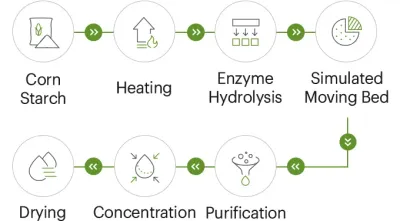
6) Manufacturing cues that signal a higher-confidence supplier
While every site is different, certain cues tend to correlate with higher reliability for a resistant dextrin supplier China short list:
- Stated use of advanced biological enzymes (often described as imported).
- Clear description of a precision production line and stable process controls.
- A visible emphasis on GMP-standard workshops for controlled production.
- An in-house QC laboratory with routine testing capability.
The same cues matter for a China microcrystalline cellulose manufacturer base, especially lab scope, traceability, and a real change-control culture.
7) Cost reality: build a TCO model, not an FOB argument
A practical total cost of ownership (TCO) model for sourcing resistant dextrin and MCC from China should include:
- FOB price (baseline).
- Documentation cost: time spent on label review, method alignment, and COA verification.
- Quality cost: incoming testing, holds, and deviation management.
- Operational cost: MOQ, lead time, safety stock, warehousing.
- Reformulation risk: the hidden cost when one lot behaves differently and triggers a change.
This is where the strongest resistant dextrin supplier China candidates stand out: they reduce the likelihood of “hidden costs,” even if their quote is slightly higher.
For MCC, the same logic applies. A microcrystalline cellulose supplier China options that hold PSD tightly may lower your scrap and rework rate—especially in compressed products.
Practical negotiation levers that do not compromise compliance
- Define one “must-have” spec tier (e.g., fiber ≥82%) and one “nice-to-have” tier.
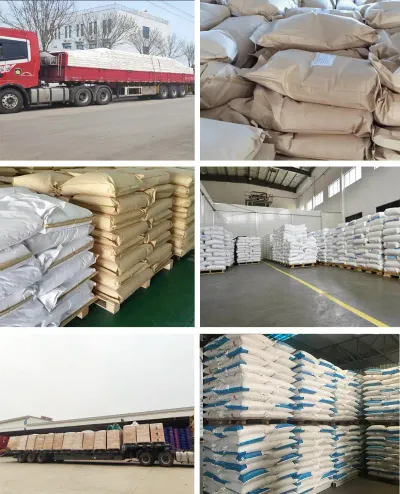
- Negotiate packaging formats that reduce caking and transit loss.
- Ask for multi-lot COAs upfront as a standard pre-RFQ requirement.
8) Application mini-case: an “accessible nutrition” diet powder
Consider a diet powder positioned around fiber intake and everyday digestive support. The formulation goal is often to:
- Deliver meaningful fiber without aggressive sweetness.
- Maintain a clean mouthfeel when mixed in water.
- Stay stable in storage and transit.
In this type of SKU:
- Resistant dextrin is typically used as the primary soluble fiber driver (procurement often specifies ≥82% fiber to protect label math).
- MCC can be used as a functional support ingredient depending on texture and processing needs.
From a sourcing standpoint, the “winning” approach is to qualify a resistant dextrin supplier China candidates and a microcrystalline cellulose supplier China candidates in parallel, using the same playbook:
- Lock core specs (fiber %, PSD targets).
- Audit QC and traceability.
- Validate performance in your matrix (powder flow, mixability, sensory).
In the China market, one way to accelerate shortlisting is to start from manufacturers that clearly publish resistant dextrin parameters (including fiber content ≥82%, appearance ranges, and protein limits), along with statements around QC labs and GMP-standard workshops. A representative manufacturer profile can be reviewed at:
This is not a substitute for auditing, but it is a practical starting point when procurement needs to build a shortlist quickly.
9) Buyer checklists you can paste into your RFQ package
RFQ checklist — Resistant dextrin (China)
- Confirm target: fiber content ≥82% (or your internal requirement).
- Confirm stated raw material source and traceability approach.
- Collect 3 recent COAs from different lots.
- Require disclosure of routine in-house QC tests.
- Ask how the supplier handles process changes (enzymes, equipment, critical parameters).
RFQ checklist — MCC (China)
- Define grade requirement and intended function.
- Set PSD targets and acceptable drift (e.g., D50 window).
- Require multi-lot COAs and change notification commitment.
- Confirm moisture and bulk density requirements for your process.
Audit checklist — both ingredients
- Batch record completeness and retention samples.
- Incoming raw material controls.
- Foreign material control and cleaning validation approach.
- Lab capability and release procedures.
- Packaging line controls and traceability codes.
10) Closing guidance: how to build a resilient China fiber supply base
A 2026-ready strategy is straightforward in concept, but strict in execution:
- Treat labeling as a supply chain requirement (not a last-minute regulatory cleanup).
- Prefer suppliers that can demonstrate consistent testing and documentation.
- Use a measurable qualification plan (multi-lot performance beats single-lot optimism).
For teams that need both cost competitiveness and launch confidence, a disciplined sourcing process is the difference between simply buying ingredients and building a dependable supply base. That is what separates a transactional resistant dextrin supplier China search from a future-proof sourcing strategy—and it is equally true when choosing a microcrystalline cellulose supplier China partner.