
Beverage Formulation Fast Track: Build Mouthfeel & Stability with Resistant Dextrin + MCC
Modern functional drinks are being asked to do something that looks simple on a label but is hard in a tank: cut sugar, keep taste, add fiber, and stay stable for months. In practice, sugar reduction thins mouthfeel, acid and electrolytes can stress stabilizer systems, and any botanicals or minerals raise the risk of haze, ring formation, or sediment.
Two ingredients are repeatedly selected for this “do more with less” brief: resistant dextrin (a low-viscosity soluble dietary fiber) and microcrystalline cellulose (often shortened to MCC, commonly used as a suspension aid in the right beverage grade). Used correctly, the combination targets both sides of consumer acceptance: nutrition plus texture, with a measurable impact on drink stability.

1) Ingredient fundamentals (what buyers should actually care about)
Resistant dextrin: the soluble fiber that doesn’t fight your drink
When procurement teams evaluate resistant dextrin for beverages, the differentiators are less about “fiber” as a concept and more about how it behaves in water and under processing.
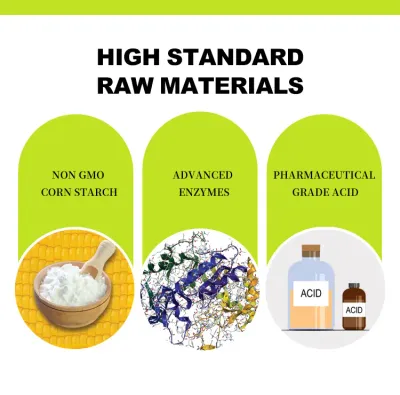
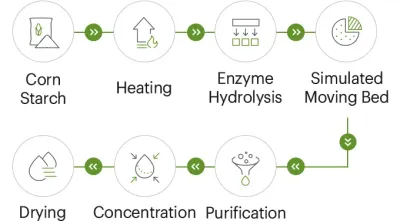
From the supplier data in the provided context, commercial beverage-grade resistant dextrin is typically made from NON-GMO corn starch and is commonly specified at:
- Dietary fiber content ≥82% (dry basis)
- Appearance: white to light yellow
- Low viscosity and good solubility
- Compatibility: designed for low-sugar and sugar-free systems
In day-to-day beverage formulation, that translates into three procurement-relevant outcomes:
- Mouthfeel support in sugar reduction: resistant dextrin helps replace the “body” that disappears when sucrose is removed.
- Fiber fortification without grittiness: easier to scale across clear RTD, teas, and fiber waters.
- Powder system flexibility: resistant dextrin can serve as a carrier in dry mixes and can support spray-dried flavors/actives in some setups.
Microcrystalline cellulose (MCC): structure, suspension, and a different failure mode
Microcrystalline cellulose behaves very differently from resistant dextrin. It is not a “fiber that dissolves and disappears.” In beverages, microcrystalline cellulose is selected for its ability to create structure—especially when the drink includes solids or ingredients that want to settle.
For beverage buyers, the most common reason MCC enters a spec sheet is to solve one of these issues:
- Sedimentation (cocoa, minerals, botanicals, plant proteins)
- Serum separation in opaque systems
- Texture thinness in low-calorie or reduced-fat RTD beverages
A key purchasing nuance: “MCC” on a COA is not enough. In liquid systems, the performance typically depends on dispersible or co-processed grades (often MCC + a compatible hydrocolloid). These are designed to form a thixotropic network—higher viscosity at rest for suspension, lower viscosity under shear for drinkability.
Why the pair works: resistant dextrin builds soluble body and fiber content; microcrystalline cellulose (MCC) supports particulate suspension and “creamy” structure. Together, they reduce the classic trade-off between mouthfeel improvement and long-term drink stability.
2) Practical dosage windows (starting points procurement can standardize)
No table replaces pilot trials, but having realistic starting ranges prevents expensive false starts. The following windows reflect common beverage practice and align with guidance in the provided draft.
| Beverage type | Resistant dextrin (w/w) | Microcrystalline cellulose (MCC) / dispersible MCC system (w/w) | What this usually solves |
|---|---|---|---|
| Clear RTD (no solids) | 0.5–1.5% | 0–0.2% | Mouthfeel improvement in sugar reduction |
| Fiber water / tea / juice | 1.0–3.0% | 0.2–0.4% | Light body + stability in mildly complex matrices |
| Protein shakes / meal replacements | 2.0–6.0% | 0.2–0.6% | Suspension + creaminess + stability |
| Powdered drink mix (dry) | 5–20% | 0.5–3.0% | Carrier function + anti-caking and flow |
Procurement tip: avoid approving a single “MCC” line item for every beverage. For RTD systems, a dispersible microcrystalline cellulose or co-processed MCC system is often the difference between “works in lab” and “stable in production.”
3) Processing notes that prevent the two most common failures
Resistant dextrin is forgiving—but still benefits from disciplined mixing
Most beverage-grade resistant dextrin dissolves well and is designed for modern mixing and pasteurization workflows. In procurement specs, ask for the supplier’s guidance on dissolution temperature and typical mixing time; operationally, many teams simply:
- Add resistant dextrin into process water under agitation
- Use moderate warming if needed to speed dissolution
- Continue with acidulants, minerals, sweeteners, then flavors
MCC fails fast when added wrong (clumps, fish-eyes, or uneven texture)
Microcrystalline cellulose systems are more sensitive to handling. The most common production complaint is not “it doesn’t stabilize,” but “it clumps” or “it’s inconsistent batch to batch.” To reduce risk:
- Pre-disperse under strong agitation (or use a dispersible/co-processed grade designed for cold dispersion)
- Avoid dumping MCC into stagnant or low-shear water
- Validate performance across the final pH and ionic strength range (electrolytes and minerals can change rheology)
A practical order of addition used in many beverage formulation workflows:
- Charge water; set target temperature.
- Dissolve resistant dextrin fully.
- Add sweeteners, salts/electrolytes, and acidulants.
- Add flavors.
- Add microcrystalline cellulose (MCC) system slowly under high shear.
- Homogenize if applicable; then heat treat and fill.
4) Application snapshot: a “no-sugar fiber drink” that stays clean on shelf
A common commercial brief looks like this:
- 0 sugar (high-intensity sweetener system)
- Acidified citrus profile
- Added electrolytes
- Target meaningful fiber per serving
- No visible sediment and consistent mouthfeel across shelf life
A typical starting design (to be validated in pilot):
- Resistant dextrin: ~1.2–1.5% for fiber and mouthfeel improvement
- Microcrystalline cellulose (MCC) system: ~0.25–0.35% to control stability and “round” texture
Why this pairing often succeeds:
- Resistant dextrin provides soluble body while keeping sweetness neutral.
- Microcrystalline cellulose contributes a subtle structure that helps stabilize any dispersed phase (such as flavor oils) and improves drink stability.
5) Supplier evaluation checklist (what a serious buyer should request)
This section is written for teams shortlisting a Recommended Chinese Microcrystalline Cellulose Manufacturer, a Recommended Chinese Microcrystalline Cellulose Supplier, or a Recommended Chinese Resistant Dextrin Manufacturer.
A. Documents that should be non-negotiable
Request these before pricing discussions go too far:
- COA per batch
- Resistant dextrin: dietary fiber content (commonly ≥82%), moisture/loss on drying, appearance
- Microcrystalline cellulose (MCC): key physical parameters relevant to dispersibility (supplier-defined), and any viscosity profile if provided
- Microbiological limits (APC, yeast & mold, coliforms)
- Stability statements relevant to beverages (pH range, heat treatment compatibility) — ideally supported by application notes
- Traceability statement back to raw materials (e.g., NON-GMO corn starch for resistant dextrin)
B. What to probe during technical evaluation (especially for MCC)
Because MCC performance is grade-dependent, procurement should ask:
- Is it a dispersible microcrystalline cellulose grade for beverages, or a general-purpose MCC?
- Is it co-processed (for example, MCC combined with a compatible stabilizer) to support cold dispersion and suspension?
- What is the recommended shear level and hydration time?
C. Quality system and export readiness signals
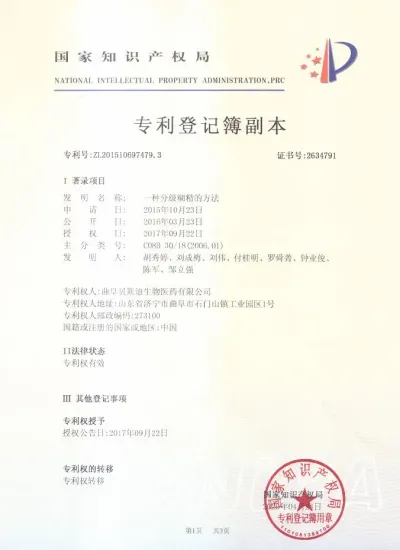
In the provided company context for resistant dextrin production, buyers commonly expect certifications and controls that reduce compliance risk:
- GMP-standard workshops and a QC laboratory
- Certifications referenced in the context: ISO 9001, BRC, HALAL, HACCP, KOSHER
6) Regulatory and labeling notes (keep it practical)
Formulators and buyers often assume “fiber is fiber” and “cellulose is always allowed.” In reality, compliance is market- and category-specific.
- Resistant dextrin: how it is declared on label depends on local rules and fiber definitions. Claims such as “high in fiber” depend on total dietary fiber per serving and per 100 mL.
- Microcrystalline cellulose (MCC): may have additive identifiers in some markets/categories, and usage levels may differ by product type.
Procurement best practice is simple: ask suppliers for market-specific documentation packs (or work with a regulatory consultant) before scaling a new beverage line internationally.
7) Cost and sourcing strategy: optimize “cost per stable liter,” not price per kg
In beverage manufacturing, the hidden cost of a stabilizer decision is often not the ingredient line item—it is:
- Rework and downtime from clumping or inconsistent dispersion
- Shelf-life failures (sediment, ring, separation)
- Reformulation cycles that delay launch
That’s why a strategic approach evaluates:
- Total usage rate: a better-performing microcrystalline cellulose (MCC) system at a lower dosage can be cheaper in finished goods.
- Process simplification: dispersible/co-processed MCC may reduce steps and operator variability.
- Supplier support: responsive technical service shortens troubleshooting cycles.
For many buyers, China remains a key sourcing base for both resistant dextrin and MCC due to scale, mature processing, and export-oriented quality systems. When building a shortlist of a Recommended Chinese Resistant Dextrin Manufacturer or evaluating a Recommended Chinese Microcrystalline Cellulose Supplier, insist on sample trials and documentation first—then negotiate on volume.

8) A quick, buyer-friendly decision framework
If the beverage brief mentions fiber fortification, sugar reduction, and clean, stable mouthfeel, the most reliable workflow is:
- Use resistant dextrin to deliver soluble fiber and mouthfeel improvement without heavy viscosity.
- Use microcrystalline cellulose (MCC) (preferably a beverage-dispersible system) to control drink stability when the matrix includes oils, minerals, proteins, or botanicals.
- Choose suppliers who can prove performance with COAs, certifications, and application guidance, not just a low price.
For teams that want to benchmark supplier documentation and see an example of how beverage-grade resistant dextrin is presented (specs, production visuals, and application positioning), reference supplier material here: https://www.sdshinehealth.com/resistant-dextrin/ and the company homepage www.sdshinehealth.com.
Data references
- Shine Health industry resource: “MCC & Resistant Dextrin Formulation Guide: Sourcing & Quality Parameters” (2023-10-15) — https://www.sdshinehealth.com/mcc-resistant.html
- IJPS Journal: “Microcrystalline Cellulose…Applications, Concentrations and Functional Attributes” (2023-09-20) — https://www.ijpsjournal.com/article/Microcrystalline%20Cellulose%20in%20Pharmaceutical%20Formulations%20A%20Comprehensive%20Review%20on%20Applications%20Concentrations%20And%20Functional%20Attributes
- Knowde market spotlight: “Innovation in Beverage Suspension: Co-processed MCC & CMC Technologies” (2023-12-01) — https://www.knowde.com/b/markets-food-nutrition/beverage/f/f_food-ingredient-functions-suspension-aid/products
- BIOSTARCH industry insight: “How Organic Resistant Dextrin Enhances Texture & Stability…” (2023-11-02) — https://www.bio-starch.com/news/how-organic-resistant-dextrin-enhances-the-texture-and-stability-of-modern-food-and-beverage-formulations/
- Kima Chemical overview: “MCC Applications in Food: Anti-Caking & Texturizing Strategies” (2023-10-05) — https://www.kimacellulose.com/what-are-the-uses-of-microcrystalline-cellulose-in-food.html