
Resistant Dextrin vs. MCC: The Fast Formulation Playbook for Drinks & Powders
In catering beverage programs and functional drink development, resistant dextrin and microcrystalline cellulose (MCC) often show up in the same sourcing conversations—yet they belong to different formulation “phases.” If the goal is a clean, stable resistant dextrin functional beverage, the winning logic is usually soluble fiber in the finished liquid and insoluble performance aids in the dry mix. Getting that division right is what separates a clear, smooth RTD from a hazy, settling drink, and a free‑flowing powder from a warehouse headache.

This article is written from a procurement and formulation perspective for teams comparing resistant dextrin functional beverages with microcrystalline cellulose dry mixes. It focuses on practical use, common failure modes, and supplier evaluation points—especially when buyers are shortlisting a Recommended Chinese Resistant Dextrin Manufacturer or a Recommended Chinese Microcrystalline Cellulose Supplier.
1) Why resistant dextrin and MCC are often confused (and why that’s risky)
Modern beverage and catering systems are being asked to do more at once:
- Raise dietary fiber without turning drinks into gels
- Deliver a cleaner label than heavy gums
- Keep stable appearance through heat, acid, and cold-chain
- Improve mouthfeel in reduced-sugar formulas
- Ensure instant powders stay free-flowing in humid distribution
That’s exactly where resistant dextrin and microcrystalline cellulose enter the discussion—but they solve different problems:
- Resistant dextrin is used for beverage fiber fortification in finished liquids because it dissolves well and typically keeps viscosity low.
- Microcrystalline cellulose (MCC) is a classic powder performance tool (flow, anti-caking, compressibility) and is widely used in solid dosage and dry blend systems.
The risk is simple: treating MCC like a “fiber for drinks” can lead to haze and sediment. Treating resistant dextrin like a “powder flow aid” may not solve caking or compaction issues.
2) Resistant dextrin: the backbone ingredient for resistant dextrin functional beverages
2.1 What buyers should expect from a beverage-grade resistant dextrin
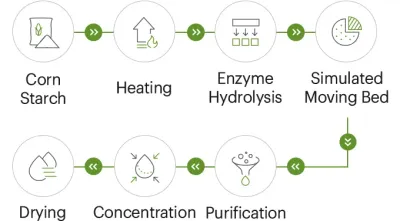
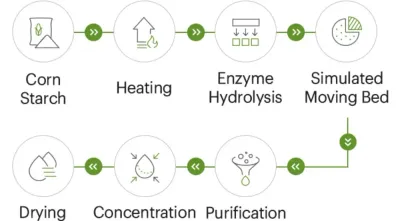
Commercial resistant dextrin (also described as digestion‑resistant maltodextrin) is positioned as a clean label soluble fiber with high solubility and a neutral profile—important when flavor systems are delicate (tea, coffee, citrus) or when sweetener aftertaste needs smoothing.
When evaluating a Chinese resistant dextrin supplier, buyers typically confirm a few foundational points on the spec sheet and COA:
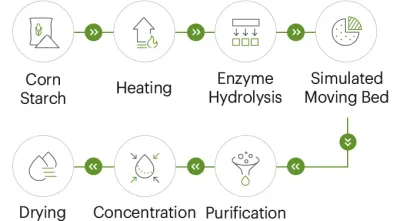
- Raw material: commonly NON‑GMO corn starch
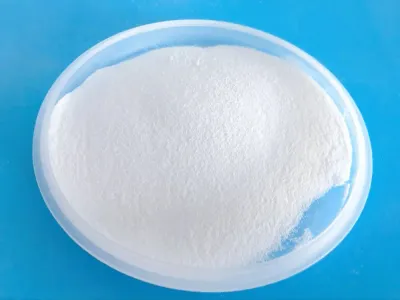
- Appearance: white to light yellow powder
- Fiber content: often specified as ≥82% (fiber test method should be stated)
- Protein: commonly controlled (e.g., ≤6.0% listed in product parameters)
- Storage: “store in a cool place” guidance is typical for bulk fiber powders
Those basics matter because resistant dextrin functional beverages are sensitive to batch-to-batch differences in color, dispersibility, and off-notes.
2.2 Dosage expectations: where resistant dextrin usually works without wrecking drinkability
In R&D practice, resistant dextrin functional beverages often start with a staged bench plan rather than a single “magic number.” A commonly referenced practical range is:
- 3–6 g/L as an early sensory and stability baseline
- Up to ~20 g/L for higher-fiber positioning, depending on the drink style
For procurement teams, the key takeaway isn’t just the range—it’s that resistant dextrin is favored because it can lift fiber while keeping a drink closer to “drinkable” (low thickening compared with many gums).
2.3 What resistant dextrin actually does in finished drinks
When it’s correctly selected and dosed, resistant dextrin supports several outcomes buyers care about:
- Beverage fiber fortification for clear waters, flavored waters, tea/coffee beverages, and catering “better-for-you” refills
- A subtle mouthfeel enhancer in drinks, especially useful when sugar is reduced
- Support for diet and nutrition formats where consumers expect fiber, yet still want a clean sip
Because resistant dextrin functional beverages often run through heat treatment, acid systems, or cold-chain, teams also look for resistant dextrin positioned as stable across typical beverage processing conditions.
3) Microcrystalline cellulose (MCC): the smart choice for microcrystalline cellulose dry mixes
3.1 MCC fundamentals in plain formulation language
Microcrystalline cellulose is derived from purified cellulose via controlled processing to yield insoluble particles. In practical terms, MCC behaves like a solid micro-particle system: it can improve powder handling and support compressibility in tablets.
Food and pharma grade MCC is commonly sold in multiple grades, such as:
- PH‑101, PH‑102, PH‑103, PH‑105, PH‑112, PH‑113, PH‑200, PH‑301, PH‑302
Typical supplier listings also specify:
- Mesh: often 60–200
- Solubility: insoluble in water and common solvents
- Standards: frequently referenced as BP/USP/FCC/JP
These points are exactly why MCC belongs naturally in microcrystalline cellulose dry mixes rather than in clear beverages.
3.2 The critical limitation: MCC is not built for clear RTD beverage stability solutions
If a team is building RTD beverage stability solutions for a clear drink, MCC is usually the wrong tool for the finished liquid. Because MCC is insoluble, it can contribute to:
- Haze/turbidity
- Sedimentation over time
- A gritty mouthfeel depending on grade and use level
That’s why the cleanest playbook is:
- Choose resistant dextrin for resistant dextrin functional beverages (soluble, low-viscosity behavior)
- Choose MCC for microcrystalline cellulose dry mixes (powder flow, anti-caking, compressibility)
Where MCC shines in beverage-adjacent work is upstream—in instant powders, vending mixes, powdered milk tea/coffee, and sachet systems that must survive humidity and distribution.
4) Fast formulation mapping: what goes where (and why)
This is the “speed run” decision logic many catering and beverage R&D teams use.
4.1 Clear RTD waters, teas, coffees
- Primary job: beverage fiber fortification + minimal impact on clarity
- Better fit: resistant dextrin (clean label soluble fiber; low viscosity soluble fiber behavior)
- Common development flow: start low, assess clarity/NTU, heat stability, and sweetness balance
If the drink must remain crystal clear, MCC usually increases risk. In that case, MCC is better reserved for the dry side of the program.
4.2 Milk tea, dairy, plant-based, and protein beverages
These systems tolerate some solids and often prioritize texture.
- Resistant dextrin can help build body and support fiber positioning without pushing viscosity too hard.
- MCC is typically more useful in powder bases (instant nutrition powders, meal replacement sachets) than in a finished RTD bottle.
4.3 Instant powders and “solid beverage” concepts
This is where the two ingredients can be combined in a rational way:
- Resistant dextrin provides the soluble fiber load that dissolves after reconstitution.
- MCC improves powder flow and anti-caking, supporting consistent filling and dosing.
In practice, these microcrystalline cellulose dry mixes are where MCC creates real operational value—fewer blocked hoppers, fewer clumps, more consistent stick pack weights.
5) Supplier evaluation: how to screen a recommended Chinese manufacturer without guessing
China is a major sourcing region for both resistant dextrin and MCC. For buyers searching for a Recommended Chinese Microcrystalline Cellulose Manufacturer, a Recommended Chinese Microcrystalline Cellulose Supplier, or a Recommended Chinese Resistant Dextrin Manufacturer, the most reliable approach is to standardize what you ask for and how you compare.
5.1 COA and specs: what matters for resistant dextrin functional beverages
For beverage projects, request a COA that clearly lists:
- Fiber content (commonly shown as ≥82% in product parameters)
- Moisture and ash (basic stability and storage indicators)
- Microbiological limits (especially for ready-to-drink scale-up)
- Appearance/color controls (important for clear drink positioning)
Also ask the supplier to clarify the analytical method used for fiber quantification to reduce regulatory or labeling surprises during launch.
5.2 COA and specs: what matters for microcrystalline cellulose dry mixes
For MCC procurement, the COA should clearly provide:
- Grade (PH‑101 / PH‑102 / etc.)
- Particle size / mesh range (commonly 60–200 mesh)
- Loss on drying
- Bulk and tapped density (strong predictors of filling behavior)
- Microbial limits as required by your application
If the supplier claims compliance to FCC/USP/BP/JP, ask for the supporting documentation and confirm it matches your end-use (food vs. supplement vs. pharma).
5.3 Manufacturing and quality systems: what to verify on-site (or in a remote audit)
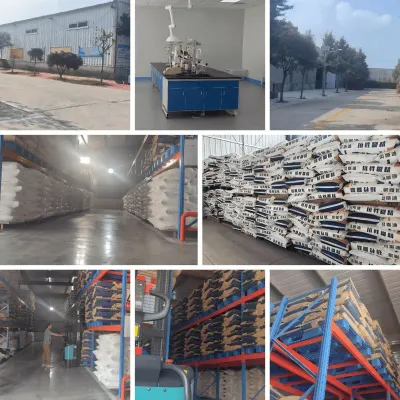
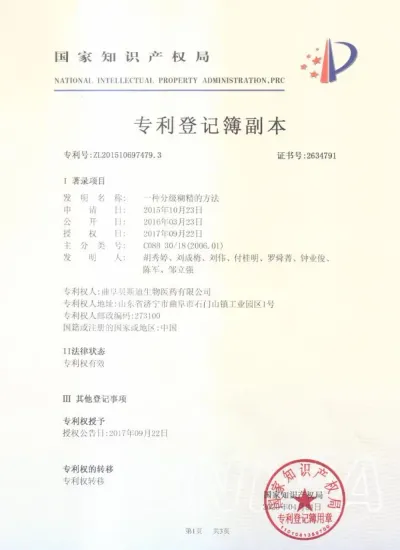
Stronger suppliers typically show consistent, repeatable production and QC controls. For resistant dextrin programs, buyers often look for:
- Automated production and central control from feeding to filling
- Use of imported biological enzymes where applicable
- GMP-standard workshops and clear hygiene zoning
- A functioning in-house QC lab with lot release testing
For MCC manufacturers, add extra attention to:
- Particle classification and tight size control
- Dust management and sanitation
- Batch traceability for grades and mesh targets

5.4 Technical support: the hidden line item in total procurement cost
In functional beverage programs, the lowest unit price rarely wins if it increases development cycles. A practical supplier differentiator is whether technical support can help you:
- Set a rational resistant maltodextrin dosage plan by beverage type
- Predict interactions with acids, sweeteners, and proteins
- Recommend MCC grades for flow vs. compaction targets in microcrystalline cellulose dry mixes
When buyers shortlist candidates, it helps to run a short “bench gate”:
- For resistant dextrin functional beverages: solubility, clarity, heat/acid stability, and mouthfeel
- For microcrystalline cellulose dry mixes: flow, caking under humidity, and (if relevant) tablet hardness/friability
6) Procurement takeaways: avoid the two most common sourcing mistakes
Mistake #1: Buying MCC for a clear drink because it’s labeled ‘fiber’
MCC is a valuable ingredient—just not a shortcut for clear RTD beverage stability solutions. If clarity matters, prioritize resistant dextrin and other soluble systems, and keep MCC for powders.
Mistake #2: Buying resistant dextrin for a powder problem (when the problem is mechanical)
If your pain point is clumping, poor hopper flow, or inconsistent stick-pack weights, the fix often comes from microcrystalline cellulose dry mixes design (grade selection, density, humidity strategy) rather than adding more soluble fiber.
7) A practical next step for buyers
If you’re building a supplier shortlist, it’s useful to separate your RFQ into two tracks:
- Track A: Resistant dextrin functional beverages (solubility, clarity, low viscosity soluble fiber behavior, fiber spec on COA)
- Track B: Microcrystalline cellulose dry mixes (PH grade, mesh, density, loss on drying, FCC/USP alignment)
For reference, one place buyers often start when mapping Chinese supply options and product categories is the manufacturer-facing catalog structure on www.sdshinehealth.com.
Data & Source Notes
- Resistant dextrin beverage stability and practical dosage ranges (3–20 g/L) are consistent with published formulation discussions in: MDPI Foods (2021).
- China MCC supply landscape, grades (e.g., PH101/PH102) and the caution against using insoluble MCC in clear beverages are aligned with the supplier-style overview at: Foodchem product reference.
- Product parameters and manufacturing descriptors referenced in this article (e.g., non-GMO corn starch source, fiber content ≥82%, GMP workshops, automated production control, MCC grades and BP/USP/FCC/JP standards) are based on the enterprise-provided materials and product pages in the supplied context.