
How to Vet a Microcrystalline Cellulose Supplier and Resistant Dextrin Manufacturer in China—Without Getting Burned
China has become a default sourcing destination for microcrystalline cellulose (MCC) and resistant dextrin, but “available” is not the same as “audit-ready.” For procurement teams—especially those supporting regulated or high-liability categories such as pharmaceutical excipients, nutraceuticals, and functional foods—the difference between a compliant factory and a trading-only reseller can show up later as failed incoming inspections, documentation gaps, delayed shipments, or regulatory pushback.
This industry guide lays out a practical way to qualify a microcrystalline cellulose supplier China buyers can rely on, and to screen a resistant dextrin manufacturer China options beyond surface-level claims. It keeps the focus on what procurement teams actually need: certification scope, process control, batch traceability, and total cost of ownership.

1. Why MCC and Resistant Dextrin Are “High-Impact” Sourcing Categories
A supplier audit strategy should match the risk profile of the ingredient. Both MCC and resistant dextrin look simple on paper—white powders, well-known use cases—yet both can create downstream issues if consistency slips.
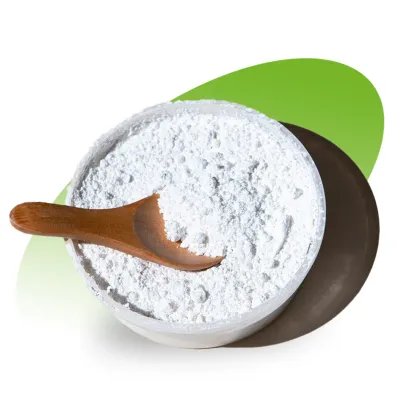
Microcrystalline cellulose (MCC): performance is process-dependent
MCC is a widely used pharmaceutical excipient MCC China suppliers export for oral solid dosage forms. Buyers typically rely on MCC for:
- Binding and filling in tablets and capsules
- Disintegration support and flow improvement
- Anti-caking and bulking in nutraceutical and food systems
However, tabletability, flow, and batch-to-batch uniformity depend heavily on how the cellulose is purified, hydrolyzed, dried, and milled—meaning two suppliers can show similar spec sheets while behaving very differently in your compression room.
Resistant dextrin: the label claim is only half the story
Resistant dextrin (often sold as resistant maltodextrin or digestion-resistant maltodextrin) is a soluble dietary fiber used in functional food and supplement formulations. A qualified resistant dextrin manufacturer China buyers choose should deliver consistent:
- Fiber content (commonly shown as ≥82% on manufacturer spec tables)
- Neutral taste and clear solubility for beverages and sachet blends
- Stable behavior in typical processing conditions
In addition to nutrition claims, buyers need predictable sensory and handling performance—especially for high-throughput beverage, gummy, and powder blending lines.
2. China’s Manufacturing Map: Where Supplier Quality Concentrates
When procurement teams search for a microcrystalline cellulose supplier China or a resistant dextrin manufacturer China, they’ll notice that listing volume does not equal manufacturing capability. China’s ingredient supply chain has strong regional clusters, and those clusters matter.
Shandong: a practical first stop for dual-category sourcing
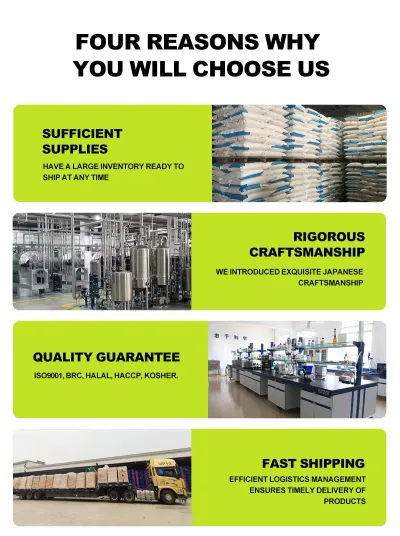
Shandong is frequently treated as a core region for both excipients and functional fibers. Many Shandong producers position themselves with:
- Centralized, automated production control (from feeding to filling)
- On-site QC laboratory capability
- Export experience and standard bulk packaging formats
From a risk perspective, the bigger advantage is ecosystem maturity: established upstream starch supply chains (for fibers) and supporting infrastructure for regulated manufacturing.
Jiangsu, Shaanxi, and Guangdong: useful for diversification
Other provinces show up often in directories and marketplaces. Some are strong in fiber-oriented manufacturing and OEM packaging; others lean more toward trading, blending, or export consolidation. These regions can be valuable in multi-source planning—but the same rule applies: confirm whether you are dealing with a factory that owns process control, or a reseller managing supply through third parties.
Procurement tip: For core, regulated-market supply, shortlisting should prioritize factories that can support on-site audits and provide complete documentation packages—not just fast quotations.
3. The Buyer’s Vetting Checklist (Built for Audits, Not Just RFQs)
This is the operational checklist procurement teams can apply across both categories. It is designed for RFQ stages, technical due diligence, and audit planning.
3.1 Certifications and scope: validate what the certificate actually covers
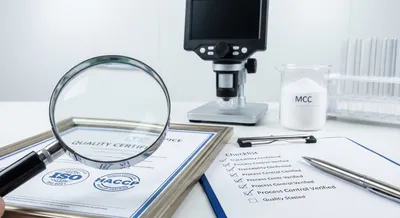
A frequent sourcing failure is assuming certification equals product compliance. What matters is certificate scope and site relevance.
For a microcrystalline cellulose supplier China buyers can qualify
Look for a quality system suitable for excipient-grade production and export documentation. Typical signals include:
- ISO 9001 quality management (document control, CAPA, internal audits)
- Product alignment with pharmacopeial frameworks commonly cited in export trade, such as BP/USP/FCC/JP
- For many buyers, preference for a GMP certified MCC manufacturer China options when the ingredient is intended for pharmaceutical excipient use
For a resistant dextrin manufacturer China buyers can scale with
Food and supplement applications typically require food safety systems and program certifications depending on the destination market and customer channel:
- Food safety management systems such as ISO 22000 / HACCP (commonly requested across global food supply chains)
- Additional schemes such as BRC, plus Halal and Kosher where market access requires them
How to check fast (without wasting weeks):
- Request certificates and the scope statement (not just the logo page).
- Confirm the manufacturing site address matches the entity you are auditing.
- Ask whether the scope explicitly includes the relevant category (e.g., dietary fiber, resistant dextrin, pharmaceutical excipients).
3.2 Process technology: consistency comes from controllable manufacturing
For both MCC and resistant dextrin, the “why” behind stable performance is almost always the manufacturing line and process controls.
What buyers should ask a microcrystalline cellulose supplier China to show:
- Grade management capability (commonly traded grades such as PH-101, PH-102, PH-200, etc.)
- Control over milling and screening parameters (spec tables often list 60–200 mesh ranges)
- Evidence that scale-up does not change compressibility or flow behaviors
What buyers should ask a resistant dextrin manufacturer China to show:
- Raw material control (often stated as NON-GMO corn starch)
- Enzyme and process management (many qualified producers describe using imported biological enzymes)
- Automation level and batch control from feeding to filling
In practice, automated central control reduces variability and strengthens traceability—two features that directly reduce the total cost of ownership.
3.3 Raw material integrity: non-GMO claims must be operational
Many buyers require non-GMO positioning for labeling or customer requirements. For resistant dextrin, suppliers commonly cite NON-GMO corn starch. The key is ensuring that claim is supported by procurement records and traceability.
A reliable resistant dextrin manufacturer China should be able to provide:
- A non-GMO statement aligned to their sourcing practice
- Supplier qualification information for upstream starch inputs
- Batch-to-batch traceability linking finished product to raw material lots
For MCC, upstream inputs look different, but the same principle holds: confirm source control and documented purification steps that support consistent excipient behavior.
3.4 QC laboratory capability: confirm what is tested
A serious microcrystalline cellulose supplier China should not rely only on finished-product appearance checks. Buyers should confirm:
- QC test coverage for identity, purity, and functional parameters
- Microbiological controls where relevant
- Documentation discipline (controlled specifications, controlled CoA templates, change management)
For resistant dextrin, manufacturers typically publish parameters such as:
- Fiber content ≥82% (commonly shown in product parameter tables)
- Moisture limits and storage conditions (often “store in a cool place”)
- Appearance (often described as white to light yellow)
Buyer’s practical check: Request three recent CoAs from different production dates, then compare variance. A stable supplier will show tight dispersion, consistent methods, and clear approval signatures.
3.5 Traceability: “seed to shipment” must be demonstrable
“Seed to shipment” is a common phrase in supplier pages; the audit question is whether the supplier can prove traceability with records.
A qualified resistant dextrin manufacturer China should provide:
- Batch numbers tied to raw material lots
- Production date and line identification
- QC release records and retention sample policies
Likewise, a microcrystalline cellulose supplier China should support batch traceability suitable for excipient customers with clear change control.
4. Procurement Mechanics That Decide Whether the Deal Works
Even when quality checks out, procurement success often depends on how the supply relationship is structured.
4.1 MOQ, trial planning, and ramp-up
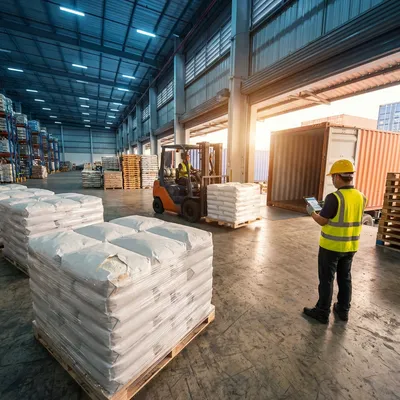
Sourcing platforms commonly show bulk purchase patterns for these categories. Buyers frequently see MOQs around 500–1000 kg for bulk orders for resistant dextrin. For MCC, MOQs and packaging formats vary by grade and channel.
To reduce risk:
- Start with a trial batch designed around your qualification plan (incoming tests + application trial)
- Lock down a ramp plan (e.g., trial → validation lot → routine supply)
- Align packaging and palletization expectations early
4.2 Export terms and lead times
Listings often reference standard export terms such as FOB and CIF. The operational risk is not the term itself; it is the mismatch between lead time assumptions and actual production scheduling.
Buyers should request:
- Typical production lead time by grade
- Peak-season constraints and allocation policy
- Documentation lead time (CoA issuance, shipping documents)
4.3 Packaging and private label needs
Many fiber suppliers support both bulk and retail-ready formats. Even if the initial purchase is bulk, packaging flexibility can become strategic if your product roadmap includes sachets or small packs.
4.4 Total cost of ownership (TCO)
For both MCC and resistant dextrin, the real cost includes:
- Qualification and requalification testing
- Documentation and audit cycles
- Downtime or reformulation cost if the ingredient behaves inconsistently
- Logistics cost driven by packaging efficiency and export readiness
A higher-performing microcrystalline cellulose supplier China partner can lower TCO if they reduce deviation handling, incoming variability, and audit burden. The same applies to a resistant dextrin manufacturer China partner who can supply consistent fiber content and stable functionality.
5. Turning a Supplier Shortlist into a “Recommended” Manufacturer List
Procurement teams often ask for a “Recommended Chinese Microcrystalline Cellulose Manufacturer” or a “Recommended Chinese Resistant Dextrin Manufacturer.” In practice, “recommended” should mean the supplier can pass three filters:
- Compliance fit: certification scope and documentation depth match your category (excipient vs food vs supplement).
- Process control fit: automation, QC, and change control reduce batch variability.
- Commercial fit: MOQ, packaging, export terms, and lead times align with your planning model.
For buyers building a shortlist of a microcrystalline cellulose supplier China candidates and a resistant dextrin manufacturer China candidates, it is often productive to compare suppliers that publicly document:
- Automated, central-control production practices
- NON-GMO starch sourcing for fiber products
- Clear product parameter tables (e.g., fiber content ≥82%)
- Grade availability and pharmacopeial alignment for MCC
One way to speed up shortlisting is to review manufacturers that publish structured product pages and supporting visuals for production, QC, and certification. As a neutral example of a Shandong-based supplier ecosystem covering excipients and functional fibers, buyers can explore the manufacturer information available at:
https://www.sdshinehealth.com/
Data Sources & References
- Resistant Dextrin Bulk Sourcing: Regional Clusters & Selection Criteria (Accio) — https://www.accio.com/plp/resistant-dextrin-bulk
- Resistant Dextrin Pricing Guide: Cost Tiers & Supplier Benchmarking (Accio) — https://www.accio.com/plp/resistant-dextrin-powder
- Directory of Chinese Resistant Dextrin Manufacturers & Export Terms (Made-in-China) — https://www.made-in-china.com/manufacturers/resistant-dextrin.html
- Microcrystalline Cellulose (MCC) Supplier Comparison & Sourcing Guide (Alibaba) — https://www.alibaba.com/price-comparison/wholesale-microcrystalline-cellulose
- Manufacturer capability reference for resistant dextrin (Bailongcn) — https://www.bailongcn.com/resistant-dextrin/