
Fast-Track Functional Drinks: Resistant Dextrin + MCC for Better Stability and Mouthfeel
Fiber-enriched, low-calorie drinks are no longer a niche “health aisle” idea. They now sit next to RTD coffees, protein shakes, sparkling waters, and meal-replacement beverages—often with the same expectations consumers apply to classic soft drinks: no grit, no settling, no weird thickness drift, and a clean finish.
For formulation teams in foodservice and functional beverages, the challenge is rarely the claim itself (“high fiber,” “low sugar,” “low calorie”). The real work starts after the nutrition panel: keeping a beverage stable through distribution, preventing sedimentation, and preserving a pleasant mouthfeel—even when the recipe is pushed from bench to pilot and then into full production.
Two ingredients repeatedly show up as dependable tools in this space:
- Resistant dextrin soluble fiber — a low-viscosity, highly soluble dietary fiber that helps build a meaningful fiber claim without turning the drink into a gel.
- Microcrystalline cellulose (MCC) — a structuring and suspension ingredient used to reduce sedimentation, manage texture, and deliver a “creamier” body in low-calorie systems.
Used correctly, resistant dextrin and microcrystalline cellulose can be paired to create a low calorie fiber beverage that stays uniform on shelf, drinks smoothly, and tolerates real-world processing.

Market reality: why “high fiber, low sugar” is hard to execute
Across global beverage innovation, the same pressures keep surfacing:
- Sugar reduction removes body. When sucrose (or HFCS) is reduced, you lose not only sweetness but also viscosity and mouth-coating.
- Fiber adds formulation risk. Some fibers increase haze, create chalkiness, or trigger viscosity drift in storage.
- Functional actives need suspension. Minerals, botanicals, cocoa, proteins, and plant particles can settle—especially in low-solids drinks.
- Scale-up changes everything. Hydration time, mixing shear, and fill-line shear profiles can shift the final mouthfeel.
This is where a functional beverage formulation guide often turns into a “two-track” system:
- Use a soluble fiber (like resistant dextrin) to hit nutrition targets without destabilizing the drink.
- Use a suspension/texture tool (like microcrystalline cellulose) to keep the system stable and drinkable.
Ingredient fundamentals: what resistant dextrin contributes (and what it doesn’t)
From an R&D perspective, resistant dextrin is frequently chosen as a base fiber because it is designed to deliver fiber with minimal disruption to flow behavior.
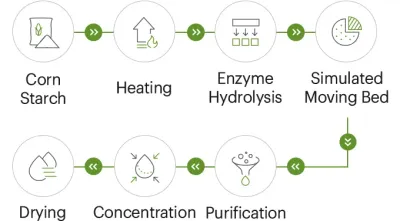
Resistant dextrin is produced by controlled breakdown of starch, creating short glucose-chain structures that resist digestion in the small intestine and can be fermented in the large intestine. In beverage development, the practical implications are straightforward: you can add fiber without building heavy viscosity.
In technical documentation for resistant dextrin used in low-calorie food additive systems, common specification and handling features include:
- Fiber content ≥82% (dry basis)
- Appearance: white to light yellow powder
- Low viscosity and high solubility: disperses in cold or hot water
- Neutral taste/odor: minimal interference with flavor systems
- Process resilience: generally compatible with typical beverage pH and heat steps
For teams designing a fiber claim, these traits are valuable because resistant dextrin can be used as a “soluble fiber backbone.” It supports a measurable claim while leaving room for other stabilizers.

Where resistant dextrin helps most in beverages
In practice, resistant dextrin soluble fiber tends to be most useful when you need one or more of the following:
- Fiber enrichment without thickness problems (especially compared with more viscous fibers)
- Low-calorie bulking in sugar-reduced formulations
- Improved balance in sweetener systems (supporting taste and reducing “thin” perception)
- Flexible processing (hot-fill, pasteurization, and common acid beverages)
It’s also widely used across beverage formats that require both stability and clean flavor delivery:
- Diet sodas and flavored waters
- RTD teas and functional “shots”
- Protein beverages and meal replacements
- Smoothies and fiber-forward juice drinks
- Powder drink sticks (where quick dissolution matters)
What resistant dextrin won’t do by itself
It’s equally important to be clear about what resistant dextrin does not solve:
- It does not create a strong suspension network for insoluble particles.
- It does not mimic fat-like creaminess at typical usage levels.
- It does not prevent sedimentation if your formula contains minerals, cocoa, plant powders, or unstable protein aggregates.
That is where a microcrystalline cellulose suspension agent (or a comparable stabilizer system) becomes the second half of the solution.
Ingredient fundamentals: what microcrystalline cellulose (MCC) contributes
Microcrystalline cellulose is purified cellulose with a controlled particle structure. In beverage and liquid applications, MCC is often used in colloidal or co-processed forms (commonly paired with CMC) to help stabilize suspensions and manage mouthfeel.
In beverage terms, MCC is less about “thickening” and more about structuring: under the right shear, it can form a network that helps keep particles distributed and improves perceived body.
What MCC does well in fiber-forward drinks
A well-chosen MCC beverage stabilizer can deliver several outcomes that are hard to achieve with soluble fiber alone:
- Suspension stability: helps reduce settling of insoluble solids (minerals, plant powders, cocoa, some protein systems).
- Thixotropic behavior: stability at rest, drinkable viscosity under shear.
- Mouthfeel improvement: adds body and a creamier texture without adding sugar or fat.
- System robustness: can help a drink keep its intended texture after heat steps and storage.
Industry guidance commonly cites beverage MCC usage ranges around 0.5%–2.0%, often adjusted by grade and beverage style. Co-processed systems (e.g., MCC + CMC) are frequently used when easier dispersion and smoother texture are priorities.
Practical takeaway: resistant dextrin helps you reach the fiber claim; microcrystalline cellulose helps you keep the drink uniform and pleasant.
The synergy: why resistant dextrin + MCC is a fast-track pairing
When beverage teams talk about fiber enriched drink stability, they’re typically dealing with two different stability problems at once:
- Nutritional stability (maintaining a clear fiber claim without over-thickening)
- Physical stability (preventing sedimentation, separation, or phase layering)
This is why pairing resistant dextrin microcrystalline cellulose is so common.
How the roles split in a formula
-
Resistant dextrin soluble fiber
- Carries most of the fiber grams
- Adds low-calorie solids and improves balance in sweetener systems
- Keeps viscosity manageable at typical beverage doses
-
Microcrystalline cellulose suspension agent
- Builds the suspension network to hold insoluble materials
- Adds body/creaminess that sugar reduction removes
- Supports “in-bottle” stability with thixotropic flow
In short: resistant dextrin gives you a scalable fiber platform, and MCC beverage stabilizer reduces the risk of visible settling and poor texture.
Formulation quick-match: choose a target texture before choosing dosages
A frequent reason fiber beverages fail in market testing is that the team targets “stability” but never defines what the consumer should feel.
Before setting initial levels of resistant dextrin and microcrystalline cellulose, align on four decisions:
- Fiber claim per serving (e.g., 3–5 g/serving)
- Sweetener system (sugar, reduced sugar, or high-intensity sweeteners)
- Appearance goal (clear, slightly turbid, opaque)
- Texture goal (refreshing/light vs. smoothie-like)
Once the sensory target is clear, selecting a stabilizer strategy becomes much faster.
Starting ranges that match common RTD goals
Below is a practical “first batch” map used by many R&D teams as a baseline (final levels depend on grade and beverage style):
| Goal | Resistant dextrin (typical) | MCC system (typical) | Notes |
|---|---|---|---|
| Clear or near-clear fiber water | 1–3% | 0.1–0.5% | MCC level depends heavily on haze tolerance; consider a very low MCC dose or alternative stabilization if clarity is critical. |
| Light RTD tea / functional drink | 1–4% | 0.3–0.8% | Focus on clean finish; MCC helps prevent active settling. |
| Opaque nutrition drink / shake | 2–5% | 0.6–1.2% | MCC adds body and stability; resistant dextrin supports fiber grams without over-gelling. |
| Smoothie-style with plant particles | 2–5% | 0.8–1.5% | Validate sedimentation and mouthfeel; test grade selection for grittiness risk. |
This table is intentionally conservative: it helps you build a stable prototype without forcing excessive viscosity early.
Processing playbook: getting dispersion right (where most failures happen)
Even the best ingredient selection can fail if dispersion and hydration are handled poorly. MCC systems are especially sensitive to mixing sequence.
Step 1: Plan the order of addition (don’t let MCC “fish-eye”)
A common defect in MCC beverages is incomplete wetting, producing “fish-eyes” (dry lumps with hydrated outer shells). To reduce this risk:
- Dry pre-blend MCC with a compatible powder carrier (such as part of the resistant dextrin, sugar, or a dry flavor base).
- Add the dry blend slowly into a strong vortex.
- Maintain sufficient mixing energy long enough to fully hydrate.
By contrast, resistant dextrin soluble fiber generally dissolves easily and can be added earlier or later with fewer hydration issues.
Step 2: Use the right shear profile (activation vs. over-shear)
MCC systems typically need activation under shear. In practical beverage lines:
- Use high-shear mixing during make-up (rotor–stator or suitable in-line systems).
- Avoid unnecessary extended high shear after the network is formed.
- Pilot with a shear profile that resembles the real plant—especially if the filling line or recirculation loop adds shear.
Step 3: Validate heat and pH tolerance in your specific matrix
Both resistant dextrin and many MCC systems are compatible with typical beverage conditions, but real formulations often include proteins, acids, minerals, or botanicals.
Validation checks should include:
- Heat–cool cycling (especially for hot-fill or pasteurized RTD)
- pH adjustments and storage at target pH
- Accelerated storage across multiple temperatures
Step 4: Troubleshooting cheat sheet (fast fixes that usually work)
When development teams report instability in a low calorie fiber beverage, the defect usually fits one of these patterns:
-
Sedimentation or ring settling
- Increase MCC slightly, or change MCC grade
- Verify full hydration and activation
- Consider a small amount of synergistic gum if allowed by the label strategy
-
Chalky mouthfeel / grittiness
- Confirm MCC hydration time and mixing energy
- Consider co-processed MCC/CMC grades (often smoother)
- Review particle size and beverage solids balance
-
Too thick / gel-like
- Reduce MCC dose first (and any auxiliary gum)
- Keep resistant dextrin stable unless the fiber claim allows reduction
-
Excessive turbidity
- Lower MCC dose or select a different grade
- Reconfirm clarity expectations with marketing before over-optimizing
Application snapshots: where the pairing performs best
The resistant dextrin microcrystalline cellulose combination is especially useful in beverage styles that have both a nutrition target and a stability risk.
1) Sugar-reduced RTD coffee and cocoa drinks
These systems often include insoluble cocoa particles or protein components that settle. MCC beverage stabilizer helps maintain uniformity, while resistant dextrin supports a fiber claim with low viscosity.
2) Functional teas and flavored waters with active minerals
Mineral fortification is a classic sedimentation trigger. Microcrystalline cellulose suspension agent can reduce visible settling, while resistant dextrin soluble fiber provides the nutrition story without heavy mouthfeel.
3) High-fiber smoothie-style drinks
Smoothie formats tolerate opacity and thickness, which gives formulation teams more room. In these systems, resistant dextrin builds fiber grams, and microcrystalline cellulose helps create stable body and reduces phase separation.
Procurement lens: how to evaluate suppliers beyond “spec sheet match”
For many procurement teams, the question isn’t whether the formula works in the lab—it’s whether it will work reliably after multiple lots, shipping cycles, and seasonal raw material changes.
When shortlisting a Recommended Chinese Resistant Dextrin Manufacturer or a Recommended Chinese Microcrystalline Cellulose Supplier, beverage buyers typically separate the evaluation into four layers.
Layer 1: Raw material and traceability discipline
For resistant dextrin, many buyers prefer suppliers that clearly document:
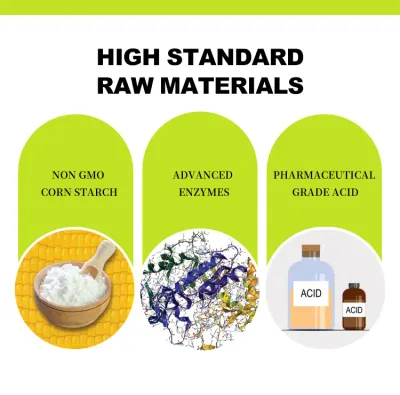
- Feedstock control (commonly non-GMO corn starch)
- Stable sourcing from established starch producers
- Batch-to-batch consistency controls
A key practical advantage for beverage developers is consistency in dissolution behavior—critical when resistant dextrin is used as a foundation fiber in repeated production runs.
Layer 2: Manufacturing control and QA infrastructure
For buyers building a supplier list, the strongest signal is usually the ability to show production discipline:
- Automated process control from feeding to filling (reduces variation)
- GMP-standard workshop practices
- A fully equipped QC laboratory
These are not marketing buzzwords in beverages: they map directly to fewer surprises in viscosity, color, and hydration behavior.

Layer 3: Certifications aligned with beverage export markets
For global beverage brands and co-packers, certifications often decide whether an ingredient can even enter qualification.
Common requirements include:
- ISO9001
- BRC
- HACCP
- Kosher
- Halal
If a supplier supports multiple export markets, the compliance burden on the buyer becomes materially lower.
Layer 4: Application support (the hidden cost saver)
A recurring procurement lesson in beverage stabilization: a “cheaper” ingredient can become more expensive when it causes rework, line downtime, or unstable shelf life.
For MCC systems in particular, application support matters because performance depends on:
- dispersion method
- shear profile
- grade selection for turbidity goals
That is why many buyers explicitly look for a Recommended Chinese Microcrystalline Cellulose Manufacturer or Recommended Chinese Microcrystalline Cellulose Supplier that can support beverage-specific troubleshooting—especially during scale-up.
Practical compliance note: keep claims and specs grounded
This article focuses on formulation mechanics and sourcing discipline. When drafting packaging claims around resistant dextrin and microcrystalline cellulose, teams should still verify:
- local definitions of “dietary fiber” and “prebiotic” language
- serving-size rules for “good source” or “high fiber” claims
- permissible naming conventions for MCC and related stabilizers
Because labeling rules differ across markets, the safest workflow is to build a stable, scalable base formula first, then adjust claim language by region.
Cost-control angle: where the real savings are (and aren’t)
In most functional beverage programs, the ingredient line item is only a portion of total cost. The larger costs often come from instability:
- returns due to sedimentation complaints
- short shelf life from phase separation
- sensory failures from chalky mouthfeel
- scale-up delays and repeated pilot runs
Pairing resistant dextrin soluble fiber with a properly selected MCC beverage stabilizer can reduce these downstream costs by making stability more predictable.
To keep cost-per-bottle rational without sacrificing stability:
- Use resistant dextrin as the primary fiber driver (because it typically adds minimal viscosity at effective fiber levels).
- Use microcrystalline cellulose strategically—just enough to hold the system together and hit mouthfeel targets.
- Validate dispersion early; hydration problems often look like “ingredient quality issues” but are actually process issues.
What “good” looks like in a finished product (a quick acceptance checklist)
Before locking the formula, beverage teams can save time by using a simple acceptance checklist. A stable prototype should meet these expectations:
- No visible sediment ring after storage at room temperature and elevated temperature checks
- No rapid viscosity drift during accelerated storage
- No chalky finish in sensory evaluation
- Consistent pour behavior (thixotropy is controlled, not “slimy”)
- Scalable dispersion (the mixing method can be reproduced in pilot and plant)
If any one of these fails, the fastest correction is usually to revisit MCC hydration and shear activation—not to abandon resistant dextrin or rewrite the entire stabilizer system.
Closing guidance: build your supplier shortlist around repeatability
For most procurement teams, the goal is not to find an ingredient that works once. The goal is to find a repeatable supply partner that can support fiber-forward beverage launches without expensive rework.
A reliable supplier profile for this space typically includes:
- consistent resistant dextrin specifications (including fiber content ≥82% and stable appearance)
- traceable non-GMO corn starch sourcing
- strong QC and automated production control
- export-aligned certifications (ISO9001, BRC, HACCP, Kosher, Halal)
- responsive application support for dispersion and stability troubleshooting
For buyers building a “recommended supplier” list, it is common to benchmark ingredient documentation and processing transparency using established manufacturer resources. One reference point for resistant dextrin specification and production documentation can be found at:
Data & source references
- Shine Health — Resistant Dextrin product documentation and specifications (fiber content ≥82%, raw material: corn starch; certifications listed): https://www.sdshinehealth.com/resistant-dextrin/
- IJPS Journal (2024-05-15) — Microcrystalline Cellulose in Pharmaceutical Formulations: A Comprehensive Review on Applications, Concentrations, And Functional Attributes (usage ranges and functional roles referenced as general industry context): source link
- Food Ingredients Online (2024-05-20) — Beverage Stabilizers — Practical Guidance on Dispersion & Scale-up (dispersion and hydration practices referenced as general industry context): source link
- Knowde (2024-06-01) — Beverage suspension aid listings for MCC-based systems (viscosity ranges and sourcing context referenced as general industry background): source link
- PCI Magazine (2023-11-15) — Colloidal MCC rheology and network behavior (mechanism referenced as general industry context): source link