
Fast-Track Functional Beverage Formulation: Resistant Dextrin + MCC for Stability and Mouthfeel
Modern functional drinks are being asked to do more with less: more fiber, more protein, fewer calories, fewer sugars, and still deliver a smooth, stable, “drinkable” texture. That sounds simple on a spec sheet—until the first pilot batch separates, settles, or tastes thin.
A reliable shortcut used by many formulation teams is to treat texture and nutrition as a single design problem. In practice, that often points to a tandem strategy: resistant dextrin to build soluble body and support fiber labeling, and a properly designed microcrystalline cellulose (MCC) suspension system to keep particulates, proteins, and emulsions stable. When the two are coordinated, MCC resistant dextrin stability becomes less of a slogan and more of a repeatable formulation outcome.
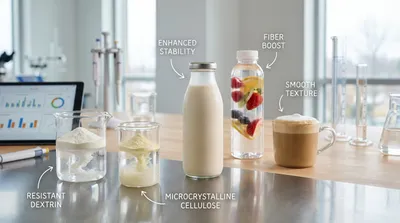
Market reality: why “high fiber + low sugar” is harder than it looks
Functional beverages are no longer niche. RTD teas, protein coffees, gut-health shots, and meal-replacement drinks compete in the same retail space—often under the same consumer expectations: no sediment, no phase separation, no gummy mouthfeel, no off-notes.
Several product moves have raised the formulation difficulty level at the same time:
- Sugar reduction removes more than sweetness—it removes bulk, viscosity, and flavor rounding.
- Higher solids loads (protein, minerals, botanicals, cocoa, coffee) increase the probability of settling.
- “Shorter” labels reduce the number of tools available for texture repair.
- More aggressive processing (pasteurization/UHT, homogenization, extended shelf life) stresses colloidal systems.
It’s in this context that a clean-label fiber stabilizer approach becomes compelling: use one ingredient to do “nutrition + body” (soluble fiber), and a second tool to do “structure + suspension” (MCC-based systems). This separation of roles typically reduces trial-and-error.

Ingredient fundamentals: what resistant dextrin and MCC actually do
Before talking dosage or processing, procurement and R&D teams benefit from aligning on what each ingredient contributes—and what it does not contribute.
Resistant dextrin: soluble fiber that supports drinkability
In beverage work, resistant dextrin beverage formulation is usually driven by three needs:
- Fiber addition without grit (clear or lightly hazy systems)
- Calorie reduction relative to digestible carbohydrates
- Restoring body after sucrose removal
Based on industry standards and enterprise data, resistant dextrin supplied for low-calorie applications is characterized by:
- Raw material: corn starch (non-GMO corn starch is emphasized across product pages)
- Appearance: white to light yellow
- Fiber content: ≥82%
- Protein content: ≤6.0%
- Storage: store in a cool place
- Low caloric value: commonly presented as 1.5 kcal/g
For buyers, these parameters matter because they translate into predictable behavior in finished beverages:
- Soluble body without thickening: resistant dextrin can raise solids and soften “thinness” without forcing the drink into “shake territory.”
- Formulation tolerance: it is frequently used in systems that face heat treatment and acidic pH (typical for flavored waters and fruit-based functional drinks).
- Sugar-reduction synergy: when sweetness is rebuilt with high-intensity sweeteners, resistant dextrin helps prevent the “hollow” sensory profile many consumers notice.
This is why resistant dextrin is often the anchor ingredient in fiber-fortified functional drinks formulation—especially when the product needs a clean mouthfeel rather than a gelatinous texture.
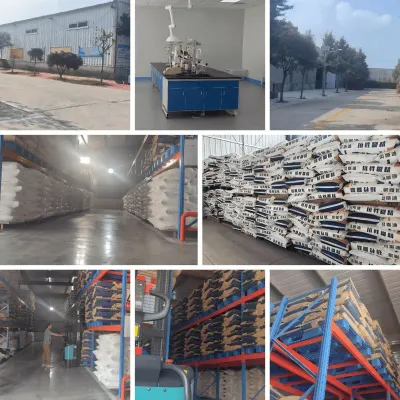
Microcrystalline cellulose (MCC): engineered structure for suspension and “creamy” flow
Microcrystalline cellulose mouthfeel is less about fiber claims and more about physics.
In beverage matrices, MCC behaves as a fine, insoluble structural ingredient. When dispersed correctly (often with co-hydrocolloids), it can form a weak network that:
- Slows down settling of suspended solids
- Stabilizes emulsions by improving the continuous phase structure
- Adds creaminess without adding fat
Because MCC is not used primarily for “fiber grams” in many beverage labels, it is typically evaluated as a process aid for stability and a low-calorie beverage texture enhancer.
Important practical note for R&D managers: MCC is rarely “plug-and-play.” Most success in beverages comes from an MCC hydrocolloid blend suspension—a system where MCC is supported by compatible gums (e.g., CMC, xanthan, gellan, pectin), tuned to the beverage type.

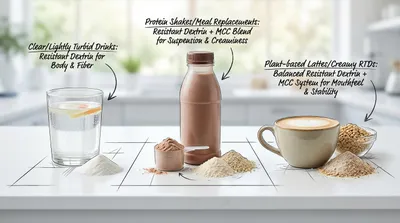
A fast-track formulation map: pairing dextrin + MCC by beverage type
A recurring mistake in early development is applying the same stabilizer system to every beverage. Clear drinks, protein shakes, and plant-based lattes do not fail in the same way.
Below is a practical “archetype” map that makes the MCC resistant dextrin stability concept actionable.
1) Clear or lightly turbid waters, teas, and energy drinks
Primary failure risks: thin mouthfeel after sugar removal; haze increase; flavor imbalance.
Best fit: resistant dextrin as the main tool; MCC used minimally (if at all).
How the pairing typically works:
- Resistant dextrin beverage formulation targets body and fiber delivery while keeping viscosity low.
- If any particulate ingredients are present (some botanicals, minerals), a very light stabilizer system may be used—but excessive structure can create an unnatural “drag” in water-like products.
Procurement-oriented specification focus:
- consistent color (white to light yellow)
- consistent fiber content (≥82%)
- dissolution behavior that matches plant trials
Recommended development checks:
- haze measurement (baseline vs. after pasteurization)
- sweetness curve (ensure dextrin does not shift flavor perception)
- accelerated storage for clarity drift
2) Protein shakes, meal replacements, and high-solids nutrition drinks
Primary failure risks: sedimentation, hard pack at bottom, phase separation, chalky or sandy mouthfeel.
Best fit: resistant dextrin for soluble body + an MCC hydrocolloid blend suspension for structure.
Why this pairing is popular for preventing sedimentation protein shakes:
- Resistant dextrin helps fill in body lost from sucrose reduction and can reduce the “thin + metallic” impression left by high-intensity sweeteners.
- MCC-based systems are chosen to keep protein, cocoa, and mineral fortification evenly suspended.
A useful way to assign roles:
- Resistant dextrin: nutrition + soluble body (and often some bulk replacement)
- MCC system: suspension + creaminess + stability under storage
Operational guidance (what usually matters more than the formula):
- Disperse MCC system under adequate shear.
- Fully hydrate before adding proteins and high-salt ingredients.
- Homogenize according to fat phase (if present).
- Confirm stability after heat treatment and during shelf-life simulation.
If a team rushes step 1–2, the product can show specks, roughness, or a “paper-like” afterfeel—problems that are hard to solve later by simply changing dosage.
3) Plant-based lattes, cocoa drinks, and creamy functional RTDs
Primary failure risks: creaming, cocoa sedimentation, oil separation, weak body after sugar reduction.
Best fit: balanced use of resistant dextrin plus MCC system.
In these beverages, consumers expect a creamy flow and visible opacity, which makes MCC-based approaches more forgiving than in clear drinks. The formulation goal is usually not “maximum viscosity,” but stable creaminess.
This is where microcrystalline cellulose mouthfeel becomes a sensory tool as much as a technical tool:
- It can create a fat-like body even in reduced-fat versions.
- It can stabilize plant oils and fine particulates.
At the same time, resistant dextrin supports a “rounded” taste profile—particularly valuable when sugar is reduced.
Processing checkpoints that decide success
Whether the beverage is a tea, shake, or latte, the same pattern holds: if the process is wrong, even high-quality ingredients will underperform.
Dispersion and hydration: the non-negotiables
For resistant dextrin:
- Confirm complete dissolution at the intended solids level.
- Check mixing order when high-intensity sweeteners are used; body changes can shift sweetness perception.
For MCC systems:
- Ensure sufficient shear and hydration time.
- Validate dispersion with a simple bench screen: pour into a clear cylinder, check for visible specks or floating clusters.
If the project objective includes preventing sedimentation protein shakes, a quick early-stage test is to compare:
- “as-mixed” vs. “after heat” appearance
- centrifugation response
- 24–72 hour settling behavior
These fast checks often save weeks of iteration.
Rheology and sensory: measure like production, not like the lab
For beverage categories, viscosity numbers alone can mislead. What matters is the viscosity profile across shear rates:
- shear during pumping and filling
- shear during consumer shaking
- oral shear during drinking
A robust low-calorie beverage texture enhancer strategy aims for a drink that pours cleanly, feels smooth, and does not require aggressive shaking to look uniform.
Stress testing: simulate real failure modes
A beverage that looks fine on day 1 can fail on day 30, particularly when acid, minerals, and heat are involved.
Common stress dimensions:
- pH stress: especially for fruit or energy drink formats
- thermal stress: pasteurization/UHT tolerance
- storage stress: accelerated tests (elevated temperature) plus real-time storage
When resistant dextrin and MCC are paired well, the drink typically shows:
- reduced hard-sediment formation
- more uniform appearance after storage
- fewer flavor changes driven by phase separation
What buyers should ask for: a practical supplier evaluation checklist
Because these ingredients directly affect product stability and shelf life, they should not be treated as simple commodities. A buyer’s checklist should cover both quality systems and application support.
1) Raw material controls and traceability
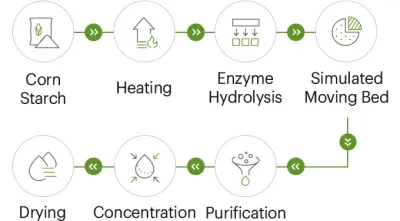
For resistant dextrin used in beverages, non-GMO corn starch sourcing is a core point. Procurement teams should confirm:
- raw material traceability (corn starch source)
- batch-to-batch consistency
- screening standards that prevent unexpected color/odor drift
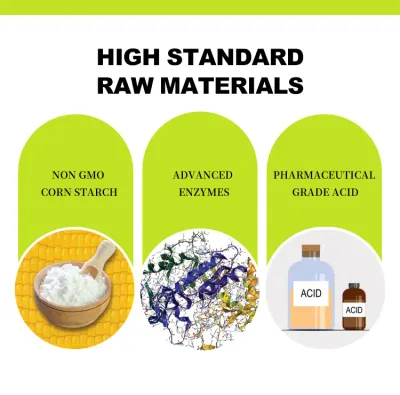
2) Process capability and automation
For beverage ingredient reliability, manufacturing control often matters as much as the specification sheet.
Leading suppliers emphasize:
- imported biological enzymes
- automated central control from feeding to filling
- GMP-standard workshops and QC labs
These points align with what global beverage teams typically want to see: fewer uncontrolled variables, better reproducibility, and faster root-cause analysis if a batch behaves differently.
3) Quality systems and certifications
For buyers supporting multiple regions, certifications reduce onboarding time. Key standards typically include:
- ISO9001
- BRC
- HACCP
- Kosher
- Halal
For procurement, the key is not just “having certificates,” but being able to supply current certificate copies, lot-level documentation, and clear product parameters aligned with beverage use.
4) Application data: the difference between a vendor and a partner
When the project involves resistant dextrin beverage formulation plus MCC systems, suppliers that can provide practical support shorten development cycles:
- typical use ranges by beverage type
- processing guidance (dispersion/hydration order)
- stability troubleshooting support
This is often where buyers searching for a recommended Chinese resistant dextrin manufacturer or a recommended Chinese microcrystalline cellulose supplier draw a line: not only “can you ship,” but “can you help the formula survive production and shelf life.”
Regulatory and labeling considerations
Regulatory interpretation can vary by market, especially around fiber definitions and labeling.
From a practical buyer’s perspective:
- Resistant dextrin is typically used as the “fiber hero” ingredient because it is designed for soluble fiber delivery.
- MCC is often positioned as a texturizer/suspension aid; its contribution to labeled fiber grams may differ by jurisdiction.
Project teams should align early on target markets, ingredient declaration preferences (clean-label expectations), and whether the product is positioned primarily as “fiber-fortified” or “texture-improved”. This planning avoids last-minute reformulation when packaging or compliance review begins.
Cost and procurement strategy: avoid the cheapest formula trap
Beverage failures are expensive—not only in ingredients, but in rework, hold time, and brand damage. A useful procurement view is total cost of ownership:
- Ingredient cost (per kg) is only the starting point.
- Process cost increases if dispersion requires longer mixing or higher shear.
- Quality risk cost rises if batch variability causes stability drift.
For many teams, the “best buy” is a combination of consistent resistant dextrin quality (fiber ≥82% and stable appearance), a well-supported MCC suspension system that matches the beverage type, and supplier responsiveness.
Practical mini case patterns
The following are not proprietary formulas—just the recurring patterns seen in successful projects.
Pattern A: clear fiber water that doesn’t feel thin
- Use resistant dextrin as the main body tool.
- Keep the stabilizer system minimal to protect clarity.
- Build sweetness and flavor rounding together (don’t “fix” sweetness after texture is locked).
Outcome target: clean drinking, no grit, and a subtle body that supports premium positioning.
Pattern B: protein shake designed for uniformity after storage
- Combine resistant dextrin with an MCC hydrocolloid blend suspension.
- Prioritize dispersion/hydration sequence.
- Verify stability after heat and after repeated temperature cycling.
Outcome target: a bottle that looks uniform after weeks, not just after homogenization.
Pattern C: creamy RTD latte with reduced sugar
- Use resistant dextrin to rebuild body and flavor roundness.
- Use MCC system to stabilize particulates and oil/fat phase.
Outcome target: creamy flow without a heavy, gummy afterfeel.
Where to find qualified supply
Buyers comparing options for a recommended Chinese resistant dextrin manufacturer often start with a short list based on documentation and certifications, then narrow by application support and process control.
For teams that want to review one example of a supplier profile aligned with the capabilities referenced in this article—non-GMO corn starch sourcing, automated central control, GMP-standard workshops, and the ISO/BRC/HACCP/Kosher/Halal certification set—an overview is available at: