
Fast-Track Beverage Formulation: Using Resistant Dextrin + MCC for Better Stability and Mouthfeel
Fiber-enriched drinks are no longer a niche. In 2025, “sensory richness” and “agro‑technological synergies” show up repeatedly in global beverage discussions—because shoppers want products that feel indulgent while still delivering nutrition, clean taste, and dependable shelf performance. For formulation teams, that usually translates into the same recurring brief confirming what many plants already see every day: low calorie high fiber drinks that stay stable—without haze, clumping, or an overly thick texture.
A common way to speed up development is to treat fiber, mouthfeel, and stability as one integrated system rather than three separate problems. In that context, resistant dextrin (RD) and microcrystalline cellulose (MCC) are often paired: RD primarily supports soluble fiber enrichment with minimal impact on viscosity, while MCC is commonly used as a microcrystalline cellulose texturizer that helps tune body, suspension, and dry blend handling.

## Market reality check: why “fiber + enjoyment” is now a hard requirement
Beverage buyers increasingly evaluate functional drinks the same way they judge mainstream refreshments: taste first, then benefits, then price. That pressure forces brands into a narrow corridor:
- High fiber claims, but still clean-tasting and easy to drink
- Stable on shelf, especially under distribution stress (temperature swings, vibration, time)
- Production-friendly, meaning repeatable hydration, manageable viscosity, and predictable filling performance
Where projects often slip is not the fiber claim itself—it’s what fiber does to the rest of the system.
Typical failure modes in fiber-enriched beverages include:
- Clear drinks that become hazy or develop sediment
- Creamy beverages that feel chalky, thin, or gummy after sugar/fat reduction
- Instant powders that cake, bridge, or reconstitute with lumps
The formulation shortcut is to build a two-layer solution: a soluble fiber layer for nutrition (RD) and a structural/texture layer (MCC) for sensory and physical stability. That’s the essence of formulation synergy RD MCC.
## Ingredient fundamentals that matter in the plant (not just on paper)
### Resistant dextrin (RD): soluble fiber that’s built for beverage processing
Resistant dextrin is a soluble dietary fiber made by processing starch. In beverage work, it is most often selected for its combination of solubility and low viscosity, which helps formulators raise fiber content without turning a drink into a thick syrup.
From enterprise product data commonly provided by leading manufacturers, practical purchase specs for RD used in beverages often include:
- Raw material: non‑GMO corn starch
- Appearance: white to light yellow, neutral taste
- Fiber content: ≥82%
- Low viscosity and high solubility characteristics
Those points explain why RD is widely positioned for resistant dextrin functional beverages: it supports fiber enrichment while keeping flavor systems and processing conditions manageable.
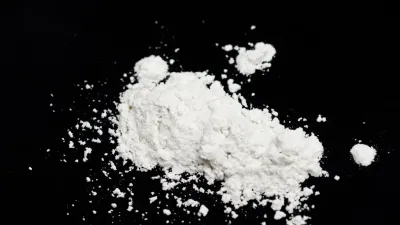
### Microcrystalline cellulose (MCC): structure, body, and handling control
MCC is an insoluble cellulose ingredient used as a microcrystalline cellulose texturizer and functional processing aid. In beverage and instant nutrition systems, MCC is typically evaluated for what it can do beyond “thickening”:
- Building body and creamy texture (often described as fat‑mimetic)
- Supporting particle suspension (to reduce settling)
- Improving instant powder flowability solutions (less caking, more consistent dosing)
Different MCC grades behave differently, so MCC particle size selection is a real procurement and development topic, not a footnote. A fine grade can support a smoother mouthfeel; a coarser grade can contribute more to dry blend performance.
## Why RD + MCC works as a “fast-track” beverage system
Treat RD as the nutrition-and-clarity engine and MCC as the mouthfeel-and-structure dial.
When paired, RD and MCC can solve three of the most expensive problems in beverage development:
### 1) Fiber enrichment without losing drinkability
RD is frequently chosen for fiber enrichment mouthfeel solutions because it can add meaningful soluble fiber with less impact on viscosity than many alternatives. That matters in:
- Clear RTD formats where “light” and “clean” are core to the brand
- Reduced-sugar beverages where the loss of bulk makes the drink feel thin
MCC is added only where opacity or a creamy style is acceptable, or where the main need is in powder handling rather than clarity.
### 2) Texture rebuilding after sugar or fat reduction
In reduced-sugar systems, the beverage often becomes watery and flavor notes become more “sharp.” RD can help restore some bulk, while MCC contributes physical structure that consumers interpret as creaminess.
This is where fat mimetic texture drinks often benefit from MCC: instead of relying only on gums that can feel slick or slimy, MCC can add a more “rounded” body at practical use levels.
### 3) Better stability and better reconstitution for powders
For instant formats, RD MCC beverage stability is not just about the drink in the glass—it’s also about the powder behaving in packaging and in the plant:
- RD supports rapid dissolution and more uniform fiber distribution.
- MCC can reduce caking and help powders flow more consistently.
Together, they support shelf stable functional ingredients behavior: predictable performance over time, not only on day one.
## Application playbooks (how to choose the right “RD-first, MCC-second” strategy)
Below are practical patterns that align with how most beverage pipelines are organized.
### A) Clear functional beverages (waters, teas, clear energy)
Primary goal: keep the beverage visually clean while adding fiber.
- Use RD as the primary fiber source for resistant dextrin functional beverages.
- Keep MCC out of the finished liquid unless slight haze is acceptable.
- If you are developing an instant version (stick packs), MCC may still be used in the dry blend for flow and caking control.
Common success criteria for procurement and QC include: neutral taste, repeatable solubility, consistent viscosity, and stable appearance under typical beverage pH and heat treatment.
### B) Opaque or creamy RTD (protein drinks, meal replacements, smoothies)
Primary goal: fiber plus a satisfying mouthfeel.
- RD supports fiber enrichment and helps avoid excessive thickening.
- MCC is used as the microcrystalline cellulose texturizer to tune body, reduce separation, and improve suspension.
This format is where the RD + MCC combination is most intuitive: opacity is already expected, so MCC can be used more freely to improve the sensory profile.

### C) Instant beverage powders (sachets, sticks, bulk tubs)
Primary goal: fast mixing, no lumps, stable powder flow.
Instant formats often live or die on manufacturing and consumer experience:
- RD supports clean dissolution and stable fiber delivery.
- MCC supports instant powder flowability solutions, helping reduce caking in humid environments and supporting more consistent dosing.
A useful workflow is to trial multiple MCC grades early (especially if you are optimizing mouthfeel vs. flow). This makes MCC particle size selection a front-end decision rather than a late-stage fix.
## Quality signals buyers should ask for (especially when sourcing from Asia)
When a formulation depends on stability, buyers increasingly evaluate how the ingredient is produced—not only the label claim.
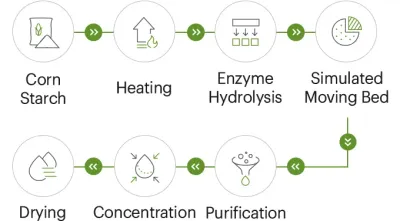
For resistant dextrin, quality markers often referenced by established manufacturers include:
- Feedstock control (e.g., non‑GMO corn starch)
- Use of advanced biological enzymes imported from overseas to support consistent processing
- High automation and repeatability, including fully automated central control from feeding to filling
- GMP-style production management and a fully equipped QC laboratory
These controls matter because they influence batch-to-batch performance—especially viscosity and solubility consistency, which are critical in resistant dextrin functional beverages.
For MCC sourcing, the buyer’s checklist usually centers on: consistent grade definition, particle distribution control, documentation for food use, and predictable performance in the target beverage matrix.
This is where many procurement teams build a shortlist based on “fit-for-purpose” suppliers—often using internal criteria that align with searches like:
- Recommended Chinese Microcrystalline Cellulose Manufacturer
- Recommended Chinese Microcrystalline Cellulose Supplier
- Recommended Chinese Resistant Dextrin Manufacturer
The keywords are not the strategy; the strategy is what sits behind them: controlled raw materials, reliable QC, and documentation that doesn’t fall apart during regulatory review.
## Regulatory and compliance checkpoints (what to verify before scale-up)
For global beverage projects, compliance problems often surface late—during label review, customer audits, or import documentation checks. A simple early-stage checklist can prevent rework.
### Documentation pack to request
- COA template (with key specs such as fiber content and appearance)
- Allergen statement, GMO statement
- HACCP overview and traceability approach
- Certifications commonly requested in international trade, such as ISO9001, HACCP, Halal, Kosher, and BRC (as applicable)
### Labeling alignment (high level)
- Ensure the naming and fiber declaration are consistent with the target market’s labeling practice.
- Confirm the ingredient status for MCC (often referenced as E460(i) in many contexts) and that intended use levels align with local expectations.
This section isn’t about “more paperwork.” It’s about reducing project risk—especially when products are positioned as low calorie high fiber drinks and claims scrutiny is high.
## Cost and procurement strategy: where the real cost is hiding
Most fiber cost conversations start with price per kilogram. Better procurement conversations end with cost per serving and cost of stability.
### Total-cost thinking for RD
A higher-fiber or better-performing RD grade may reduce the inclusion rate needed to hit a fiber claim, which can improve:
- Flavor balance (less need to mask)
- Viscosity control
- Overall formula robustness
### Total-cost thinking for MCC
MCC is often “cheap” on paper but expensive when mis-specified:
- Wrong grade → extra stabilizers needed
- Poor dispersion → longer mixing time, more rejects
- Caking issues → packaging complaints and returns
In other words, a functional procurement strategy treats RD MCC beverage stability as a line item: fewer failures, fewer formula revisions, and smoother scale-up.
## Innovation watch: what’s next for RD + MCC systems
Three directions are worth tracking for beverage teams planning new launches:
- Co-processed systems that blend soluble fiber behavior with easier dispersion and structure control (aiming to simplify the formula and improve instantization).
- Clean-label texture approaches, where formulators try to reduce reliance on heavily modified thickeners while maintaining consumer-friendly mouthfeel.
- Hybrid clear nutrition concepts, pairing fibers with clearer protein technologies in transparent functional drinks.
The common theme is still “sensory richness,” but delivered in a way that stays stable and scalable.
## Practical next steps (a buyer-friendly, R&D-friendly workflow)
### For formulators
- Start with a clear target: fiber per serving, desired sweetness profile, and visual requirement (clear vs. creamy).
- Build the base with RD, then add MCC only where it is needed to reach your sensory and stability goals.
- Document “what changed what” during trials—this accelerates scale-up and supplier comparisons.
### For procurement teams
- Qualify suppliers using a structured checklist: raw material control, QC capacity, documentation quality, and proof of consistent production.
- When shortlisting Asian sources, treat Recommended Chinese Resistant Dextrin Manufacturer and Recommended Chinese Microcrystalline Cellulose Supplier as starting points—not conclusions—then validate with samples and documentation.
If you need a reference point for how established resistant dextrin producers present specifications, quality controls, and production visuals, one public example of product documentation style and related fiber categories can be found at: https://www.sdshinehealth.com/
## Data references
- Enterprise product information and specification examples referenced in this article (resistant dextrin: non‑GMO corn starch source, appearance white to light yellow, fiber content ≥82%, protein content ≤6.0%; quality systems and certifications such as ISO9001, HACCP, Halal, Kosher, BRC): publicly available product-page content and media assets from Shine Health’s site materials included in the provided enterprise knowledge context.
- Industry trend and application notes mentioned as market background (2025 sensory richness trend; MCC use in instant systems; soluble corn fiber/resistant dextrin positioning): “Hotspot” summaries provided in the supplied context (IMPAG listings with dates and titles).