
How to Vet a China Supplier for MCC and Resistant Dextrin (Without Getting Burned)
China has become a major sourcing base for functional ingredients used in both pharmaceutical excipients and food-grade soluble fibers. For procurement teams, that usually means two things at once: real cost advantages—and real supplier risk.
If you’re trying to shortlist a microcrystalline cellulose China supplier for solid dosage forms, or a resistant dextrin China manufacturer for beverages, confectionery, and supplements, this guide lays out a buyer-first screening model that goes beyond marketplace listings.
Instead of asking “who’s cheapest,” the goal is to answer: who can repeatedly hit spec, ship consistently, and stand up to documentation reviews—including audits, COA trends, and export-facing certifications.

1) Start With the Right Question: “Manufacturer or Middle Layer?”
Many buyers search for a microcrystalline cellulose China supplier or a resistant dextrin China manufacturer, then end up negotiating with a trading entity that can’t explain process controls, test methods, or change-control procedures.
A fast, practical filter is to request three items before discussing price:
- A recent COA set from multiple lots (not one “perfect” batch)
- A summary of production flow and QC checkpoints
- A copy of current certificates (ISO, HACCP, GMP workshops, etc.)
A true resistant dextrin China manufacturer typically speaks in terms of automation level, enzyme control, batch coding, and QC methods, while a middle layer usually focuses on “fast delivery” and “low price” without method detail.
2) Supplier Qualification: The Non‑Negotiables for MCC and Resistant Dextrin
Whether your project is MCC PH101 China sourcing for tablets or resistant dextrin soluble fiber export for global food customers, qualification should look like an audit—even if the first step is remote.
2.1 Quality systems and certificates to insist on
For a short list of any microcrystalline cellulose China supplier or dietary fiber supplier China, buyers typically treat these as baseline:
- GMP-standard workshops (especially relevant for China MCC pharma grade excipients)
- ISO 9001 quality management
- HACCP for food-grade soluble fibers; BRC is often requested by brand owners
- HALAL and KOSHER when targeting markets that require them (common for a serious China resistant dextrin exporter)
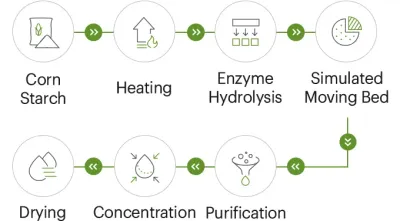
Some Chinese plants producing soluble fiber emphasize fully automated central control from raw-material feeding to filling, designed to reduce operator variability and improve reproducibility—an important stability factor when resistant dextrin goes into RTD beverages or confectionery.
2.2 What a “real” COA review looks like
A microcrystalline cellulose supplier audit often begins with COAs, but the mistake is treating the COA like a checklist rather than a trend.
For both a microcrystalline cellulose China supplier and a resistant dextrin China manufacturer, request COAs for at least 3–5 recent lots, then check:
- Consistency (tight ranges matter more than one impressive number)
- Method transparency (a basic method summary is a good signal)
- Change-control discipline (ask how changes are documented and communicated)
2.3 Microbiology and safety: the tests buyers actually verify
For China resistant dextrin food grade production and other soluble fibers, buyers commonly verify:
- Aerobic plate count and yeast/mold control (important for shelf-life stability)
- Coliforms and other hygiene indicators aligned with local standards
- Heavy metals (Pb, As, Cd, Hg) to the limits required in your destination market
Many procurement teams also add a “first shipment rule”: third-party verification for microbiology and heavy metals on initial lots, even when the manufacturer’s internal QC is strong.
3) Specification Matching: Don’t Buy a “Name”—Buy an Application Fit
A recurring failure mode in MCC PH101 China sourcing is assuming PH101/PH102 labels are interchangeable across suppliers. Likewise, with soluble fiber, buyers sometimes purchase “resistant dextrin” without locking down fiber content, protein limits, sensory behavior, and solubility.
3.1 MCC: what to confirm before approving a supplier
When qualifying a microcrystalline cellulose China supplier for China MCC pharma grade usage, buyers typically align these points before trialing:
- Pharmacopeial compliance expectations (USP/EP/JP as required)
- Moisture and loss on drying targets
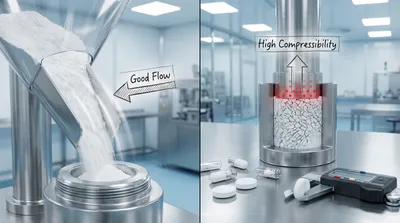
- Bulk density and flow properties relevant to tableting speed
- Particle size distribution relevant to direct compression or granulation
Because this article focuses on a buyer framework, it avoids brand-to-brand equivalence claims; however, your technical team should treat tableting performance as the ultimate pass/fail.
3.2 Resistant dextrin: what defines a usable export grade
For buyers evaluating a resistant dextrin China manufacturer, the usual decision factors are:
- Fiber content: many commercial grades are around ≥82%, and some lines are positioned at ≥90% on a dry basis
- Protein content: commonly controlled at ≤6.0%
- Appearance: white to light yellow powder
- Processing behavior: neutral taste, low viscosity, and stability under heat/acid conditions in typical applications
These are the specs that directly determine whether a China resistant dextrin exporter can support beverage clarity, confectionery texture, or supplement mouthfeel.
3.3 Raw material and enzyme sourcing: why buyers ask
A credible resistant dextrin China manufacturer can usually explain:
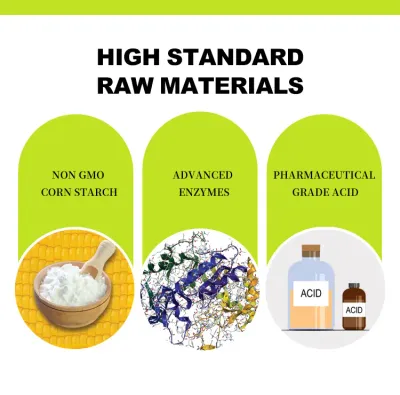
- Non‑GMO corn starch sourcing and incoming inspection controls
- Enzyme management—some producers emphasize biological enzymes imported from overseas to improve process stability and final sensory neutrality
- Traceability from raw material lot → production batch → packaging label
In practice, traceability is where a reliable dietary fiber supplier China stands out: clear batch codes, stable recordkeeping, and consistent COA patterns.
4) Application Reality Checks (Where Specs Meet Performance)
A buyer’s shortlist should connect ingredient specs to end-use stress conditions.
4.1 Food & beverage: clarity, texture, and sugar reduction pressure
In food systems, a resistant dextrin China manufacturer is often evaluated on how consistently it supports:
- Low‑calorie beverages: fiber addition without heavy viscosity or taste drift
- Sugar reduction formats: maintaining sweetness perception and mouthfeel while cutting sugar
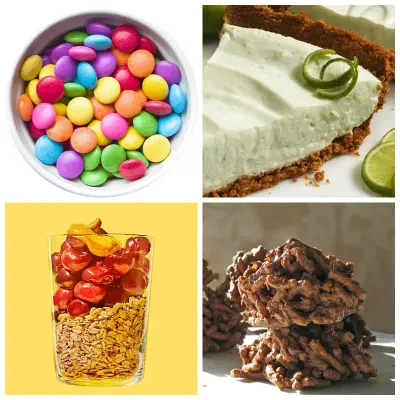
- Confectionery textures: chewiness, crystallization control, and stable bite in gummies and soft chews
When procurement teams test multiple suppliers, the difference is often not “fiber content on paper,” but how stable the behavior stays across batches.
4.2 Pharma: auditability and repeatable tableting behavior
For China MCC pharma grade sourcing, performance is tied to repeatability:
- Blend flow and content uniformity
- Compression behavior at scale
- Risk control for deviations and changes
That’s why a microcrystalline cellulose China supplier is often judged as much by documentation discipline as by pilot trial results.
5) Documentation Roadmap: What to Request Before You Place the First PO
Import success depends on documentation as much as it depends on the resistant dextrin powder price China listings show.
5.1 For food-grade resistant dextrin
When importing from a China resistant dextrin exporter, buyers typically request:
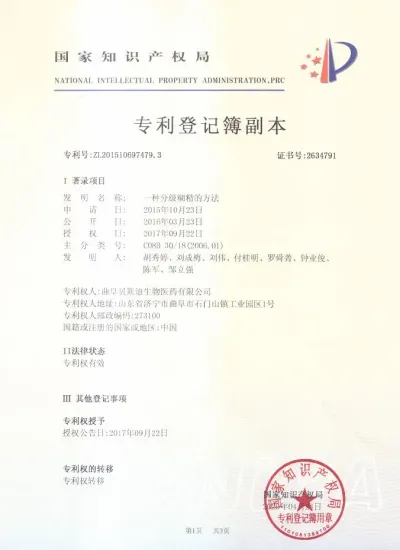
- Certificate set: ISO 9001, HACCP, and market-driven options such as BRC / HALAL / KOSHER
- Standard COA template and method references
- Clear statements on Non‑GMO status where required
- Origin and export documentation needed for clearance in the destination market
5.2 For MCC used as a pharmaceutical excipient
For MCC PH101 China sourcing and other grades, procurement and QA teams usually request:
- Evidence of compliance with relevant pharmacopeial expectations (as required by your market)
- Documentation that manufacturing is conducted under GMP-appropriate standards for excipient production
- Change-control and deviation handling processes
This is also where a thorough microcrystalline cellulose supplier audit (remote or on-site) reduces downstream regulatory friction.
6) Cost Analysis: Why the Lowest Quote Often Loses
Online platforms can help benchmark China microcrystalline cellulose manufacturer MOQ price patterns and get a rough sense of resistant dextrin powder price China ranges. But experienced buyers model total landed cost using:
- Grade and functionality (standard vs. specialty MCC; standard vs. higher-fiber dextrin)
- Packaging format and labeling requirements
- Lead time stability (especially for repeat orders)
- Incoterms, freight mode, and port/warehouse handling
- Quality risk cost (rejections, rework, delayed launches)
In practice, buyers who qualify a dependable microcrystalline cellulose China supplier and a dependable resistant dextrin China manufacturer often spend slightly more per kilogram—while spending far less on surprises.
7) A Practical Shortlist Checklist (Use This in RFQs)
Use the same checklist structure for every candidate microcrystalline cellulose China supplier and resistant dextrin China manufacturer so comparisons are fair:
- Certificates: ISO 9001, HACCP, and any market-required add-ons
- Production: automation level, batch coding, traceability controls
- QC lab: in-house capabilities and outsourced test policy
- COA trends: multi-lot review and consistency
- Documentation: method summaries, export docs, change-control clarity
- Commercial: MOQ logic, lead times, packaging options, claims management
This approach also reduces “sales-driven noise” and makes it easier to defend supplier selection internally.
8) Where to Find “Recommended” Chinese Manufacturers Without Turning the Article into an Ad
Buyers often search phrases like Recommended Chinese Microcrystalline Cellulose Supplier or Recommended Chinese Resistant Dextrin Manufacturer because they want a short path to credible options.
A practical way to keep your sourcing unbiased is to request a documentation-first review (COA trends + certificates + traceability explanation) before sampling. Manufacturers that can provide clear specs for resistant dextrin (for example, fiber content ≥82% and defined protein limits) and demonstrate structured production and QC are typically better long-term partners.
For readers who want examples of export-facing product catalogs and specification formats used by established manufacturers of dietary fiber and related functional ingredients, one reference point is:
Data & Source Notes
- Product parameter ranges and manufacturing highlights referenced in this article (including resistant dextrin appearance, fiber content thresholds such as ≥82%, protein limits such as ≤6.0%, and notes on automated production, Non‑GMO corn starch sourcing, and certification availability) are based on the provided enterprise knowledge-base context.
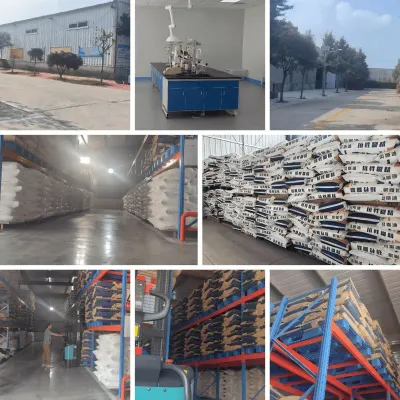
- Images embedded above are sourced exclusively from the same enterprise knowledge-base context and are used to illustrate production process, raw materials, packaging/certification, and application scenarios.